COVID-19 '7th Wave' Shows Gradual Increase... Sharp Rise in Severe Cases and Deaths
![[Image source=Yonhap News]](http://www.asiae.co.kr/news/img_view.htm?img=2022122812283966654_1672198119.jpg)
[Asia Economy Reporter Byeon Seon-jin] The scale of the COVID-19 '7th wave' this winter is rising gradually, but the number of critically ill patients and deaths is increasing significantly.
According to the Central Disease Control Headquarters on the 28th, the average daily number of new confirmed cases during the week of the 18th to 24th was 67,321, an increase of 3.5% compared to the previous week. On the other hand, the average daily number of critically ill patients hospitalized during the week increased by 13.8% from 464 to 528, and the average daily number of deaths rose by 20.7% from 46 to 56. The recent increase in critically ill patients and deaths is about six times the scale of the increase in confirmed cases.
The health authorities expect that there are many 'hidden infected' individuals. Lim Sook-young, head of the Central Disease Control Headquarters' situation management team, said at a briefing that "the proportion of elderly people aged 60 and over among all confirmed cases is higher than before," and added, "We believe that the avoidance of testing among younger people may have some impact." This means that while young people with COVID-19 symptoms are not getting tested, the number of critically ill patients and deaths is reflected in the statistics, so the current epidemic situation may not be accurately represented.
The effective reproduction number (Rt) was 1.04, slightly down from 1.08 the previous week, but it has remained above 1 for 10 consecutive weeks. An Rt above 1 indicates 'epidemic spread.'
The estimated reinfection rate among people who were infected with COVID-19 and recovered is 17.11% (based on December 11?17), up from 15.87% the previous week. This means that about one in five or six confirmed cases is a reinfection. As of midnight on the 18th, among the cumulative 27,063,307 confirmed cases, 960,975 were reinfections, accounting for 3.53%.
Hot Picks Today
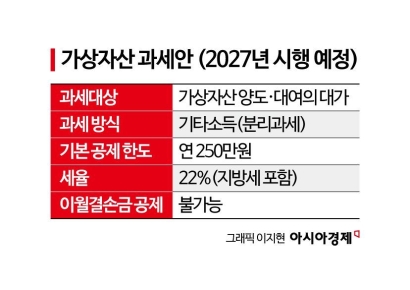 "Stocks Are Not Taxed, but Annual Crypto Gains Over 2.5 Million Won to Be Taxed Next Year... Investors Push Back"
- "Not Jealous of Winning the Lottery"... Entire Village Stunned as 200 Million Won Jackpot of Wild Ginseng Cluster Discovered at Jirisan
- "Rather Than Endure a 1.5 Million KRW Stipend, I'd Rather Earn 500 Million in the U.S." Top Talent from SNU and KAIST Are Leaving [Scientists Are Disappearing] ①
- "How Did an Employee Who Loved Samsung End Up Like This?"... Past Video of Samsung Electronics Union Chairman Resurfaces
- "Even With a 90 Million Won Salary and Bonuses, It Doesn’t Feel Like Much"... A Latecomer Rookie Who Beat 70 to 1 Odds [Scientists Are Disappearing] ③
The health authorities consider that the decreasing detection rate of the dominant BA.5 variant is one of the factors contributing to the increase in reinfections. The BA.5 variant, which led last summer's wave, dropped below half to 46.1%, while the detection rate of BN.1 increased from 20.6% to 24.4%. However, the detection rate of BF.7, which is spreading in China, slightly decreased from 4.0% to 3.7%. The authorities stated that they will continue to monitor possible changes in virus characteristics due to the COVID-19 wave originating from China.
© The Asia Business Daily(www.asiae.co.kr). All rights reserved.







