'Preheating Before Driving Essential; Battery Heating for Electric Cars'... Vehicle Maintenance in Cold Wave
Vehicle Inspection Needed for Antifreeze, Battery, and More
![[Image source=Yonhap News]](http://www.asiae.co.kr/news/img_view.htm?img=2022122108175358543_1671578273.jpg)
[Asia Economy Reporter Kim Jung-wan] As a large amount of snow is forecast to fall mainly in the central region this week, caution is required in vehicle management to prevent accidents.
According to the Korea Meteorological Administration on the 21st, dangerous weather conditions such as very heavy snow and very strong winds are expected for the time being. On this day, especially, a large amount of snow is expected to fall mainly in the central region.
The expected snowfall amounts are △Northern and eastern Gyeonggi, Gangwon, Jeju Island mountain areas (5~10 cm) △Northern Gyeonggi, inland mountain areas of Gangwon (15 cm or more) △Seoul, Incheon, southwestern Gyeonggi (2~8 cm) △Chungcheong area (except central and northern Chungbuk), eastern Jeonbuk, central and southern inland Gyeongbuk, western inland Gyeongnam (1~3 cm).
In addition, a cold wave warning is expected to be issued in some areas, so special attention is needed for traffic safety during commuting hours. According to the automobile industry, vehicle management and inspection are necessary to prepare for winter driving.
First, when parking a vehicle before snowfall, it is recommended to use underground parking lots if possible. If parking outdoors, the front and rear windows of the vehicle should be covered. Sudden acceleration or sudden braking is dangerous because the road surface is icy, so the vehicle speed should be reduced by 20~30% while driving.
Preheating the car before driving is also essential. When the vehicle is exposed to low temperatures for a considerable period without running, engine oil and other fluids can freeze, causing damage to the car. The preheating time varies depending on the vehicle type, but about 1 to 2 minutes is appropriate.
Antifreeze and coolant should also be checked. Coolant can freeze at low temperatures and damage other parts. When visiting a repair shop, check the specific gravity of the antifreeze that prevents freezing, and if the specific gravity is low, it should be replenished or replaced.
Tires, which are in direct contact with the road, are also essential inspection targets. Driving on snowy or icy roads with severely worn tires poses a risk of slipping. To ensure safe driving, preparations such as replacing them with winter tires are necessary.
Checking the battery, whose performance decreases as the temperature drops, is also important. The electrolyte in liquid batteries becomes less active at low temperatures, reducing efficiency by about 20~30%. Check the charging status through the battery inspection window, and if it is time for replacement, it is better to change it.
Hot Picks Today
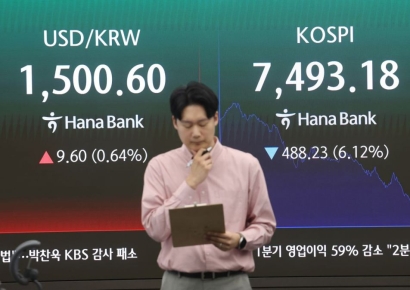 After Topping 8,000 Instead of Hitting 10,000... KOSPI Plunges—When Will It Rebound?
- "Samsung and Hynix Were Once for the Underachievers"... Hyundai Motor Employee's Lament
- [Breaking] Court Rules Against Samsung Electronics Union...1 Billion Won per Day Penalty for Exceeding Strike Scope
- Global Big Tech Joins AI Firms in Full-Scale AI Agent Showdown
- "That? It's Already Stashed" Nightlife Scene Crosses the Line [ChwiYak Nation] ③
Electric vehicles require even more caution in winter. Battery performance decreases, significantly reducing driving range, and charging speed may also slow down. It is recommended to use indoor parking lots for electric vehicles during winter, and before charging, using systems such as the 'battery heating system' can help prevent slow charging speeds.
© The Asia Business Daily(www.asiae.co.kr). All rights reserved.