National Pension Service Temporarily Raises 'Currency Hedge Ratio' from 0% to 10%
Temporary Increase of National Pension Fund's Currency Hedge Ratio up to 10%
Expansion of Strategic Investment Scope in Overseas Stocks, from 1.5%p to 3%p
![[Image source=Yonhap News]](http://www.asiae.co.kr/news/img_view.htm?img=2022110417304895665_1667550649.jpg)
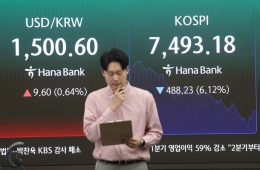
[Asia Economy Reporter Kwangho Lee] The National Pension Service (NPS) will temporarily raise the foreign exchange hedging ratio for overseas investments from 0% to 10%.
On the 16th, the National Pension Fund Management Committee held its 6th meeting at the NPS Seoul Northern Regional Office, chaired by Chairman Kyu-Hong Cho (Minister of Health and Welfare), and deliberated and approved this agenda. This measure follows the Ministry of Strategy and Finance's request last November to increase the foreign exchange hedging ratio for public pension funds, including the NPS.
The Fund Committee agreed that if an unusual rise in exchange rates (a decline in the value of the Korean won) occurs again, it is necessary to temporarily reduce the scale of foreign exchange exposure until stabilization. Accordingly, the foreign exchange hedging ratio will be temporarily raised up to 10% depending on market conditions.
Since 2018, the NPS has adhered to a principle of 100% foreign exchange open position without hedging for all overseas investments. However, it has been allowed to hedge within a ±5% range of the total overseas assets.
As of the end of September, the NPS's overseas assets amounted to approximately $340 billion, including KRW 247.5 trillion in overseas stocks and KRW 70 trillion in overseas bonds. If the NPS raises the foreign exchange hedging ratio, it will have the effect of increasing the supply of dollars in the market.
When the NPS sells dollar forward contracts for hedging, banks take a forward purchase position and borrow foreign currency to sell it in the market. An increase in dollar supply tends to lower the KRW-USD exchange rate.
Additionally, the Fund Committee changed the benchmark countries for overseas infrastructure performance evaluation from the OECD to the G7 and adjusted the domestic and overseas CPI calculation method from the current year to a 5-year average. The premium was lowered by 1 percentage point each. The resulting improvement plan sets the KRW-based return as the 5-year average CPI growth rate of the overseas G7 plus 4%, and domestically as the 5-year average CPI growth rate plus 3%.
The Fund Committee set next year's target excess return at 0.20 percentage points, 0.02 percentage points lower than the current 0.22 percentage points. This reflects discussions to induce balanced management between excess returns and total risk, considering the unresolved uncertainties in domestic and international financial markets.
Hot Picks Today
 "Samsung and Hynix Were Once for the Underachievers"... Hyundai Motor Employee's Lament
- "Sold Everything Fearing Bankruptcy, Then It Soared 3,900 Times: How a Stock Once Feared for Delisting Became an AI Powerhouse"
- Court Partially Grants Samsung Electronics' Injunction to Prohibit Industrial Action... 100 Million Won Penalty Per Day for Violations
- President Lee: "Corporate Management Rights Should Be Respected as Much as Labor Rights"...Final Samsung Labor-Management Negotiations (Comprehensive)
- "That? It's Already Stashed" Nightlife Scene Crosses the Line [ChwiYak Nation] ③
© The Asia Business Daily(www.asiae.co.kr). All rights reserved.