Ministry of Unification: "The Goal Is Denuclearization, Not Disarmament... China Needs to Play a Constructive Role"
"China's Role in Korean Peninsula Peace"... Possibility of High-Level Visit to China
Kwon Young-se: "Yoon's North Korean Defector Policy"... Heralding a Revolutionary Change
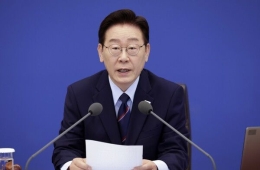
![Unification Minister Kwon Young-se responds to reporters' questions at the Unification Ministry Press Corps Workshop held in Ganghwa-do on the afternoon of the 13th. <br>[Photo by Ministry of Unification]](http://www.asiae.co.kr/news/img_view.htm?img=2022121317075050423_1670918871.jpg)
Unification Minister Kwon Young-se responds to reporters' questions at the Unification Ministry Press Corps Workshop held in Ganghwa-do on the afternoon of the 13th.
[Photo by Ministry of Unification]
[Asia Economy Reporter Jang Hee-jun] The Ministry of Unification firmly dismissed the possibility that North Korea, which has been carrying out unprecedented provocations this year, might demand 'arms reduction talks' instead of denuclearization as a condition for a phase shift. The ministry emphasized that "our goal is clearly North Korea's denuclearization." At the same time, it reiterated its stance that it is "always open" to North Korea's return to dialogue or humanitarian aid.
A senior official from the Ministry of Unification met with reporters at a workshop held on the 13th in Ganghwa-do and responded to related questions by saying, "As we have consistently stated, the Yoon Seok-yeol administration's North Korea policy ultimately aims for North Korea's denuclearization, not merely arms reduction talks."
The official referred to the missed prediction of the '7th nuclear test prospect' raised since mid-October, saying, "It is difficult to predict North Korea's future strategic provocations as they will depend on changes in the international situation," and added, "We will not specifically assume provocations at any particular time but will prepare for all possible scenarios."
Regarding recent remarks from the U.S. White House emphasizing 'China's influence on North Korea,' when asked what role China is expected to play in North Korea policy, the official stressed, "China is the country North Korea depends on the most and holds the greatest influence."
He continued, "Recently, for various reasons, China has neither participated in sanctions against North Korea nor has it supported UN Security Council sanctions, even becoming a key player in their failure. China can play a greater role in peace on the Korean Peninsula. It needs to take a more constructive role than it does now," he pointed out.
In particular, the official mentioned that Minister Kwon Young-se visited German President Frank-Walter Steinmeier in October and requested cooperation and support for the denuclearization roadmap called the 'Bold Initiative,' hinting at the possibility of Minister Kwon or other high-level officials visiting China.
![Unification Minister Kwon Young-se responds to reporters' questions at the Unification Ministry press corps workshop held on Ganghwa Island on the 13th. <br>[Photo by Unification Ministry]](http://www.asiae.co.kr/news/img_view.htm?img=2022121317235550444_1670919836.jpg)
Unification Minister Kwon Young-se responds to reporters' questions at the Unification Ministry press corps workshop held on Ganghwa Island on the 13th.
[Photo by Unification Ministry]
Minister Kwon Young-se also attended the press briefing that day. He evaluated the direction of policy implementation this year as "a time to build the foundational strength of North Korea policy." He explained, "The Bold Initiative clarifies that North Korea's nuclear issue is our issue and was prepared within a framework led by us and supported by the international community."
Regarding the key tasks for next year, he said, "We will actively promote the 'North Korean Defector Policy,' which can be called the Yoon Seok-yeol style defector policy," adding, "We plan to develop an analytical system that can preemptively detect crisis signs by compiling fragmented information on defectors and to create a system that can immediately provide comprehensive services."
When asked about the meaning of naming it the 'Yoon Seok-yeol style defector policy,' a senior official from the Ministry of Unification explained, "It means we intend to change the system more innovatively," and added, "Since various efforts related to defectors have not been systematically initiated, the organizations are divided among different ministries, agencies, and the private sector."
Hot Picks Today
 "Stocks Are Not Taxed, but Annual Crypto Gains Over 2.5 Million Won to Be Taxed Next Year... Investors Push Back"
- "Don't Throw Away Coffee Grounds" Transformed into 'High-Grade Fuel' in Just 90 Seconds [Reading Science]
- Signed Without Viewing for 1.6 Billion Won... Jamsil and Seongbuk Jeonse Prices Jump 200 Million Won in a Month [Real Estate AtoZ]
- [Breaking] President Lee: "Sharing operating profit before taxes are deducted?... I don't understand"
- "Even With a 90 Million Won Salary and Bonuses, It Doesn’t Feel Like Much"... A Latecomer Rookie Who Beat 70 to 1 Odds [Scientists Are Disappearing] ③
The official added, "It is necessary to make the policy more coherent so that defectors can properly settle in our society and truly live as citizens of the Republic of Korea," and said, "We will improve parts that have not been supported by budgets and actual implementation and proceed in a direction that can provide practical help."
© The Asia Business Daily(www.asiae.co.kr). All rights reserved.