Goldman Sachs: "Korea to Capture 55% of US Battery Market Share Within 3 Years"
US Expected to Expand South Korea's Battery Share by Building Battery Supply Chains Excluding China
![[Photo by Reuters Yonhap News]](http://www.asiae.co.kr/news/img_view.htm?img=2022112211022225424_1669082543.jpeg)
[Asia Economy Reporter Park Byung-hee] The American investment bank Goldman Sachs predicted that South Korea's share of the U.S. electric vehicle (EV) battery market, which was 11% last year, will increase to 55% within three years. This expectation comes as the U.S. moves to establish its own battery supply chain excluding China, which is anticipated to increase the proportion of Korean EV batteries. Goldman Sachs analyzed that thanks to large-scale battery investments by SK and LG, the U.S. can reduce its dependence on China and build its own battery supply chain.
According to major foreign media on the 21st (local time), Goldman Sachs analyzed that with new investments exceeding $160 billion (approximately 217 trillion KRW), the U.S. and Europe can sever their dependence on China in the EV battery sector by 2030.
Goldman Sachs estimated that to establish a battery supply chain excluding China, Western countries such as the U.S. and Europe need to invest $78.2 billion in the battery sector, $60.4 billion in EV parts, $13.5 billion in mining EV materials such as lithium, nickel, and cobalt, and $12.1 billion in EV material refining. Furthermore, if policy support from the U.S. and Europe and investments from companies outside China are added, it is analyzed that dependence on China for batteries can be eliminated within seven years. In particular, Goldman Sachs predicted that thanks to large-scale investments by South Korea's SK and LG in the U.S., the U.S. will be able to meet the demand for finished battery products within 3 to 5 years. LG and SK are also expected to receive substantial subsidies from the U.S. government under the Inflation Reduction Act (IRA). The IRA includes large subsidies for EVs and eco-friendly energy sectors. Goldman Sachs predicted that EV subsidies will exceed $10,000 (approximately 13.63 million KRW) per vehicle.
Goldman Sachs also noted that companies outside China are focusing on developing alternatives to lithium-ion batteries, such as sodium-ion batteries and lithium iron phosphate (LFP) batteries, and that Western regulations on EV battery production related to environmental issues will pose challenges to Chinese companies.
Ross Gregory, a partner at consulting firm New Electric Partners, pointed out that Goldman Sachs' outlook is overly optimistic. Gregory predicted that, contrary to Goldman Sachs' expectations, it will be difficult for the U.S. to establish its own supply chain at low cost in a short period. He stated, "While expectations for securing a battery supply chain are growing, large-scale investments in upstream raw material production excluding China are not being made." As an example, he cited the lack of large-scale overseas investments in Australian battery raw material mining.
Currently, investments are insufficient to overcome China's overwhelming market dominance in the EV battery sector. China produces 75% of the world's EV batteries and boasts overwhelming market dominance in the production of EV-related materials and parts. In the global EV battery cathode material production market, Chinese companies hold an 87% share. Their shares in precursor and anode materials are 85% and 77%, respectively.
Gregory also predicted that while the U.S. and Europe invest to secure their own supply chains, China will also make significant investments in EV infrastructure, surpassing the investment scale of the U.S. and Europe.
Hot Picks Today
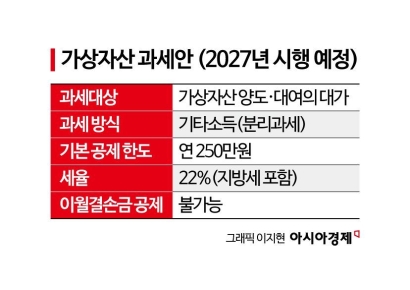 "Stocks Are Not Taxed, but Annual Crypto Gains Over 2.5 Million Won to Be Taxed Next Year... Investors Push Back"
- "Not Jealous of Winning the Lottery"... Entire Village Stunned as 200 Million Won Jackpot of Wild Ginseng Cluster Discovered at Jirisan
- "Rather Than Endure a 1.5 Million KRW Stipend, I'd Rather Earn 500 Million in the U.S." Top Talent from SNU and KAIST Are Leaving [Scientists Are Disappearing] ①
- "How Did an Employee Who Loved Samsung End Up Like This?"... Past Video of Samsung Electronics Union Chairman Resurfaces
- "Even With a 90 Million Won Salary and Bonuses, It Doesn’t Feel Like Much"... A Latecomer Rookie Who Beat 70 to 1 Odds [Scientists Are Disappearing] ③
In this regard, Goldman Sachs recently analyzed that the per-unit facility investment scale in the U.S. is 78% higher than that of China.
© The Asia Business Daily(www.asiae.co.kr). All rights reserved.