LifeSemantics, 'Skin Cancer Differential Diagnosis Support SW' First Designated as Customized Rapid Classification Item by MFDS
![Skin cancer lesion imaging and prediction results using the 'Skin Cancer Differential Diagnosis Assistance Software Based on Regional Skin Imaging.' <br>[Photo by LifeSemantics]](http://www.asiae.co.kr/news/img_view.htm?img=2022112208003524874_1669071635.jpg)
Skin cancer lesion imaging and prediction results using the 'Skin Cancer Differential Diagnosis Assistance Software Based on Regional Skin Imaging.'
[Photo by LifeSemantics]
[Asia Economy Reporter Lee Gwan-joo] LifeSemantics announced on the 22nd that its 'Body Part-Specific Skin Image-Based Skin Cancer Differential Diagnosis Assistance Software (SW)' has been designated as the first case of a customized rapid classification item by the Ministry of Food and Drug Safety (MFDS).
The customized rapid classification system in the medical device field was introduced as part of the '100 Major Regulatory Innovation Tasks for Food and Drug' announced by the MFDS in August. It aims to provide opportunities for rapid productization and market entry of newly developed medical devices applying advanced technologies such as artificial intelligence (AI) and big data through regulatory improvements.
The MFDS designated the 'Body Part-Specific Skin Image-Based Skin Cancer Differential Diagnosis Assistance SW' as a customized rapid classification item and decided to classify it as 'Skin Cancer Image Detection and Diagnosis Assistance Software (E12010.01)'.
This SW is a medical AI solution developed by LifeSemantics through the Doctor Answer 2.0 national project. It analyzes skin images taken with a smartphone to differentiate whether skin cancer is present and is expected to help in the early detection and prevention of skin cancer. Training data related to basal cell carcinoma, squamous cell carcinoma, and malignant melanoma were used in the software development.
Kim Eung-hee, head of the R&D team at LifeSemantics ICT Convergence Research Institute, said, "This first case is significant in that it establishes an institutional foundation allowing innovative medical companies to focus on developing new technologies and services." She added, "Through this SW, we expect to improve the accuracy of medical professionals' diagnoses and accelerate patients' treatment processes, thereby reducing social costs."
Hot Picks Today
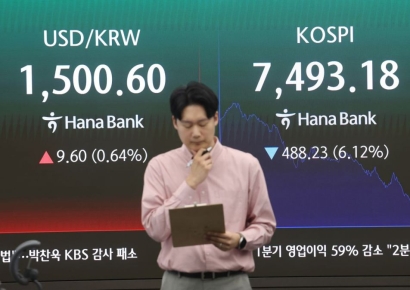 After Topping 8,000 Instead of Hitting 10,000... KOSPI Plunges—When Will It Rebound?
- "Samsung and Hynix Were Once for the Underachievers"... Hyundai Motor Employee's Lament
- [Breaking] Court Rules Against Samsung Electronics Union...1 Billion Won per Day Penalty for Exceeding Strike Scope
- Court Partially Grants Samsung Electronics' Injunction to Prohibit Industrial Action... 100 Million Won Penalty Per Day for Violations
- "That? It's Already Stashed" Nightlife Scene Crosses the Line [ChwiYak Nation] ③
The Doctor Answer development project is an AI-based precision medical solution supported by the Ministry of Science and ICT and the National IT Industry Promotion Agency. It is a consortium-type project involving major hospitals and ICT companies to develop AI-based medical programs that support disease prediction, diagnosis, treatment, and management.
© The Asia Business Daily(www.asiae.co.kr). All rights reserved.