[Senior Trend] Do You Have a Preferred Area to Live After Retirement?
![[Senior Trend] Do You Have a Preferred Area to Live After Retirement?](http://www.asiae.co.kr/news/img_view.htm?img=2022092809194949236_1664324390.jpg)
“How much money do I need to prepare for retirement?” This is a common question at senior-related gatherings. We now live in a world where the period of retirement life is longer than the time spent working. Therefore, there is no absolute answer in terms of numbers. Just as living expenses varied greatly until the age of 50, the difference depends largely on how one has lived so far and how one plans to live going forward. In the book “Not Afraid of Aging”, Japanese retirement planner Yokote Shota says, “At 60, annual income drops by half, and work returns to the level of a new employee.”
If one could remain active throughout life, would working unconditionally and tightening the belt with frugality and pension savings be the only answer to maintaining assets for a long time?
By temporarily changing “where” you live, various paths open up in the third act of life. This is because lifestyles change. In regions, there are “jobs, activities, and entertainment” suitable for the “new middle-aged.” And none of these require everyone to farm, raise livestock, or tend trees. One example is the local creator.
Early last year, while living in Jeju Island for a month, I visited “Haenyeo’s Kitchen.” It was a theater-style restaurant where you could watch a performance depicting the life of haenyeo (female divers) while enjoying a meal. According to an interview with reporter Yoon Chang-su in “People Revitalizing Local Areas,” as of September this year, it has grown to a scale with a 3-year average reservation rate of 96.8%, a cumulative audience of 50,000, and 12 haenyeo and 12 young people working there. It started in 2019 with CEO Lee Ha-won’s challenge to help her mother by developing sales channels for horned turban shells harvested by haenyeo. After renovating an abandoned fish market, the CEO, who was an artist, utilized her major to perform, serve food with local residents, and sell processed foods. The performance alone, which conveys the UNESCO World Heritage “haenyeo” culture in a unique form, is meaningful, and it generates profit. The positive influence did not stop there; they opened a second branch and even planned overseas expansion. Because of this success story, a musical performance restaurant based on Jeju’s indigenous folklore has also appeared.
This is thanks to her being a “local creator.” These individuals combine distinctive ideas with the cultural characteristics or resources of a region to solve local problems, create new economic value, or help revitalize the local economy. They are mainly discovered and nurtured by local governments to activate commercial districts or revive disappearing local cultures. There are support projects categorized into types such as local-based manufacturing, local food, region-specific tourism, regional hub brands, regional value, and eco-friendliness. Currently, most local creators are either early-career professionals or activists. If seniors become creators in their regions, they might create fun stories together like “mother and daughter,” “uncle and nephew,” or “grandmother and grandchild.”
Professor Mo Jong-rin of Yonsei University Graduate School of International Studies, known as the “Alleyway Economist,” recently talks about “return-local” startups for seniors. Depending on their previous profession, he recommends suitable industries. For example, if one was a professor or journalist, they could create a one-person research institute combined with an independent bookstore; if in finance, they might engage in crowdfunding; if in cultural arts and design, they could plan a complex cultural space. Since learning everything to start might be overwhelming, these are areas of application or expansion that do not require separate investment in production technology. Retirees often wish to work leisurely but are advised realistically not to expect large sums of money.
The author also sympathizes with this direction and planned the “One-Day Local Living Project ? Wonju Edition.” It was intended to explore living in the third act of life by discovering regions, finding work and activities, and experiencing life through meetings and travel with people contemplating where and how to live. Among them, the Mowol Brewery was attractive. CEO Kim Won-ho, who retired early as an engineer at a large corporation, learned how to brew alcohol and then formed a cooperative with neighborhood friends. Valuing “mutual growth first,” they purchase the local rice variety Totomi. Taking the late 40s as a turning point in life, Kim chose his beloved alcohol and harmony, and after the success of “Mowol” and “Won Soju,” the place became a landmark. It not only widely shares stories related to Chiaksan Mountain but also greatly contributes to creating local jobs and consuming agricultural products.
Meanwhile, there are pathfinders who connect the 50s and 60s generation with local communities. They have conducted “living experiences” in Namwon, Gangneung, and Inje. Even if it is not one’s hometown, they encourage becoming “relational population” fansumers (Fans + Consumer) in regions that attract them, linking personal hobbies, experiences, and values with the region to propose economically and socially meaningful work and activity models.
Regions worried about extinction due to rapidly declining populations compared to Seoul need seniors. Living in a region, one realizes that people are essential for bus routes to operate, broken spaces to be repaired, and permanent markets to function. Therefore, various educational programs and short- or long-term migration programs are already well prepared in each region, allowing people to visit and see which area suits them best. However, it is better to choose accommodations, food, and places like a local resident rather than just traveling, and to visit multiple times in different seasons.
Hot Picks Today
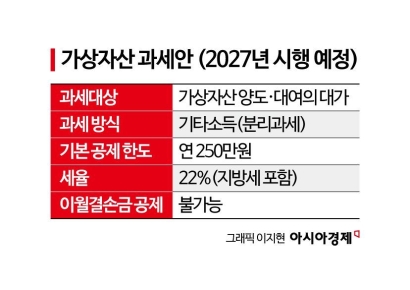 "Stocks Are Not Taxed, but Annual Crypto Gains Over 2.5 Million Won to Be Taxed Next Year... Investors Push Back"
- "Not Jealous of Winning the Lottery"... Entire Village Stunned as 200 Million Won Jackpot of Wild Ginseng Cluster Discovered at Jirisan
- "Rather Than Endure a 1.5 Million KRW Stipend, I'd Rather Earn 500 Million in the U.S." Top Talent from SNU and KAIST Are Leaving [Scientists Are Disappearing] ①
- "How Did an Employee Who Loved Samsung End Up Like This?"... Past Video of Samsung Electronics Union Chairman Resurfaces
- "Even With a 90 Million Won Salary and Bonuses, It Doesn’t Feel Like Much"... A Latecomer Rookie Who Beat 70 to 1 Odds [Scientists Are Disappearing] ③
Lee Boram, CEO of Third Age
© The Asia Business Daily(www.asiae.co.kr). All rights reserved.







