[Slate] Who Is Behind the Death of Crown Prince Sohyeon?
Movie 'Owl' Exploring the Mystery of Crown Prince Sohyeon's Death
Reformer Kidnapped as Hostage, Prepared Western Thought
Joseon History Missed a Chance for Self-Directed Modernization
![[Slate] Who Is Behind the Death of Crown Prince Sohyeon?](http://www.asiae.co.kr/news/img_view.htm?img=2022111513070717186_1668485228.jpg)
※ This article contains many potential spoilers for the movie.
"His entire body was covered in black, and blood flowed from all seven facial orifices. His face was half-covered with a black cloth, but even those nearby could not discern his complexion, making him look like a person who had died from drug poisoning."
This is the condition of Crown Prince Sohyeon’s body as described in the Annals of King Injo. It was conveyed by his relative Lee Se-wan, who participated in the embalming. The black discoloration and blood from the eyes, ears, and nose are far from symptoms of death by malaria. Still, some argue the death was due to illness, attributing the black discoloration to decomposition. If so, how should King Injo’s response be explained? It was customary to interrogate the royal physicians for any fault when a king or crown prince died. However, Injo defended Lee Hyung-ik. Even Song Jun-gil and Chief Inspector Kim Gwang-hyeon intervened, but he remained unmoved. For a father who suddenly lost his son, he was cold and resolute.
The movie Owl assumes King Injo (played by Yoo Hae-jin) as the main culprit behind Crown Prince Sohyeon’s poisoning. Cheon Gyeong-su (Ryu Jun-yeol), who was recognized for his skills by Lee Hyung-ik (Choi Moo-sung) and entered the palace, witnesses the murder scene and finds himself in danger, creating a tense situation. This is not an unreasonable setting. Injo often likened himself to a “bird struck by an arrow.” The arrow refers to the humiliation at Samjeondo, highlighted in director Hwang Dong-hyuk’s film Battle of Namhan Mountain Fortress (2017). After failing to defend the fortress, he knelt and surrendered before Qing Taizong. Many officials and princes were taken hostage, including Crown Prince Sohyeon.
![[Slate] Who Is Behind the Death of Crown Prince Sohyeon?](http://www.asiae.co.kr/news/img_view.htm?img=2022111513071417188_1668485234.jpg)
Crown Prince Sohyeon was appointed crown prince at the age of thirteen in 1625. During the Jeongmyo War, he went down to Jeonju to encourage the troops and later entered Namhan Mountain Fortress to resist during the Byeongja War. Even in Shenyang, where he was taken as a hostage, his spirited nature did not fade. Over eight years, he mastered Western knowledge such as astronomy, geography, mathematics, heliocentrism, navigation, and cannon manufacturing. He wrote a letter to Father Adam Schall, who was like a mentor to him, saying:
"Upon returning to my kingdom, I intend not only to use various technologies in the palace but also to publish them widely among scholars. I am confident this will help transform the desert into a hall of extensive learning."
He was a reformer who sought to awaken Joseon with Western ideas and science instead of the dust-covered pro-Ming ideology. In contrast, King Injo was the opposite. He still felt uneasy about peace with Qing. He severed diplomatic relations with Ming at the Samjeondo Treaty and promised to send troops to support Qing when they attacked Ming. However, as pro-Ming sentiment grew stronger internally, he covertly delayed sending troops to the promised location. As the atmosphere stiffened, the crown prince’s position became ambiguous domestically. Trapped in a negative frame, the father-son relationship grew distant.
![[Slate] Who Is Behind the Death of Crown Prince Sohyeon?](http://www.asiae.co.kr/news/img_view.htm?img=2022111513065817184_1668485218.jpg)
A bird struck by an arrow tends to have old wounds flare up at the sight of an arrow. Still, no father kills his son. But Injo had several other reasons. Lawyer Kim Hyung-jin wrote in his book Injo’s Nation that "Injo’s obsession with power, lack of magnanimity unbefitting his position, suspicion, and anxiety cannot be overlooked," and wrote as follows:
"Before the Byeongja War, Injo vacillated between pro-Ming and pro-Qing factions depending on public opinion. He declared confrontation with Qing without any preparation, but after Samjeondo, he criticized the anti-Qing faction, stripping them of office and exiling them, making them scapegoats for the defeat. For him, maintaining royal authority was more important than national humiliation, devastation, or the suffering of the people, which is why he reacted pathologically to the idea of going to Shenyang. Following the precedent of Goryeo kings during the Yuan dynasty, going to the court was perceived as his abdication and the crown prince’s ascension."
Director Ahn Tae-jin compressed signs of anxiety in the scene where Crown Prince Sohyeon’s return ceremony is skipped. This actually happened. The Ministry of Rites pointed out the lack of a welcoming ceremony during the second return and urged a grand event. "Previously, it was said that ‘since he will not return forever, there is no need for a ceremony,’ but now that the crown prince has returned permanently, it is truly an unprecedented great national celebration." Injo ordered the scale of the event to be reduced. He refused the envoy’s request to meet outside the city walls, citing illness. He met the envoys in the palace courtyard with the help of officials and ordered that the hospitality for the envoys be downgraded.
![[Slate] Who Is Behind the Death of Crown Prince Sohyeon?](http://www.asiae.co.kr/news/img_view.htm?img=2022111513072517191_1668485246.jpg)
Injo’s abnormal behavior continued even after Crown Prince Sohyeon’s death. He hastened the coffin preparation and lowered the rank of the funeral rites. The status of the tomb was downgraded from garden (won) to grave (myo), and the mourning period he was supposed to observe for three years was shortened to eight days. The mourning period for officials, which was supposed to be one year, was also reduced to three months. Even the envoys said, "The ministers did not argue with proper etiquette, so the grand mourning was ultimately conducted improperly, which is very regrettable," criticizing the hasty handling.
Hot Picks Today
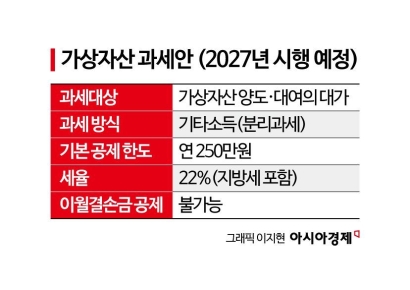 "Stocks Are Not Taxed, but Annual Crypto Gains Over 2.5 Million Won to Be Taxed Next Year... Investors Push Back"
- "Not Jealous of Winning the Lottery"... Entire Village Stunned as 200 Million Won Jackpot of Wild Ginseng Cluster Discovered at Jirisan
- "Rather Than Endure a 1.5 Million KRW Stipend, I'd Rather Earn 500 Million in the U.S." Top Talent from SNU and KAIST Are Leaving [Scientists Are Disappearing] ①
- "How Did an Employee Who Loved Samsung End Up Like This?"... Past Video of Samsung Electronics Union Chairman Resurfaces
- "Even With a 90 Million Won Salary and Bonuses, It Doesn’t Feel Like Much"... A Latecomer Rookie Who Beat 70 to 1 Odds [Scientists Are Disappearing] ③
The sudden death of Crown Prince Sohyeon is undoubtedly a regrettable moment in Joseon history. It was a missed opportunity to achieve self-driven modernization like Japan’s Meiji Restoration. According to various records, despite being a hostage, Crown Prince Sohyeon actively fulfilled his duties. When anti-Qing loyalists like Kim Sang-heon were captured and imprisoned in Bukgwan, he practically took on the role of caretaker. Owl vividly depicts the brutal suppression and extinction of reform possibilities. However, it is not entirely bleak. It provocatively presents a new force to replace his departure, shining even brighter in the pitch-black darkness.
© The Asia Business Daily(www.asiae.co.kr). All rights reserved.







