Daejeon City Announces Next Year's Living Wage at 10,800 Won... 3.2% Increase Compared to This Year

Data on the hourly living wage increase for next year compared to this year in 8 metropolitan cities and provinces nationwide. Provided by Daejeon City
View original image[Asia Economy (Daejeon) Reporter Jeong Il-woong] Daejeon City has decided and announced the living wage hourly rate for next year as 10,800 KRW.
According to the city on the 20th, the living wage hourly rate for next year is set at 340 KRW (3.25%) higher than this year’s rate (10,460 KRW) and 1,180 KRW (12.3%) higher than the minimum wage hourly rate (9,620 KRW).
Initially, the city proposed a plan to raise the living wage standard for next year by 2.2% compared to this year, applying the average real wage growth rate over the past six years.
However, the city explained that the Living Wage Committee recently decided and finalized to increase the living wage for next year by 3.25%, considering factors such as recent inflation.
However, the living wage for next year in the region is lower than those of Seoul, Busan, Incheon, Gwangju, Sejong, Chungnam, and Chungbuk.
In these cities and provinces, the increases are as follows: ▲ Seoul from 10,766 KRW this year to 11,157 KRW next year (3.6%) ▲ Busan from 10,868 KRW to 11,074 KRW (1.9%) ▲ Incheon from 10,670 KRW to 11,123 KRW (4.2%) ▲ Gwangju from 10,920 KRW to 11,930 KRW (9.2%) ▲ Sejong from 10,328 KRW to 10,866 KRW (5.2%) ▲ Chungnam from 10,510 KRW to 10,840 KRW (3.1%) ▲ Chungbuk from 10,326 KRW to 10,010 KRW (6.6%).
While Daejeon’s living wage increase rate is higher than Busan and Chungnam, the actual living wage hourly rate paid is lower than those cities and provinces.
The living wage is a wage policy that supports the stabilization of public sector workers’ lives and enables practical living in various fields such as education, culture, and housing. The city plans to apply the increased living wage from January next year to low-wage workers affiliated with the city hall, public corporations, public institutions, invested and funded institutions, and private consignment agencies.
Earlier, starting this year, the city expanded the scope of application of the living wage to include low-wage workers such as those working in private consignment offices fully funded by the city and those partially supported by national funds.
Through this, the city reduced the proportion of public sector workers earning less than the living wage hourly rate from 13.3% last year to 9.2% this year, a decrease of 4.1 percentage points.
Hot Picks Today
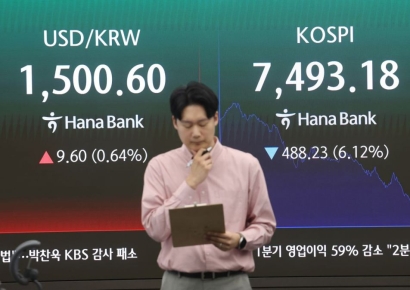 After Topping 8,000 Instead of Hitting 10,000... KOSPI Plunges—When Will It Rebound?
- [Breaking] Court Rules Against Samsung Electronics Union...1 Billion Won per Day Penalty for Exceeding Strike Scope
- "What? It Wasn't a Wristwatch?" This Brand's Stock Soared 15%, Then Plunged After Official Announcement
- [Breaking] Court Rules Against Samsung Electronics Union...1 Billion Won per Day Penalty for Exceeding Strike Scope
- "That? It's Already Stashed" Nightlife Scene Crosses the Line [ChwiYak Nation] ③
Kim Young-bin, Director of the Economic Science Bureau of the city, said, “The living wage is a wage policy that guarantees the practical livelihood of low-wage workers in the public sector, and recently, some workplaces have started using it as a standard for labor costs. We hope that the living wage will expand to the private sector and help partially resolve income inequality among local workers.”
© The Asia Business Daily(www.asiae.co.kr). All rights reserved.