Electric Vehicle Road Surface and Air Taxi Motor Noise "No More Worries"
KAIST Develops Ultra-Light Meta Panel Capable of Simultaneous Noise Blocking for Electric Vehicles and UAM

[Asia Economy Reporter Kim Bong-su] A domestic research team has developed an ultra-lightweight next-generation new material that can completely block motor noise from electric vehicles and Urban Aerial Mobility (UAM), a next-generation transportation mode.
The Korea Advanced Institute of Science and Technology (KAIST) announced on the 18th that Professor Jeon Won-joo's research team from the Department of Mechanical Engineering developed a novel acoustic metamaterial-based ultra-lightweight soundproof meta-panel that can simultaneously block low-frequency road noise and high-frequency motor noise of electric vehicles.
Acoustic metamaterials are artificially designed structures with acoustic effective properties (such as acoustic mass and acoustic stiffness) that do not exist in nature. They feature capabilities difficult to achieve with conventional materials, such as acoustic cloaking, high transmission-high focusing, and perfect soundproofing and absorption.
Electric vehicles, which use electric motors instead of internal combustion engines, no longer produce the engine noise that was considered noisy in traditional internal combustion engine vehicles. However, with the masking effect of engine noise gone, low-frequency road noise may be perceived as louder, or the high-frequency noise from the electric motor replacing the engine may sound clearer and more irritating.
As electric vehicles, a key pillar of future mobility, evolve beyond mere transportation to provide customized services such as rest, leisure, and work activities during travel, securing interior quietness is very important. Especially since electric vehicle road noise and motor noise appear in different frequency bands?low frequency and high frequency respectively?and each band covers a wide frequency range, it is now necessary to develop and apply technology that can effectively block these noises simultaneously.
Currently, commercial electric vehicles use traditional sound absorption and insulation materials such as polyester, thermoplastic rubber, EVA (ethylene vinyl acetate copolymer) sheets, and metal plates to block noise. However, the performance of these traditional materials depends on the material’s inherent thermal/viscous dissipation properties or the mass law (to increase transmission loss by 6 dB, the mass density must be doubled), making weight increase inevitable for high soundproofing performance, which in turn reduces the energy efficiency of electric vehicle batteries.

Therefore, achieving excellent soundproofing performance while simultaneously reducing weight is very important for electric vehicle applications, and overcoming the limitations of existing acoustic materials and laws posed a challenging academic problem.
Professor Jeon Won-joo’s research team overcame the limitations of existing technologies and developed an ultra-lightweight soundproof meta-panel that can block both electric vehicle road noise and motor noise with high soundproofing performance.
The meta-panel developed by the research team is designed to have negative effective acoustic mass in the low-frequency band (road noise) and negative effective acoustic stiffness in the high-frequency band (motor noise). With an extremely light areal density of 1.51 kg/m², it theoretically predicts blocking transmission loss of 16.7 dB (98% energy reduction) or more over a wide frequency range of 100 to 1,750 Hz, and its performance was successfully verified through fabrication and experiments. This represents an ultra-lightweight achievement more than 20 times lighter compared to existing technologies with the same soundproofing performance.
The soundproof meta-panel, composed of a multi-scale lattice structure and a membrane (thin film), has the acoustic characteristic of simultaneously achieving high transmission loss in two separated broadband frequency ranges. When applied to electric vehicles, it is expected to effectively block low-frequency road noise and high-frequency motor noise. In particular, by easily adjusting the geometric parameters of the meta-panel, high soundproofing performance can be achieved in the desired frequency bands, making it suitable not only for electric vehicles but also for various future mobility platforms such as Urban Aerial Mobility (UAM). Additionally, it offers the advantage of easy fabrication from an application perspective.
Hot Picks Today
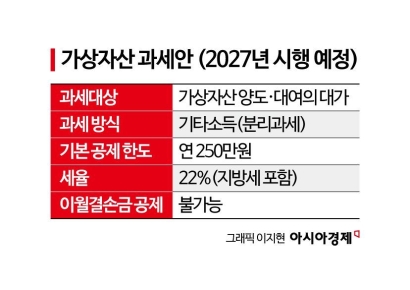 "Stocks Are Not Taxed, but Annual Crypto Gains Over 2.5 Million Won to Be Taxed Next Year... Investors Push Back"
- "Not Jealous of Winning the Lottery"... Entire Village Stunned as 200 Million Won Jackpot of Wild Ginseng Cluster Discovered at Jirisan
- "Jeong Yu-kyung Is a Neighbor"...Itaewon Standalone House with Record 23.2 Billion Won Appraisal Up for Auction [Real Estate AtoZ]
- "How Did an Employee Who Loved Samsung End Up Like This?"... Past Video of Samsung Electronics Union Chairman Resurfaces
- "Even With a 90 Million Won Salary and Bonuses, It Doesn’t Feel Like Much"... A Latecomer Rookie Who Beat 70 to 1 Odds [Scientists Are Disappearing] ③
This research result was published online on August 30 in the top-tier international journal in mechanical engineering, Mechanical Systems and Signal Processing.
© The Asia Business Daily(www.asiae.co.kr). All rights reserved.