[The Editors' Verdict] "An Age of Chaos"... Real Estate Soft Landing Measures Needed
![[The Editors' Verdict] "An Age of Chaos"... Real Estate Soft Landing Measures Needed](http://www.asiae.co.kr/news/img_view.htm?img=2022101711273970873_1665973658.png)
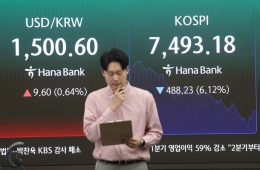
Recently, the asset investment markets such as stocks, cryptocurrencies, and real estate are in utter chaos. The KOSPI index, which had risen to the 3300 level, has repeatedly underperformed and plunged to the 2200 range, while virtual assets like Bitcoin have fallen into a swamp of uncertainty following the Luna-Terra incident. Apartment prices continue to hit new lows daily, making it difficult to predict the bottom.
Especially when looking at the real estate market, this year naturally brings talk of an unprecedented slump. With record-breaking declines occurring everywhere, transactions have come to a complete halt, leading some to describe the situation as passing beyond a cliff into an ice age.
Concerns are growing that the reverse jeonse crisis will fully materialize. Recently, as jeonse prices have dropped significantly, the number of jeonse listings in the Seoul apartment market priced lower than two years ago has increased. When landlords attempt to renew jeonse contracts, they must return the full amount of the deposit increase to tenants. In fact, the jeonse price for an 84㎡ unit in Eonma Apartment in Gangnam-gu, Seoul, has halved compared to two years ago. The perception of a housing price peak and rising interest rates have caused jeonse prices to fall, spreading the reverse jeonse crisis. On the other hand, the risk of ‘empty shell jeonse’?where jeonse prices are higher than sale prices?is increasing, especially in villas and multi-family houses.
Moreover, as the burden of rising loan interest rates drives demand toward half-jeonse or monthly rent, some landlords have even started offering luxury handbags worth over 10 million won as incentives for signing jeonse contracts. In Geomdan New Town, there was even a proposal to give tenants two 50g pure gold bars as gifts.
Due to the impact of interest rate hikes and falling house prices, even the Seoul apartment pre-sale market, once considered ‘invincible,’ is now gripped by the fear of unsold units. However, there are still those dreaming of ‘lottery-like subscription’ opportunities. Recently, in Gwacheon, Gyeonggi Province, a so-called ‘jupjup’ (non-priority subscription) special supply for eight units recorded a competition rate exceeding 1000 to 1. This is because winning could yield a capital gain of up to 1 billion won.
Amidst these bizarre phenomena that belie expectations, some voices warn that a ‘bubble burst’ level collapse in housing prices could occur due to factors like US interest rate hikes. There are also assessments that the current real estate price decline is closer to a downward stabilization. Since housing prices rose sharply during the Moon Jae-in administration, the current situation is seen as the real estate market beginning to return to its proper place. In fact, the argument that the previous government’s excessive intervention and punitive tax policies caused the market to overheat is somewhat convincing. The regulation-heavy real estate policies stimulated anxiety among the housing non-owners, leading to ‘panic buying’ where people invested even their souls to buy homes, accelerating future home purchases. For this reason, there is a considerable view that the recent phenomena reflect the bursting of a bubble caused by the previous government’s mistakes, bringing the market back to normal. This also explains why various measures promised by the current government have yet to be implemented.
However, the problem lies in the response. Land, Infrastructure and Transport Minister Won Hee-ryong said, “The market has a self-purification function to discover (appropriate) prices.” If so, shouldn’t regulations that weaken the market’s ‘self-purification function’ be lifted? These include the ban on interim payment loans for apartments priced over 900 million won (there are almost no homes priced under 900 million won in Seoul), acquisition tax surcharges, comprehensive real estate tax bombs, restrictions on resale, total debt service ratio (DSR) regulations, and bans on mortgage loans exceeding 1.5 billion won in speculative areas and overheated speculation zones. While a downturn is inevitable, it is time to implement measures that induce a soft landing to reduce the shock.
Cho Gang-wook, Head of Construction and Real Estate Department
Hot Picks Today
 "Samsung and Hynix Were Once for the Underachievers"... Hyundai Motor Employee's Lament
- "Sold Everything Fearing Bankruptcy, Then It Soared 3,900 Times: How a Stock Once Feared for Delisting Became an AI Powerhouse"
- Court Partially Grants Samsung Electronics' Injunction to Prohibit Industrial Action... 100 Million Won Penalty Per Day for Violations
- [US-China Summit] China to Purchase $17 Billion in US Agricultural Products Annually...Real Gains for Beijing
- "That? It's Already Stashed" Nightlife Scene Crosses the Line [ChwiYak Nation] ③
© The Asia Business Daily(www.asiae.co.kr). All rights reserved.