Choo Kyung-ho Meets Indian Finance Minister, Requests Support for Korean Companies Entering Digital and Bio Markets
Meeting with Nirmala Sitharaman, Finance Minister, in Washington DC
Requesting cooperation to enable Korean export companies to receive tariff benefits
Choo Kyung-ho also attends the 1st G20 Finance and Agriculture Ministers' Meeting

Deputy Prime Minister and Minister of Economy and Finance Choo Kyung-ho shakes hands with Nirmala Sitharaman, India's Finance Minister, before their meeting at the International Monetary Fund (IMF) headquarters on the 12th (local time). (Photo by Ministry of Economy and Finance)
View original image[Asia Economy Washington DC=Reporter Moon Jewon] Deputy Prime Minister and Minister of Economy and Finance Choo Kyung-ho held a meeting with the Indian Finance Minister and agreed to strengthen cooperation on trade and supply chains going forward. He also requested support to help Korean companies successfully enter the Indian market in fields such as digital and bio.
On the 12th (local time), Deputy Prime Minister Choo met with Indian Finance Minister Nirmala Sitharaman in Washington DC, USA, to discuss ways to enhance economic cooperation including trade and investment, as well as major G20 agendas.
First, Deputy Prime Minister Choo urged active cooperation in trade and supply chains through the ongoing negotiations on the Comprehensive Economic Partnership Agreement (CEPA) and the Indo-Pacific Economic Framework (IPEF), in which both countries are founding members.
In particular, regarding CEPA, he requested that India promptly apply the revised HS codes (product numbers) so that Korean exporters can benefit from tariff advantages.
Deputy Prime Minister Choo requested cooperation to enable Korean companies to actively enter the Indian market in digital, bio, and renewable energy sectors, and Minister Sitharaman responded by welcoming the entry of Korean companies.
Both countries agreed to hold a Korea-India Finance Ministers' Meeting as soon as possible, with the specific time and place to be discussed later. The Korea-India Finance Ministers' Meeting has not been held since it was last convened in Seoul on June 14, 2017.
Deputy Prime Minister Choo proposed that India, the G20 chair country next year, include policy coordination to respond to current financial market uncertainties and strengthening of the global safety net as major G20 agendas for next year.
Minister Sitharaman responded to Deputy Prime Minister Choo's proposal by stating, "We will emphasize next year's agenda on strengthening the role of multilateral development banks in responding to crises such as the pandemic and efforts to complete the 16th IMF quota general review within the deadline."

Deputy Prime Minister and Minister of Economy and Finance Choo Kyung-ho is meeting with Nirmala Sitharaman, India's Minister of Finance, on the 12th (local time) at the International Monetary Fund (IMF) headquarters. (Photo by Ministry of Economy and Finance)
View original imageDeputy Prime Minister Choo participated in the 1st G20 Finance and Agriculture Ministers' Meeting held that day via pre-recorded video and delivered a speech.
Convened at the proposal of the chair country Indonesia, this meeting was an opportunity to share awareness of the recent global food situation and discuss response measures.
The majority of member countries agreed that there is a significant concern about a global food crisis due to supply chain disruptions caused by COVID-19, the Russia-Ukraine war, trade restrictions, and abnormal climate conditions.
Deputy Prime Minister Choo diagnosed that the current crisis is largely due not only to supply chain disruptions, climate, and the pandemic but also to war, and urged the swift end of the war.
He also emphasized that the ongoing assessment work jointly promoted by international organizations such as the World Bank (WB) and the United Nations Food and Agriculture Organization (FAO) should serve as the foundation for future responses.
Hot Picks Today
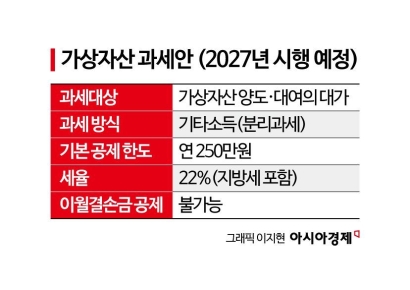 "Stocks Are Not Taxed, but Annual Crypto Gains Over 2.5 Million Won to Be Taxed Next Year... Investors Push Back"
- "Not Jealous of Winning the Lottery"... Entire Village Stunned as 200 Million Won Jackpot of Wild Ginseng Cluster Discovered at Jirisan
- "Rather Than Endure a 1.5 Million KRW Stipend, I'd Rather Earn 500 Million in the U.S." Top Talent from SNU and KAIST Are Leaving [Scientists Are Disappearing] ①
- "How Did an Employee Who Loved Samsung End Up Like This?"... Past Video of Samsung Electronics Union Chairman Resurfaces
- "Even With a 90 Million Won Salary and Bonuses, It Doesn’t Feel Like Much"... A Latecomer Rookie Who Beat 70 to 1 Odds [Scientists Are Disappearing] ③
Washington DC=Reporter Moon Jewon
© The Asia Business Daily(www.asiae.co.kr). All rights reserved.







