Choo Kyung-ho Diagnoses 'Complex Economic Crisis' "Next Year Will Be Harder"

[Asia Economy New York=Special Correspondent Joselgina, New York=Reporter Mun Je-won] "It is a complex economic crisis situation. Especially, I think next year will be more difficult."
On the 11th (local time), Deputy Prime Minister and Minister of Economy and Finance Choo Kyung-ho cited Russia's invasion of Ukraine, the U.S.'s high-intensity monetary tightening, and the Chinese economy as the biggest variables, stating that the current difficult economic situation "is likely to continue until next year."
At a press briefing held in Manhattan, New York, on the same day, Deputy Prime Minister Choo defined the current economic situation as a 'complex economic crisis.' The background for this judgment includes sharply increased global uncertainty, worsening macroeconomic conditions, and structural debt problems.
He said, "The biggest concerns are how the war between Russia and Ukraine will unfold and when the U.S. will stop its high-intensity tightening," adding, "China could act as a major variable for the domestic economy." Considering the characteristics of the Korean economy, which is highly dependent on external factors, he diagnosed that these variables could deliver a direct blow.
There is also concern that the complex economic crisis situation could expand and prolong beyond his expected period of about one year. Regarding the International Monetary Fund (IMF) lowering South Korea's economic growth forecast for next year to 2.0%, down 0.1 percentage points from the previous forecast, he said, "The government had projected 2.5%, but next year will be lower than that."
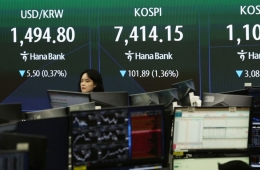
However, Deputy Prime Minister Choo drew a line by saying, "The Korean economy has built a breakwater (to respond to the global economic crisis)," and "It is not a situation where foreign currency funds are immediately lacking or financing is difficult like during a foreign exchange crisis in the short term. There is no need to be excessively anxious." Regarding the soundness of the Korean financial market amid the recent surge in the won-dollar exchange rate, he also responded, "There is no immediate major problem."
On the same day, Deputy Prime Minister Choo held his first 'Korean Economy Briefing' since taking office for senior executives of global investment banks and asset management firms such as Blackstone, Brookfield, and JP Morgan in New York. At this event, he introduced the new government's economic management priorities and emphasized that although concerns about economic slowdown are growing amid the recent global high-interest-rate environment, Korea's economic fundamentals and external soundness remain favorable.
Hot Picks Today
!["Rather Than Endure a 1.5 Million KRW Stipend, I'd Rather Earn 500 Million in the U.S." Top Talent from SNU and KAIST Are Leaving [Scientists Are Disappearing] ①](https://cwcontent.asiae.co.kr/asiaresize/93/2026051414165763158_1778735817.jpg) "Rather Than Endure a 1.5 Million KRW Stipend, I'd Rather Earn 500 Million in the U.S." Top Talent from SNU and KAIST Are Leaving [Scientists Are Disappearing] ①
"Rather Than Endure a 1.5 Million KRW Stipend, I'd Rather Earn 500 Million in the U.S." Top Talent from SNU and KAIST Are Leaving [Scientists Are Disappearing] ①
- [Breaking] Park Sukeun, Central Labor Relations Commission Chair: "Some Gaps Narrowed Between Samsung Electronics Labor and Management"
- "If That's the Case, Why Not Just Buy Stocks?" ETFs in Name Only, Now 'Semiconductor-Heavy' and a Playground for Short-Term Traders
- "I Take Full Responsibility"... Chung Yongjin Issues Direct Apology for Starbucks 'May 18 Controversy' (Update)
- "No Cure Available, Spread Accelerates... Already 105 Dead, American Infected"
He stated, "To maintain the current account surplus trend, we will continue to seek structural improvement measures such as strengthening export competitiveness and diversifying import sources to reduce dependence on China," and added, "We will enhance the attractiveness of the domestic capital market through measures such as advancing the foreign exchange market, promoting membership in the World Government Bond Index (WGBI) by exempting transfer and interest income taxes on foreign investment in government bonds." He also confirmed the principle of actively implementing market stabilization measures against excessive concentration related to the exchange rate.
© The Asia Business Daily(www.asiae.co.kr). All rights reserved.