Daily Use Electronics... What If They Increase Long-Term Happiness?

Relationship among technological products, diversity of emotions, and happiness.
View original image[Asia Economy Yeongnam Reporting Headquarters Reporter Hwang Duyul] A study has found that the design of products and services incorporating ICT technologies such as mobile phones, social media, home appliances, and video streaming services affects our sense of happiness.
Professor Kim Chajung of the Department of Design at UNIST recently published research stating that "the use experience of products and services applied with ICT technology can evoke various positive emotions and enhance users' long-term happiness."
The study analyzed experience sampling results collected from 116 individuals who had used 580 ICT technology-applied products and services over a long period.
Professor Kim classified the criteria for positive emotions induced while using ICT technology-applied products or services into object function, instrumental function, and enabler function.
The "Object function" refers to sensory experiences such as the beauty provided by the product, while the "Instrumental function" means instrumental experiences aimed at achieving a certain purpose, such as the product's functionality and usability.
Lastly, the "Enabler function" means that using the product operates in establishing self-identity or social relationships.
Participants in the experience sampling survey reported their emotions three times a day for a week regarding ICT technology-applied products or services they had used for a long time.
The research team analyzed the reported data to examine the difference between momentary happiness and long-term happiness.
As a result, immediate and momentary happiness appeared relatively similarly across object function, instrumental function, and enabler function.
In contrast, long-term happiness increased more when products and services were used as an "enabler."
Additionally, happiness levels were higher when experiencing various positive emotions (positive emodiversity) obtained from the products.
Professor Kim Chajung said, "Until now, the focus of product or service design has been on beauty or instrumental roles, but even if these two are fulfilled, it is difficult to contribute to long-term happiness. When products and services fulfill the role of an enabler, they allow users to experience diverse positive emotions, which leads to long-term happiness."
Professor Kim added, "I hope that the design of products and services applied with advanced technologies such as AI will be designed beyond 'aesthetics' and 'instrumentality' to function as 'enablers.' When products and services with such designs appear, even if they are AI robots, our long-term happiness will increase."
Hot Picks Today
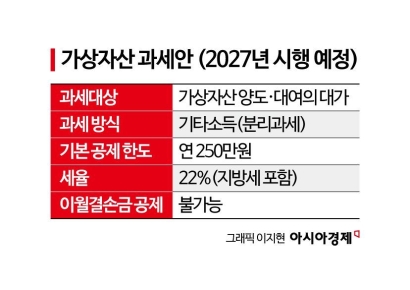 "Stocks Are Not Taxed, but Annual Crypto Gains Over 2.5 Million Won to Be Taxed Next Year... Investors Push Back"
- "Not Jealous of Winning the Lottery"... Entire Village Stunned as 200 Million Won Jackpot of Wild Ginseng Cluster Discovered at Jirisan
- "Rather Than Endure a 1.5 Million KRW Stipend, I'd Rather Earn 500 Million in the U.S." Top Talent from SNU and KAIST Are Leaving [Scientists Are Disappearing] ①
- "How Did an Employee Who Loved Samsung End Up Like This?"... Past Video of Samsung Electronics Union Chairman Resurfaces
- "Even With a 90 Million Won Salary and Bonuses, It Doesn’t Feel Like Much"... A Latecomer Rookie Who Beat 70 to 1 Odds [Scientists Are Disappearing] ③
The study was conducted jointly with Professor Yoon Jungkyun's team at Cornell University in the United States and was supported by the Korea Research Foundation's general joint research project. The research results were published in the International Journal of Human-Computer Interaction.

© The Asia Business Daily(www.asiae.co.kr). All rights reserved.