[Interview] Kim Hyun-ki, Chairperson of Seoul Metropolitan Council: "Need to Provide Basis for Taxi Fare Increase"
Kim Hyun-ki, Chairman of the Seoul Metropolitan Council, Elected as President of the Association of Chairpersons of City and Provincial Councils of Korea, Pledges to Strengthen the Role of Local Councils Representing Citizens... "Regarding the Seoul Taxi Fare Increase, the Expectation That the Shortage of Taxis Will Increase Due to Fare Hikes Is Mere Speculation; Persuasive Research, Analysis, and Simulation Data Should Have Been Presented First"
![[Interview] Kim Hyun-ki, Chairperson of Seoul Metropolitan Council: "Need to Provide Basis for Taxi Fare Increase"](http://www.asiae.co.kr/news/img_view.htm?img=2022092911223151590_1664418152.jpg)
[Asia Economy Reporter Park Jong-il] “The Chairperson of the Council of Chairpersons of City and Provincial Councils of the Republic of Korea holds a position that must address long-standing tasks such as realizing substantial local autonomy and strengthening the role of local councils. With the trust placed in me, I will leverage my experience and passion from four terms to build the Council of Chairpersons of City and Provincial Councils of the Republic of Korea as a hub for communication between the central government and cooperation among regions.”
Kim Hyun-ki, Chairperson of the Seoul Metropolitan Council (photo), who was elected as Chairperson of the Council of Chairpersons of City and Provincial Councils of the Republic of Korea, shared these thoughts in an interview with this publication.
Chairperson Kim first stated that he will devote himself to strengthening the role of local councils representing citizens. He said, “I will continue to push for central legislation regarding the council’s budget authority, organizational authority, and audit authority, which are still granted to the executive branch.”
He also promised, “Especially for quality legislation that will bring changes to citizens’ lives, I will prioritize the implementation of the ‘1:1 assistant (policy support personnel)’ system.”
As Chairperson of the Seoul Metropolitan Council, he said he will first create a ‘field-oriented council’ and second, achieve the ‘normalization of abnormalities’ in Seoul. Chairperson Kim stated, “We will correct the erroneous ordinances and wasteful budgets, including the private organization subsidy budget that reached 1 trillion won, which were jointly caused by the executive branch and the council.”
Along with this, regarding the recent taxi fare increase in Seoul, he attracted attention by stating that the expectation that the taxi shortage will worsen due to the fare increase is merely an unfounded speculation, and that research analysis results and simulations to persuade citizens should have been presented first as evidence.
Below is a Q&A with Chairperson Kim.
1. You were elected as Chairperson of the Council of Chairpersons of City and Provincial Councils of the Republic of Korea following your role as Chairperson of the Seoul Metropolitan Council. Please share your thoughts.
Thinking of the citizens who expect change and innovation, I feel a truly heavy responsibility.
2. As Chairperson of the Council of Chairpersons of City and Provincial Councils of the Republic of Korea, what aspirations do you have for the development of local autonomy and related matters?
I will devote myself to strengthening the role of local councils representing citizens. I will continue to push for central legislation regarding the council’s budget authority, organizational authority, and audit authority, which are still granted to the executive branch.
I will actively pursue not only the revision of the Local Autonomy Act but also the enactment of the Basic Act on Local Councils.
Especially, to create quality legislation that will bring changes to citizens’ lives, I will prioritize the implementation of the ‘1:1 assistant (policy support personnel)’ system. According to the revised Local Autonomy Act, this year one policy support staff will be assigned per four council members, and from next year one per two members. Policy support staff are means for local council members to effectively perform their legislative activities. While a member of the National Assembly, who deliberates on 604 trillion won, is supported by nine assistants, a city council member, who deliberates on about 65 trillion won, currently receives no assistants.
Therefore, I will increase communication with the National Assembly and the Ministry of the Interior and Safety. The council will take the lead in legislative work at the national level to establish a ‘sound foundation for local council operations.’
3. As Chairperson of the Seoul Metropolitan Council for the first half of the term, how do you plan to lead the council’s activities over the next two years?
First, I will create a ‘field-oriented council.’ ‘Into the field, close to the citizens’ has been the motto of my long legislative career. As a field-oriented person, I will foster a council atmosphere that frequently visits the field.
Second, I will achieve the ‘normalization of abnormalities’ in Seoul. We will correct erroneous ordinances and wasteful budgets, including the private organization subsidy budget that reached 1 trillion won, which were jointly caused by the executive branch and the council. I also believe reform of educational administration, which has caused the public education crisis of ‘declining basic academic skills,’ is necessary.
Third, through ‘council reform,’ I will restore the functions and roles of the city council. Over the past 12 years, the Seoul Metropolitan Council has been complicit in Seoul’s regression. Due to insufficient scrutiny, it simply passed the executive branch’s budgets and ordinances. To become a ‘trusted council,’ I will faithfully perform the oversight and check functions.
4. The recent controversial Seoul taxi fare increase proposal passed the Transportation Committee of the Seoul Metropolitan Council yesterday. There are concerns that it will increase the burden on citizens. What are your thoughts?
On the 22nd, the taxi fare adjustment proposal passed the Transportation Committee. It is now pending approval by the plenary session and the Price Countermeasure Deliberation Committee. The Seoul taxi fare increase proposal lacks persuasive grounds. The expectation that the taxi shortage will worsen due to the fare increase is merely an unfounded speculation. I believe research analysis results and simulations to persuade citizens should have been presented first as evidence.
5. You emphasize reform of Seoul’s public education. Please share your views on the current state of Seoul’s education and the direction you envision.
The current problems in Seoul’s public education are twofold: one is ‘ideological bias in education,’ and the other is ‘declining basic academic skills.’
According to Ministry of Education data, the basic academic skill levels nationwide and in Seoul can be seen. In 2016, among the rates of basic academic skill deficiency compared across all regions, Seoul was the highest at 6%. Although subsequent data have not been released, it is presumed that Seoul’s level of basic academic skill deficiency has worsened.
Hot Picks Today
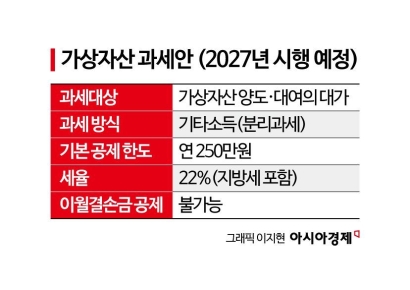 "Stocks Are Not Taxed, but Annual Crypto Gains Over 2.5 Million Won to Be Taxed Next Year... Investors Push Back"
- "Not Jealous of Winning the Lottery"... Entire Village Stunned as 200 Million Won Jackpot of Wild Ginseng Cluster Discovered at Jirisan
- "Rather Than Endure a 1.5 Million KRW Stipend, I'd Rather Earn 500 Million in the U.S." Top Talent from SNU and KAIST Are Leaving [Scientists Are Disappearing] ①
- "How Did an Employee Who Loved Samsung End Up Like This?"... Past Video of Samsung Electronics Union Chairman Resurfaces
- "Even With a 90 Million Won Salary and Bonuses, It Doesn’t Feel Like Much"... A Latecomer Rookie Who Beat 70 to 1 Odds [Scientists Are Disappearing] ③
The city council is proposing alternatives with the conviction that ‘education is a human right.’ Shortly after the council’s inauguration, the ‘Special Committee for Improving Academic Achievement in Seoul Education’ was launched to review Seoul’s education policies comprehensively and prepare policies to guarantee basic academic skills. In particular, a budget of 3 billion won was allocated to expand academic diagnostic assessments.
© The Asia Business Daily(www.asiae.co.kr). All rights reserved.