"Taking Banned Drugs but Donating Blood?" ... Distribution of Ineligible Blood
3,239 Blood Donations After 5 Years 8 Months of Acne Medication Use
294 Units Produced and Released as Blood Component Products
Assemblyman Jo Myung-hee, "Accurate Sharing of Blood Information Needed"
![[Image source=Yonhap News]](http://www.asiae.co.kr/news/img_view.htm?img=2021092819524445713_1632826364.jpg)
It has been revealed that blood from individuals who have taken blood donation-prohibited drugs that can cause fetal deformities is being distributed without proper safeguards. Although a system is in place where medical institutions notify the Korean Red Cross when prescribing blood donation-prohibited drugs to prevent blood-related accidents, delays in registering this information can result in failure to properly identify such cases.
According to data submitted by the Korean Red Cross to Jo Myung-hee, a member of the National Assembly’s Health and Welfare Committee from the People Power Party, from 2017 to August of this year, there were a total of 3,239 blood donations from individuals who had taken blood donation-prohibited drugs. The plasma, red blood cells, and platelets produced from this blood amounted to a total of 7,900 units, of which 294 units were released for transfusion.
Among the blood donations involving prohibited drugs, acne treatments accounted for the largest number with 1,838 cases, followed by benign prostatic hyperplasia treatments with 1,381 cases, making up the majority.
The Red Cross designates drugs that can cause deformities if taken by pregnant women as blood donation-prohibited drugs and prohibits individuals who have taken these drugs from donating blood for a certain period.
The blood donation-prohibited drugs include △ psoriasis treatments (Acitretin) △ acne treatments (Accu, Rostan, Isotina) △ benign prostatic hyperplasia treatments (Dutasteride, Proscar, Finasteride) △ male pattern baldness treatments (Finasteride) △ severe eczema treatments (Alitok, Alitretinoin) △ anti-malignant tumor treatments (Thalidomide, Bismodegib), among others.
The Red Cross confirms whether donors have taken blood donation-prohibited drugs through a questionnaire before blood collection and, after collection, receives data on individuals prescribed such drugs from the Health Insurance Review and Assessment Service (HIRA) to ultimately filter out problematic blood.
HIRA and the Ministry of National Defense send prescription information for blood donation-prohibited drugs daily at designated times, and the Red Cross immediately registers this information in the Blood Information Management System (BIMS) to apply it during donor screening, blood collection, and blood release. However, the Red Cross explains that if some medical institutions delay registering prescription information or fail to perform Drug Utilization Review (DUR) checks, delayed registration of blood donation-prohibited drug prescriptions can lead to the release of unsuitable blood products. There are also cases where donors inform the authorities of drug use after donating blood.
Accordingly, there are calls to reduce the time lag in registering prescription information and to improve the system so that the public can receive transfusions with confidence. Representative Jo stated, "Despite the establishment of a blood accident prevention system, the fact that dozens of units of blood that could cause fetal deformities are released every year is a very serious issue," emphasizing, "The blood information, which is directly linked to the lives of the people, must be accurately shared in real time by improving the system."
Hot Picks Today
 "I Wish I Could Get Some Sleep" Frozen Meals an...
- The Quoted 800,000 Won, the Bill Was 5 Million... Bereaved Families of 'No-Funer...
- Samsung Electronics Faces Production Disruption: Foundry Output Plunges 58% on D...
- "You Can Only Have This in Korea": Which National Museum Cafe Menu Is Captivatin...
- "Never Hike Alone as a Woman" "Even Two Are at Risk"... Growing Fear of Crime on...

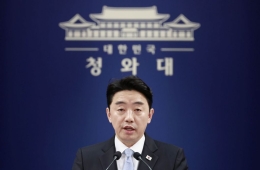
National Assembly Health and Welfare Committee Member of the People Power Party, Jo Myeong-hee
View original image© The Asia Business Daily(www.asiae.co.kr). All rights reserved.