Corporate Loans Increase for 8 Consecutive Months This Year... Up by 52 Trillion Won
72% of Total Corporate Loan Increase is from Small and Medium Enterprises
![[Image source=Yonhap News]](http://www.asiae.co.kr/news/img_view.htm?img=2022082311134295793_1661220823.jpg)
[Asia Economy Reporter Buaeri] Corporate loans at the five major commercial banks have increased for eight consecutive months this year, rising by nearly 52 trillion KRW. This contrasts with household loans, which have decreased by more than 12 trillion KRW during the same period. Banks are also focusing more on corporate lending.
As of the end of August, the outstanding corporate loans at the five major commercial banks (KB Kookmin, Shinhan, Hana, Woori, NH Nonghyup) amounted to 687.4271 trillion KRW, an increase of 5.7595 trillion KRW compared to the previous month, and 51.5393 trillion KRW higher than at the end of last year.
Looking at loans by type, large corporate loans stood at 96.7491 trillion KRW, up 2.1128 trillion KRW from the previous month and 14.3398 trillion KRW higher than at the end of last year.
Notably, loans to small and medium-sized enterprises (SMEs), including self-employed and small business owners, increased significantly. SME loan balances reached 590.678 trillion KRW, rising by 3.6468 trillion KRW in one month. Compared to the end of last year, this represents an expansion of 37.1995 trillion KRW. Among the total corporate loan increase (51.5392 trillion KRW), SME loans (including individual business owners) accounted for about 72%.
In contrast, household loans have decreased for eight consecutive months. At the end of last month, household loan balances at the five major commercial banks stood at 696.4509 trillion KRW, down 9.858 billion KRW from the previous month and 12.602 trillion KRW less than at the end of last year. A banking industry official said, "As interest rates rise daily, more customers are also making early repayments, which is likely reflected in these figures."
For this reason, banks are concentrating more on corporate loans. Unlike household loans, which are subject to total volume regulations, loan-to-value (LTV) ratios, and debt service ratio (DSR) regulations, corporate credit is relatively free from government regulations. Kim Young-il, Head of Management Strategy at Hana Bank, mentioned during the Q2 earnings conference call, "We will try to increase household loans through real demand-driven jeonse (lease deposit) loans, but due to increased interest burdens, growth will be limited. We have planned our lending strategy to focus on corporate loans in the second half of the year."
However, there are concerns that if interest rates rise further or financial support ends, defaults or delinquencies could occur among the rapidly increased corporate loans, threatening asset quality. In fact, corporate interest burdens are also increasing. According to the "Weighted Average Interest Rate of Financial Institutions" statistics released by the Bank of Korea on the 30th of last month, the corporate loan interest rate (as of July) was 4.12% per annum, the highest in 7 years and 9 months since October 2014 (4.14%). In particular, SME loan interest rates have risen more than those for large corporations. As of July, the interest rate for large corporate loans was 3.84%, and for SME loans, it was 4.36%, increasing by 0.25 percentage points and 0.3 percentage points respectively from the previous month.
Hot Picks Today
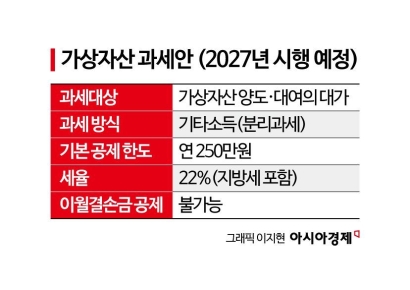 "Stocks Are Not Taxed, but Annual Crypto Gains Over 2.5 Million Won to Be Taxed Next Year... Investors Push Back"
- "Not Jealous of Winning the Lottery"... Entire Village Stunned as 200 Million Won Jackpot of Wild Ginseng Cluster Discovered at Jirisan
- "Even With a 90 Million Won Salary and Bonuses, It Doesn’t Feel Like Much"... A Latecomer Rookie Who Beat 70 to 1 Odds [Scientists Are Disappearing] ③
- Supreme Court Orders NH Investment to Pay 7.5 Billion Won to Ottogi... 'Optimus Fund Mis-selling' Confirmed
- "How Did an Employee Who Loved Samsung End Up Like This?"... Past Video of Samsung Electronics Union Chairman Resurfaces
Kim Junsu, a researcher at Kiwoom Securities, stated, "With the base interest rate hikes and performance slowdowns due to rising raw material prices, corporate repayment capacity is deteriorating while loans from financial institutions are increasing. Proactive management of financial institutions' soundness and preemptive responses to delinquencies will become necessary."
© The Asia Business Daily(www.asiae.co.kr). All rights reserved.







