The New Drug Development Market is Growing... South Korea Reaches Only 70% of US Technology Level
South Korea Has Zero FDA-Approved First-in-Class Innovative Drugs in 5 Years...Lacks Competitiveness Compared to Major Countries
FKCCI: "Utilizing Medical Big Data Can Save Time and Costs in Discovering Core New Drug Candidates"

[Asia Economy Reporter Kim Pyeonghwa] A survey revealed that South Korea's pharmaceutical industry competitiveness is lacking compared to major countries. The gap in blockbuster new drug development technology capable of generating annual revenues exceeding $1 billion (?1.3445 trillion) is significant, resulting in no recent approvals for new drug development.
To improve this situation, experts advise integrating artificial intelligence (AI) and big data technologies with high-quality medical data. Securing customized talent is also a challenge. It is explained that establishing legal systems and policies by the government is essential for this purpose.
Number of World’s First New Drug Development Approvals: US 66, Japan 6, South Korea 0
On the 1st, the Federation of Korean Industries announced that a comparison of new drug development status between South Korea and major countries showed that South Korea’s new drug development technology is insufficient.
The pharmaceutical industry has been a rapidly growing market since the COVID-19 pandemic. In five years, the global pharmaceutical market is expected to reach $1.8 trillion (?2,420.1 trillion). New drug development, a key sector of the pharmaceutical industry, is led by Western countries such as the US and Europe. According to the US Food and Drug Administration (FDA), over the past five years, the US received 66, and Europe 25 approvals for first-in-class (innovative new drugs that cure diseases with no existing treatments) new drugs, accounting for 90% of the total 102 new drug approvals. Among Asian countries, Japan received 6, and China (including Hong Kong and Taiwan) 2 first-in-class new drug approvals. South Korea had no approvals for new drug development.
South Korea is evaluated to have a lower level of new drug development technology compared to major competitors. The domestic new drug development technology level is about 70% of the leading US level, lagging by approximately six years. China, which started investing in new drug development in 2015, has grown to about 75% of the US level, possessing higher new drug development technology than South Korea.

Japan Develops New Drugs Using Medical Data... US Supports AI-Based New Drug Development
Among Asian countries, Japan has a high level of new drug development and competitiveness in basic science fields. As a traditional powerhouse in basic sciences, Japan has produced five Nobel laureates in physiological medicine, a foundation of the pharmaceutical industry. The Japanese government enacted the Next-Generation Medical Infrastructure Act to build medical big data and promote new drug development using medical data, enhancing competitiveness. In 2018, Japan formed an industry-academia-research consortium worth ?110 billion to develop AI and big data-based new drugs.
China actively supports policies to attract multinational pharmaceutical companies locally. If a joint venture established by a multinational pharmaceutical company in China has over 51% Chinese ownership, China fully opens its medical data for new drug development. Collecting data from over 1 billion citizens allows the discovery of new drug candidates, making this open policy a major factor in attracting multinational pharmaceutical companies to China.
The US, the world’s largest pharmaceutical and biotech powerhouse, focuses on maintaining its leading position through national-level AI new drug development support. During COVID-19 vaccine development, the US used AI and big data to reduce the average development period from 10.7 years to under one year. This AI-based vaccine development experience is expected to aid new drug development, which follows a similar process. Previously, the US started the AI new drug development project (ATOM) in 2017, led by the National Institutes of Health (NIH) with participation from pharmaceutical companies. On the private sector side, Google has been conducting an AI new drug development project with major pharmaceutical company Sanofi since September 2019.
Europe hosts many pharmaceutical industry powerhouses. The sales of a single representative multinational pharmaceutical company headquartered in Europe exceed the total sales of South Korea’s top 100 pharmaceutical companies. Notably, Roche, a pharmaceutical company in Switzerland, a pharmaceutical stronghold, recorded sales of $69 billion (?92.7705 trillion) in 2021, 2.7 times the total sales of South Korea’s top 100 pharmaceutical companies ($25.4 billion, ?34.1503 trillion). This is thanks to European pharmaceutical strongholds fostering the industry through government policies. Switzerland designated the Basel region as a pharmaceutical-biotech cluster, providing incentives to pharmaceutical companies located there. Belgium encourages talent development by exempting up to 80% of withholding tax on R&D personnel and patent taxes.

South Korea Needs to Secure Convergent Talent for Medical Data Integrating AI and Big Data Technologies
South Korea’s major advantage compared to other countries is that 50 million citizens are enrolled in national health insurance. This allows new drug development based on national claims data.
According to the Ministry of Food and Drug Safety, developing a single new drug requires a budget of about ?1 to 2 trillion and takes an average of 10 to 15 years. Using AI can reduce development costs to about ?600 billion and shorten the development period to an average of 3 to 4 years. AI can quickly identify new drug candidates by reviewing over one million papers at once. The government passed the Data 3 Act in early 2020, establishing legal grounds for pseudonymization of personal information. In June, it announced plans to promote a clinical data network project through the Health and Medical Data Policy Deliberation Committee.
The Federation of Korean Industries emphasized that to enhance South Korea’s pharmaceutical industry competitiveness, integrating AI and big data technologies with high-quality medical data is essential to drastically reduce new drug development time and costs. For this, securing convergent experts with AI and big data skills and a deep understanding of the pharmaceutical industry is important. They also explained that securing sufficient medical review personnel, like the US FDA, could help shorten the scientific and regulatory advisory support and new drug review and approval periods during the new drug development process.
Hot Picks Today
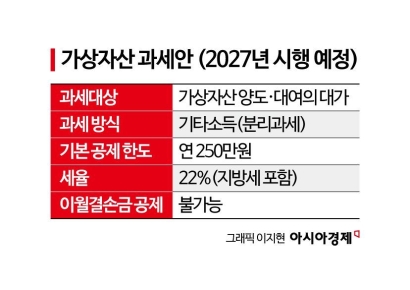 "Stocks Are Not Taxed, but Annual Crypto Gains Over 2.5 Million Won to Be Taxed Next Year... Investors Push Back"
- "Not Jealous of Winning the Lottery"... Entire Village Stunned as 200 Million Won Jackpot of Wild Ginseng Cluster Discovered at Jirisan
- "Even With a 90 Million Won Salary and Bonuses, It Doesn’t Feel Like Much"... A Latecomer Rookie Who Beat 70 to 1 Odds [Scientists Are Disappearing] ③
- "Rather Than Endure a 1.5 Million KRW Stipend, I'd Rather Earn 500 Million in the U.S." Top Talent from SNU and KAIST Are Leaving [Scientists Are Disappearing] ①
- "How Did an Employee Who Loved Samsung End Up Like This?"... Past Video of Samsung Electronics Union Chairman Resurfaces
Kim Bongman, head of the Federation of Korean Industries’ International Headquarters, said, “For South Korea to succeed in new drug development, it is necessary to establish legal systems to create an environment that smoothly utilizes our greatest strength, high-quality medical data,” adding, “Government-level customized policy support is also needed to secure big data and medical convergent experts.”
© The Asia Business Daily(www.asiae.co.kr). All rights reserved.







