Rapidly Changing Returns... The Chaos of Crude Oil ETFs
Crude Oil Inverse ETF Returns Turn Negative Last Week
WTI Plummets 5.5% in One Day
"US Crude Oil Inventories More Crucial Than Production Cuts"

On the 4th, as international oil prices fall and fuel tax cuts are further implemented, citizens are refueling their vehicles at a gas station in downtown Seoul. Photo by Moon Honam munonam@
View original image[Asia Economy Reporter Hwang Yoon-joo] Amid extreme fluctuations in international oil prices, the returns of crude oil exchange-traded funds (ETFs) are also experiencing a rollercoaster ride. Considering the increasingly difficult environment for predicting international oil prices and roll-over costs, it seems unlikely that significant profits can be made from crude oil ETFs in the near term.
According to the Korea Exchange on the 31st, the recent one-month returns of KODEX WTI Crude Oil Futures (H) and TIGER Crude Oil Futures Enhanced (H) were 0.85% and 1.55%, respectively. Both ETFs, which bet on rising international oil prices, recorded negative returns but turned positive starting from the 25th.
On the other hand, during the same period, KODEX WTI Crude Oil Futures Inverse (H) and TIGER Crude Oil Futures Inverse (H), which bet on falling oil prices, recorded returns of -2.51% and -1.81%, respectively.
The sharp changes in returns within a month are due to extreme volatility in international oil prices. At the beginning of this year, international oil prices surged sharply amid concerns of an energy crisis caused by the Russia-Ukraine war. However, as expectations for reduced oil demand due to an economic downturn increased recently, international oil prices slightly declined. Consequently, the returns of inverse crude oil ETFs turned positive but reversed again in less than a month.
The biggest issue is whether the Organization of the Petroleum Exporting Countries (OPEC) will cut production. Earlier, the Saudi Arabian Energy Minister hinted at the possibility of production cuts, pushing international oil prices above $100 per barrel.
However, on the 30th (local time), reports emerged that OPEC+ had not yet discussed the possibility of production cuts, causing the October West Texas Intermediate (WTI) crude oil price to plunge 5.5%. The outlooks for production cuts (supply) and demand reduction due to economic sluggishness are in a tense balance, expanding the volatility of international oil prices. As a result, the returns of index-tracking and inverse ETFs are also fluctuating sharply.
Crude oil inventory and demand forecasts are also expected to have an impact. The U.S. Energy Information Administration (EIA) is scheduled to release weekly U.S. crude oil inventory data on the 31st (local time). Inventory levels can help gauge consumption capacity (demand).
Hot Picks Today
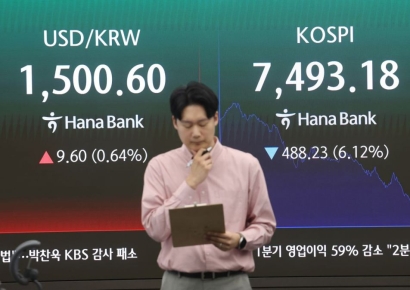 After Topping 8,000 Instead of Hitting 10,000... KOSPI Plunges—When Will It Rebound?
- "Samsung and Hynix Were Once for the Underachievers"... Hyundai Motor Employee's Lament
- [Breaking] Court Rules Against Samsung Electronics Union...1 Billion Won per Day Penalty for Exceeding Strike Scope
- Six Economic Organizations Urge Withdrawal of Samsung Electronics Strike Plan...Warn of National Loss of Opportunity
- "That? It's Already Stashed" Nightlife Scene Crosses the Line [ChwiYak Nation] ③
Shim Soo-bin, a researcher at Kiwoom Securities, stated, "Compared to other commodities, the decline in international oil prices may be limited," adding, "With Saudi Arabia mentioning the possibility of production cuts and some Middle Eastern oil-producing countries showing agreement, the likelihood of supply reduction has increased." He further evaluated, "Rather, oil prices are more likely to move according to the U.S. weekly crude oil inventory data released later in the week."
© The Asia Business Daily(www.asiae.co.kr). All rights reserved.







