[MZ Column] The 'Age of Despair' Among Youths That Can No Longer Be Overlooked
![[MZ Column] The 'Age of Despair' Among Youths That Can No Longer Be Overlooked](http://www.asiae.co.kr/news/img_view.htm?img=2022070106561533632_1656626175.png)
[Asia Economy] I feel that the atmosphere among the youth has changed drastically over the past decade. I attended university about ten years ago, and back then, my generation was called the ‘880,000 won generation.’ It was also referred to as the ‘3-po generation,’ meaning they gave up on dating, marriage, and childbirth. However, unlike the societal labels, young people had a kind of spirit and humor.
For example, they formed groups like the ‘part-time job solidarity’ or ‘alternative communities’ to fight against the world. Or they didn’t care much about the future and decided to live by YOLO, focusing on travel and consumption. Additionally, the trend of dismissing ‘noooreok’ (excessive effort) and instead enjoying ‘sohwakhaeng’ (small but certain happiness) became very popular. Looking back, all these phenomena contained a kind of humor. Despair was somewhat a matter of the future, and they believed there were ways to avoid that despair in their own ways.
However, recently, these trends seem to have changed drastically. Instead of YOLO, the phrase ‘YOLO jjatda gollo ganda’ (chasing YOLO leads to ruin) resonates more. There is a growing caution that indulging in daily consumption and pleasure will lead to a more desperate reality. The trend of belittling the word ‘effort’ as ‘noooreok’ or ‘effort-chung’ (effort fanatic) has disappeared, and now there is a spreading message to live by working harder.
About ten years ago, the despair of the future had not fully arrived, but now it seems to have firmly come. Over the past decade, marriage and birth rates have sharply declined, confirming the reality of the ‘3-po’ (giving up dating, marriage, and childbirth). Young people no longer face the future with humor but feel a threat to survival in the present. The hope of owning a home has vanished due to rapidly rising housing prices, and inflation is making even daily ‘sohwakhaeng’ difficult.
At the same time, a craze for financial investment and self-development has started again. There was a time when ‘self-development’ was widely rejected among young people. The trend of refusing to ‘make an effort’ was part of that.
However, recently, YouTube channels and books related to the economy and self-development have become very popular again. Everyone is diving into financial investment, side jobs, and startups, starting from ‘Miracle Morning’ to ‘Burnout Night,’ working tirelessly day and night. Trends like ‘YOLO’ and ‘sohwakhaeng’ have gradually disappeared.
This year, South Korea’s birth rate in the second quarter reportedly recorded in the 0.7 range. When I entered university in 2006, the birth rate was in the 1.1 range, and even then, it was a hot topic as the ‘world’s lowest’ birth rate. Japan, which we commonly know as an ‘aging’ society, currently records about 1.3, so this is considered an ‘emergency.’ South Korea may be a society where despair has firmly arrived, beyond emergency and crisis.
The whole society must carefully listen to the despair and hopes of the youth. After all, the current youth will eventually have to bear the burden of our society. But by then, the population structure may collapse, the elderly population will increase rapidly, and the youth will be depleted, causing the entire society’s momentum to be lost, leading to an irreversible era.
Before such an era fully arrives, we must hurry to create a society where we can talk about hope for the youth. The era when self-mockery was humor is coming to an end. What remains may only be an increasingly inescapable reality of despair.
Hot Picks Today
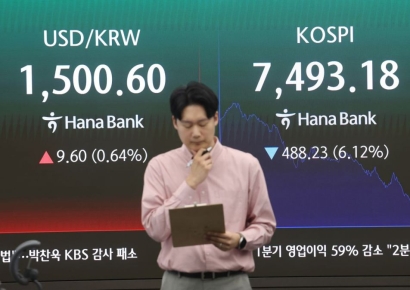 After Topping 8,000 Instead of Hitting 10,000... KOSPI Plunges—When Will It Rebound?
- "Samsung and Hynix Were Once for the Underachievers"... Hyundai Motor Employee's Lament
- [Breaking] Court Rules Against Samsung Electronics Union...1 Billion Won per Day Penalty for Exceeding Strike Scope
- Six Economic Organizations Urge Withdrawal of Samsung Electronics Strike Plan...Warn of National Loss of Opportunity
- "That? It's Already Stashed" Nightlife Scene Crosses the Line [ChwiYak Nation] ③
Jung Ji-woo, Cultural Critic and Writer
© The Asia Business Daily(www.asiae.co.kr). All rights reserved.







