Concerns Rise Over Another Increase in Real-Expense Insurance Premiums Amid the Phase-Out of Moon Care

[Asia Economy Reporter Changhwan Lee] The government has begun the process of dismantling the previous administration's health insurance coverage expansion policy, known as 'Moon Jae-in Care,' to prevent wasteful spending of health insurance funds. Concerns are rising that if the coverage of public health insurance decreases due to the dismantling of Moon Jae-in Care, the role of private insurance, such as indemnity medical insurance (실손보험), will increase, potentially leading to higher indemnity insurance premiums.
According to industry sources on the 30th, the Ministry of Health and Welfare recently reported to President Yoon Suk-yeol the new government's plan to re-evaluate coverage items such as ultrasound and MRI (Magnetic Resonance Imaging), which are believed to cause excessive medical treatment. The Ministry plans to revert some high-cost covered tests like ultrasound and MRI, which were implemented as part of the Moon Jae-in Care policy, back to non-covered status, citing that they induce overmedicalization and burden the health insurance finances.
Moon Jae-in Care was a health insurance coverage expansion policy initiated by the previous administration in 2017. Its goal was to significantly reduce the medical expenses burden on the public by covering about 3,800 non-covered items that were medically necessary but not previously covered by health insurance. Following Moon Jae-in Care, brain and cerebrovascular MRI coverage began in October 2018, followed sequentially by coverage of head and neck, abdominal, chest, whole-body, and special disease MRIs, as well as abdominal and reproductive organ ultrasounds in 2019.
However, contrary to the previous administration's goals, the actual medical field saw the emergence of new non-covered items, causing medical expenses to rise again, leading to criticisms about the policy's effectiveness. In fact, in the third year of Moon Jae-in Care implementation, 2019, the health insurance coverage rate rose only 0.4 percentage points from the previous year to 64.2%.
The expected reduction in indemnity insurance premiums at the policy's outset also failed to materialize properly. Initially, the government anticipated that the coverage of previously non-covered items under Moon Jae-in Care would reduce the scope of indemnity insurance coverage, allowing non-life insurance companies to profit, which in turn was expected to lead to lower indemnity insurance premiums. However, in practice, this effect did not appear as hospitals increased new non-covered items, which actually expanded the deficit in indemnity insurance.
A representative example is cataract surgery, which became a social issue due to overmedicalization. Under Moon Jae-in Care, the examination fee for cataract surgery was covered, dropping from 2 to 3 million won to less than 100,000 won. Consequently, some hospitals significantly raised the cost of multifocal lenses, a non-covered item, keeping the total cost of cataract surgery the same as before the policy implementation. Other non-covered treatments that increased indemnity insurance deficits include physical therapy, thyroid nodule radiofrequency ablation, and HIFU (High-Intensity Focused Ultrasound).
With the indemnity insurance deficit issue unresolved under Moon Jae-in Care, concerns are emerging that reverting coverage items back to non-covered status could worsen the situation. If high-cost medical procedures like ultrasound and MRI become non-covered again, non-life insurance companies that sold many first- and second-generation indemnity insurance policies with low co-payment rates may suffer losses.
Hot Picks Today
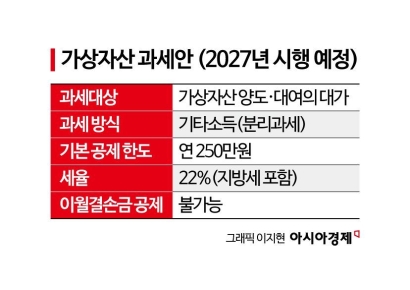 "Stocks Are Not Taxed, but Annual Crypto Gains Over 2.5 Million Won to Be Taxed Next Year... Investors Push Back"
- "Not Jealous of Winning the Lottery"... Entire Village Stunned as 200 Million Won Jackpot of Wild Ginseng Cluster Discovered at Jirisan
- "Rather Than Endure a 1.5 Million KRW Stipend, I'd Rather Earn 500 Million in the U.S." Top Talent from SNU and KAIST Are Leaving [Scientists Are Disappearing] ①
- "How Did an Employee Who Loved Samsung End Up Like This?"... Past Video of Samsung Electronics Union Chairman Resurfaces
- "Even With a 90 Million Won Salary and Bonuses, It Doesn’t Feel Like Much"... A Latecomer Rookie Who Beat 70 to 1 Odds [Scientists Are Disappearing] ③
An official from a non-life insurance company said, "If non-covered items increase, it is highly likely to have a negative impact on indemnity insurance," but added, "Since it takes time for government policies to show effects in the field, we need to observe the situation."
© The Asia Business Daily(www.asiae.co.kr). All rights reserved.







