K-Electric Vehicle Hit by 'Inflation Reduction Act'... Why the Government Took the Strong Measure of 'WTO Complaint'
Government Responds to US Inflation Reduction Act with 'Negotiations'
Senior Ministry of Industry Official to Be Dispatched to US This Month
Low Possibility of Bill Amendment Within the Year
Effectiveness of WTO Complaint on 'Suspension of Appeal Function' Also Questioned

President Biden Signs the 'Inflation Reduction Act'
(Washington DC AP=Yonhap News) U.S. President Joe Biden signed the 'Inflation Reduction Act,' which focuses on climate change response and expanding healthcare coverage, at the White House in Washington DC on the 16th (local time). From left: Senator Joe Manchin, Senator Chuck Schumer, Representative James Clyburn, Representative Frank Pallone, Representative Cathy Castor. 2022.08.17
Photo by ddy04002@yna.co.kr
(End)
<Copyright(c) Yonhap News Agency, Unauthorized reproduction and redistribution prohibited>
[Asia Economy Sejong=Reporter Lee Jun-hyung] The South Korean government's response to the U.S. 'Inflation Reduction Act (IRA)' can be summarized as 'bilateral negotiations.' In response to the U.S. government's exclusion of Korean-made electric vehicles from subsidy eligibility, the basic policy is to "resolve the issue through dialogue." The government intends to reflect the positions of domestic companies as much as possible in the tax credit guidelines related to the Inflation Reduction Act, which the U.S. will specify through bilateral negotiations.
Accordingly, the Ministry of Trade, Industry and Energy plans to dispatch a first-level senior official to the U.S. within this month. The ministry is reportedly coordinating meeting schedules with relevant U.S. departments involved in the Inflation Reduction Act, such as the U.S. Department of the Treasury and the Office of the United States Trade Representative (USTR). An Deok-geun, head of the ministry’s trade negotiation bureau, will also visit the U.S. next month to attend the Indo-Pacific Economic Framework (IPEF) ministerial meeting and convey South Korea’s position on the Inflation Reduction Act.

"No Suitable Means to Pressure the U.S."
The issue lies in effectiveness. The Inflation Reduction Act was rapidly enacted due to the upcoming U.S. midterm elections in November. After the detailed contents were first disclosed at the end of last month, the act passed both the U.S. House and Senate within just one month and was signed by President Joe Biden. Given the clear political background behind the act’s implementation, there is little room for the U.S. government to amend the law within this year. Professor Jeong In-kyo of Inha University’s Department of International Trade said, “The possibility of reaching a conclusion favorable to us through consultations is low,” adding, “However, the government currently lacks appropriate means to pressure the U.S.”
The government is not unaware of this point. A senior official from the Ministry of Trade, Industry and Energy said at a back briefing for reporters on the 24th, “(The IRA) was enacted swiftly due to the U.S. political schedule,” and “Since the U.S. government has a clear purpose, it is realistically difficult to expect immediate amendments or relaxations.”
![Minister Lee Chang-yang of the Ministry of Trade, Industry and Energy (left) held a meeting with the semiconductor and electric vehicle industries regarding the U.S. Inflation Reduction Act (IRA) on the 25th at the Korea Chamber of Commerce and Industry in Seoul. Minister Lee stated, "We will continuously raise concerns about the possibility of the IRA violating trade norms in the United States," and added, "We will cooperate with like-minded countries such as the European Union (EU) and Japan to devise joint response measures." <br>[Photo by Ministry of Trade, Industry and Energy]](http://www.asiae.co.kr/news/img_view.htm?img=2022082511194298965_1661393983.jpg)
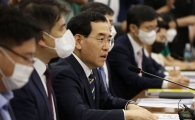
Minister Lee Chang-yang of the Ministry of Trade, Industry and Energy (left) held a meeting with the semiconductor and electric vehicle industries regarding the U.S. Inflation Reduction Act (IRA) on the 25th at the Korea Chamber of Commerce and Industry in Seoul. Minister Lee stated, "We will continuously raise concerns about the possibility of the IRA violating trade norms in the United States," and added, "We will cooperate with like-minded countries such as the European Union (EU) and Japan to devise joint response measures."
[Photo by Ministry of Trade, Industry and Energy]
'Effectiveness of WTO Complaint Also in Question'
This is why the government has even brought up the 'World Trade Organization (WTO) complaint' card. After reviewing the Inflation Reduction Act, the Ministry of Trade, Industry and Energy believes it is highly likely to violate not only WTO rules but also the Korea-U.S. Free Trade Agreement (FTA). On the 22nd, Minister Lee Chang-yang also stated at the National Assembly’s Industry, Trade, and Small and Medium Enterprises Committee plenary meeting, “There are serious concerns about the U.S. Inflation Reduction Act,” and “We are actively considering filing a complaint with the WTO.”
However, the effectiveness of a WTO complaint is also considered low. This is because the WTO’s Appellate Body, which functions as a supreme court, has not been operational since 2019. Professor Heo Yoon of Sogang University’s Graduate School of International Studies said, “Since the WTO’s dispute resolution function is not working properly, it is difficult for the government to pressure the U.S. through a WTO complaint,” adding, “Basically, the direction to resolve (the Inflation Reduction Act) through bilateral consultations is appropriate.”
Meanwhile, the automobile industry is seeking ways to minimize damage independently of government negotiations. Hyundai Motor Group is considering advancing the groundbreaking of its electric vehicle plant in Georgia, U.S., originally planned for the first half of next year, by about six months to the second half of this year. Additionally, Hyundai Motor Group Chairman Chung Eui-sun departed for the U.S. on the 23rd as part of the response to the Inflation Reduction Act. The Korea Automobile Manufacturers Association (KAMA) plans to issue a joint statement with the European Automobile Manufacturers Association (ACEA) next month.
Related Articles
 Lee Chang-yang, Minister of Industry, "Joint Public-Private Response to Electric Vehicle Damage in the US"
© The Asia Business Daily(www.asiae.co.kr). All rights reserved.
!["Please Help Us": How Much Do Those Bowing Deeply for Your Vote Really Earn? [Data Pick]](https://cwcontent.asiae.co.kr/asiaresize/307/2026052010120870131_1779239528.png)






