"Everyone Who Could Get Infected Has?"... Resurgence Turns to Decline, 'Reinfection' Is Key
Weekly reinfection rate rose from 3.7% to 6.65% in the past month
As the 2nd semester begins... 40% of twice-infected cases are under 17 years old

On the 24th, as the spread of COVID-19 continued, the screening clinic at Mapo-gu Public Health Center in Seoul was crowded with citizens. Photo by Mun Ho-nam munonam@
View original image[Asia Economy Reporter Jo In-kyung] As the COVID-19 resurgence passes its peak and is expected to enter a decline phase as early as this week, the proportion of reinfected cases among the total confirmed cases continues to rise. Notably, a significant number of reinfected individuals are children and adolescents aged 17 and under, suggesting that this week’s school reopening and students returning to in-person classes may influence whether the resurgence subsides.
Im Sook-young, the Situation General Manager of the Central Disease Control Headquarters, said at a regular briefing on the 23rd, "As the pace of the recent outbreak slows down, there is a possibility that the trend will shift to a decline this week or next week."
On the day, the number of new COVID-19 confirmed cases was 150,258, which is significantly higher than the 84,103 cases reported on the 16th a week earlier due to holiday effects, but similar to the 149,860 cases recorded two weeks ago on the 9th. Earlier, on the 21st and 22nd, new confirmed cases were 110,944 and 59,046 respectively, both lower than the previous week.
The health authorities, synthesizing predictions from various experts, have forecasted that this wave could peak in August with an average daily case count of around 200,000. Im said, "It is difficult to precisely predict the speed and scale of the decline after the peak, but we expect a gradual decrease. Currently, the outbreak is progressing within the previously predicted range."
During the third week of August (14th?20th), the weekly average number of confirmed cases was approximately 127,000, a 4.8% increase from the previous week. The effective reproduction number (Rt) was 1.06, down 0.12 from 1.18 the previous week, but it has remained above 1 for eight consecutive weeks. Im explained, "The reproduction number has slightly decreased, and the increase in confirmed cases is slowing, indicating we are at the peak phase."
The proportion of COVID-19 reinfections has steadily increased. In the second week of August (7th?13th), the estimated reinfection rate among confirmed cases was 6.65%, up 0.55 percentage points from the previous week. Previously, it was about 2.9% in the first week of July, 3.7% in the second week, 6.6% in the third week, 5.4% in the fourth week, and 6.1% in the first week of August.
Accordingly, as of midnight on the 14th, among the total 20,979,145 confirmed cases, there were 237,486 estimated reinfection cases (two or more infections), with an incidence rate of 1.13%, up from 0.91% a week earlier. This means that 1 out of every 100 cumulative confirmed cases is a reinfection. Among these, 237,047 were second infections, and 439 were third infections.
In particular, looking at the age distribution of second infections, those aged 0?17 accounted for 95,391 cases, representing 40.24% of the total. Among third infections, those aged 17 and under (148 cases) were the largest group at 33.71%.
The health authorities announced that with the full reopening of elementary, middle, and high schools, they will maintain in-person classes even if confirmed cases increase, to continue normal life recovery. Because of this, there are concerns that confirmed cases among children and adolescents aged 17 and under may continue to rise even if the overall outbreak shifts to a decline.
The scale and duration of this resurgence will also affect another expected resurgence anticipated between fall and early winter. Jeong Ki-seok, a member of the National Infectious Disease Crisis Response Advisory Committee, predicted, "A large-scale outbreak could occur again in October to November when the majority of the population’s COVID-19 immunity declines simultaneously."
Hot Picks Today
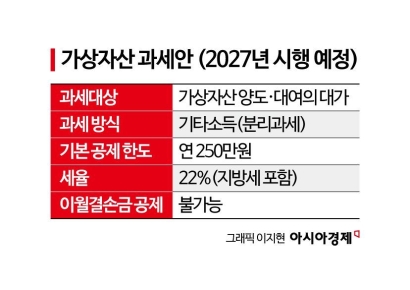 "Stocks Are Not Taxed, but Annual Crypto Gains Over 2.5 Million Won to Be Taxed Next Year... Investors Push Back"
- "Not Jealous of Winning the Lottery"... Entire Village Stunned as 200 Million Won Jackpot of Wild Ginseng Cluster Discovered at Jirisan
- "Jeong Yu-kyung Is a Neighbor"...Itaewon Standalone House with Record 23.2 Billion Won Appraisal Up for Auction [Real Estate AtoZ]
- "How Did an Employee Who Loved Samsung End Up Like This?"... Past Video of Samsung Electronics Union Chairman Resurfaces
- "Even With a 90 Million Won Salary and Bonuses, It Doesn’t Feel Like Much"... A Latecomer Rookie Who Beat 70 to 1 Odds [Scientists Are Disappearing] ③
Im also said, "The Korea Disease Control and Prevention Agency and various experts have predicted a resurgence in fall and winter. We believe multiple factors such as waning immunity, seasonal effects, and the emergence of new variants will contribute."
© The Asia Business Daily(www.asiae.co.kr). All rights reserved.