US State Department: "Not Delaying Iran Nuclear Deal Talks... Getting Closer to Agreement"
Iran Pressures for Swift Resolution, Accusing US of Deliberate Negotiation Delays
Key Issues Agreed Upon, but Israeli Opposition Remains a Variable
![[Image source=Reuters Yonhap News]](http://www.asiae.co.kr/news/img_view.htm?img=2022082308571995334_1661212639.jpg)
[Asia Economy Reporter Hyunwoo Lee] The U.S. government stated that it is not deliberately delaying negotiations related to the restoration of the Iran nuclear deal (JCPOA - Joint Comprehensive Plan of Action) and that it is approaching an agreement. The JCPOA restoration talks are reportedly nearing a conclusion as the U.S. and Iran find common ground on major contentious issues. However, with Israel continuing to express strong opposition, controversy is expected to persist until a final agreement is reached.
On the 22nd (local time), Ned Price, spokesperson for the U.S. State Department, said regarding the final draft of the JCPOA restoration talks, "We are working to respond as soon as possible," and emphasized, "The idea that the U.S. is trying to delay negotiations in any way is not true." He added, "We are encouraged by Iran’s withdrawal of some initial demands, such as the removal of the Islamic Revolutionary Guard Corps (IRGC) from the terrorist list, and we are closer to an agreement than we were two weeks ago."
This statement is interpreted as a response to Iran’s earlier criticism that the U.S. is delaying the negotiations. The day before, Nasser Kanaani, spokesperson for the Iranian Ministry of Foreign Affairs, said at a press conference, "The U.S. is delaying the JCPOA restoration talks, and the European side is not taking action," adding, "Iran wants a sustainable agreement that preserves its legitimate rights."
The JCPOA restoration talks resumed on the 4th and gained momentum on the 15th when Iran announced it would withdraw its request to remove the IRGC from the terrorist list, which had been the biggest sticking point with the U.S. Iran hopes for a swift conclusion, pressing the U.S. side as it has already made concessions, while the U.S. government has yet to make an official stance.
The remaining key issues are known to be ▲ preventing the U.S. from reneging on the agreement ▲ halting inspections of Iranian nuclear facilities by the International Atomic Energy Agency (IAEA) ▲ prisoner exchanges between the U.S. and Iran. These issues are expected to be resolved soon through coordination between the two sides.
However, Israel’s continued opposition to the JCPOA restoration talks is expected to be a significant variable going forward. On the same day, Israeli Prime Minister Yair Lapid expressed opposition during a call with French President Emmanuel Macron, stating, "We are not obligated to comply with the nuclear deal, and Israel will do everything possible to prevent Iran from acquiring nuclear weapons."
Hot Picks Today
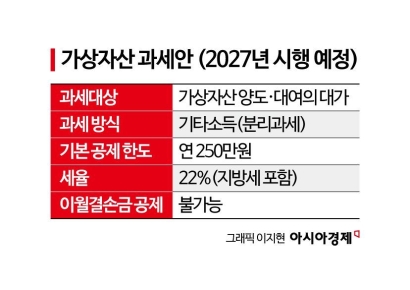 "Stocks Are Not Taxed, but Annual Crypto Gains Over 2.5 Million Won to Be Taxed Next Year... Investors Push Back"
- "Not Jealous of Winning the Lottery"... Entire Village Stunned as 200 Million Won Jackpot of Wild Ginseng Cluster Discovered at Jirisan
- "Rather Than Endure a 1.5 Million KRW Stipend, I'd Rather Earn 500 Million in the U.S." Top Talent from SNU and KAIST Are Leaving [Scientists Are Disappearing] ①
- "How Did an Employee Who Loved Samsung End Up Like This?"... Past Video of Samsung Electronics Union Chairman Resurfaces
- "Even With a 90 Million Won Salary and Bonuses, It Doesn’t Feel Like Much"... A Latecomer Rookie Who Beat 70 to 1 Odds [Scientists Are Disappearing] ③
In Israel, with the November general election approaching, blocking the JCPOA has become a major political issue, and the government continues to convey its opposition to the U.S., applying pressure. Axios reported, citing a U.S. government official, that "The U.S. government has told Israel that there have been no new concessions in the Iran nuclear negotiations and that it is still unclear whether an agreement will be reached, but Israeli officials remain skeptical."
© The Asia Business Daily(www.asiae.co.kr). All rights reserved.







