Government Strengthens Supply Chain Cooperation with Australia... Joint Development of Mines Planned
Ministry of Trade, Industry and Energy Holds the 31st Korea-Australia Energy Resources Cooperation Committee Meeting
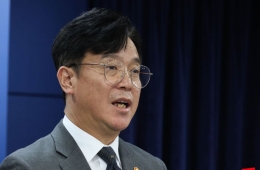
![Cheon Young-gil, Director of Energy Transition Policy, Chairs Power Demand Management Inspection Meeting<br> (Seoul=Yonhap News) Cheon Young-gil, Director of Energy Transition Policy at the Ministry of Trade, Industry and Energy, is chairing the "Summer Power Demand Management Progress Inspection Meeting" held on the 13th at the Ministry's video conference room in the Government Sejong Complex. 2022.7.13 [Provided by Ministry of Trade, Industry and Energy. Redistribution and DB prohibited]<br> Photo by Yonhap News<br>(End)<br><br><br><Copyright (c) Yonhap News, Unauthorized reproduction and redistribution prohibited>](http://www.asiae.co.kr/news/img_view.htm?img=2022082200084293591_1661094521.jpg)
Cheon Young-gil, Director of Energy Transition Policy, Chairs Power Demand Management Inspection Meeting
(Seoul=Yonhap News) Cheon Young-gil, Director of Energy Transition Policy at the Ministry of Trade, Industry and Energy, is chairing the "Summer Power Demand Management Progress Inspection Meeting" held on the 13th at the Ministry's video conference room in the Government Sejong Complex. 2022.7.13 [Provided by Ministry of Trade, Industry and Energy. Redistribution and DB prohibited]
Photo by Yonhap News
(End)
<Copyright (c) Yonhap News, Unauthorized reproduction and redistribution prohibited>
[Asia Economy Sejong=Reporter Lee Junhyung] The government is strengthening supply chain cooperation with Australia. The two countries plan to hold a minerals business roundtable within the year and begin full-scale joint mining development.
The Ministry of Trade, Industry and Energy announced on the 22nd that it held the "31st Korea-Australia Energy and Resources Cooperation Committee" at Lotte Hotel in Seoul. The cooperation committee, launched in 1980, has served as a channel for energy and mineral cooperation between Korea and Australia. Attendees included domestic officials from the Ministry of Trade, Industry and Energy, the Korea Energy Economics Institute, and the Korea Mine Reclamation Corporation, as well as Sean Sullivan, Deputy Secretary of the Australian Department of Climate Change, Energy, the Environment and Water, and Martin Squire, Director.
At the meeting, the Ministry shared the new government's energy policy direction and discussed detailed cooperation tasks. The Ministry emphasized the importance of the carbon capture, utilization, and storage (CCUS) cooperation project, a core technology for carbon neutrality. In particular, the Ministry urged the Australian side to promptly deposit the acceptance letter for the amendment to the London Protocol with the International Maritime Organization (IMO). The amendment to the London Protocol enables cross-border carbon dioxide (CO2) transfer based on CCUS, and Korea deposited its acceptance letter with the IMO in April.
Measures to strengthen cooperation on critical minerals were also discussed. Previously, the government signed a "Critical Minerals Supply Chain Cooperation Memorandum of Understanding (MOU)" with Australia in December last year and has jointly operated a "Critical Minerals Working Group" since February this year. The government plans to jointly promote Australian mine development and critical minerals research and development (R&D) centered on the working group. Additionally, they plan to hold a business roundtable between mineral companies of both countries within the year to further strengthen practical cooperation.
Investment in liquefied natural gas (LNG), a key energy source, was also mentioned. Australia is Korea's second-largest LNG import country. The Ministry emphasized that Korea is an important resource cooperation partner for Australia, continuously investing in Australian LNG infrastructure through Korea Gas Corporation and others. Accordingly, the two countries agreed to continue mutually beneficial investment and trade in the natural gas sector.
Hydrogen cooperation will also be strengthened. Based on the "Carbon Neutral Technology and Clean Hydrogen Economy MOU" signed in December last year, the "Korea-Australia Hydrogen Economy Working Group," launched in February this year, will continue to operate. The Ministry expects synergy effects as Australia is a hydrogen production powerhouse and Korea possesses hydrogen utilization technology.
Hot Picks Today
 "Stocks Are Not Taxed, but Annual Crypto Gains Over 2.5 Million Won to Be Taxed Next Year... Investors Push Back"
- "Don't Throw Away Coffee Grounds" Transformed into 'High-Grade Fuel' in Just 90 Seconds [Reading Science]
- Signed Without Viewing for 1.6 Billion Won... Jamsil and Seongbuk Jeonse Prices Jump 200 Million Won in a Month [Real Estate AtoZ]
- "Groups of 5 or More Now Restricted"... Unrelenting Running Craze Leaves Citizens and Police Exhausted
- "Even With a 90 Million Won Salary and Bonuses, It Doesn’t Feel Like Much"... A Latecomer Rookie Who Beat 70 to 1 Odds [Scientists Are Disappearing] ③
Cheon Young-gil, Director of the Energy Industry Office at the Ministry of Trade, Industry and Energy and Korea's chief representative, said, "Australia is Korea's number one supplier of mineral resources, and the two countries are optimal partners for building energy supply chains and security," adding, "Close cooperation between the two countries will contribute to stabilizing the energy supply chain."
© The Asia Business Daily(www.asiae.co.kr). All rights reserved.