'82nyeonsaeng' Lee Donghak: "We must stop 'politics of revenge' where winning means the opponent must fail, and pursue politics of consensus" [Interview]
"To Solve Climate Crisis and Super-Aging, 'Politics of Consensus' Must Restart"
"Problem with Current Political Structure Is Two-Party System Alternating Power"
"Foundation for 'Multi-Party System' Must Be Built through Proportional Representation and Runoff Voting"

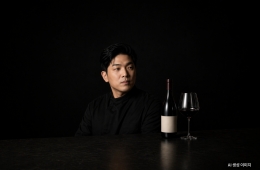
Lee Dong-hak, former Supreme Council member, running for party leader at the Democratic Party convention. Photo by candidate Lee Dong-hak.
View original image[Asia Economy Reporter Koo Chae-eun] “In a two-party system, the ruling and opposition parties simply switch roles and engage in ‘politics of revenge drama.’ When this repeats like a broken record, bipartisan issues such as the climate crisis, super-aging society, and welfare get pushed aside. The cycle of ‘hostile symbiosis,’ focusing every time on investigations of the previous administration, just keeps repeating.”
Lee Dong-hak, former Supreme Council member (40), who is running for the Democratic Party of Korea’s party leader election, said in an interview with this paper on the 27th, “Politics is failing to address the lives of the people.” He explained that the two major parties centered on the Democratic Party and the People Power Party focus on highlighting and criticizing the other party’s failures, engaging only in retaliation, hostility, and revenge politics.
This is also why Lee decided to run for party leader under the banner of ‘political change.’ As methods for political change, he proposed ▲preventing satellite parties through a mixed-member proportional representation system ▲expanding proportional representation seats ▲reforming the National Assembly election system ▲introducing a presidential runoff voting system.
The following is a Q&A with former Supreme Council member Lee Dong-hak.

On the afternoon of August 27, 2016, at the Olympic Gymnastics Arena in Songpa-gu, Seoul, Lee Dong-hak, then a candidate for the Youth Supreme Council Member of the Democratic Party of Korea, is seen garnering support from party members during the party's 2nd Regular National Delegate Convention.
View original image
Former Supreme Council Member Lee Dong-hak (center) and Representative Lee Tan-hee (left) of the Democratic Party of Korea are holding an emergency press conference for the Political Reform and Political Change Action Declaration at the National Assembly Communication Office in Yeouido, Seoul, on the 25th.
View original image- What does Lee Dong-hak’s ‘political change’ mean?
▲ The two-party system can only justify its existence by negating the other side unconditionally. There is no political act of adjusting interests. It allows cracks and conflicts by exploiting fandoms and extreme supporters. There is no choice in politics. Politics that divides sides and fosters hostility is dominated by partisan logic. It fails to address the lives of the people. Because of this awareness that it must change, I decided to run by proposing the expansion of proportional representation and the runoff voting system.
- Do you think fandoms partly contribute to cracks and conflicts?
▲ Fandoms are necessary. However, we cannot embrace hate and hateful expressions. The Democratic Party is a party of democrats. We must draw a line against hateful language and behavior and engage in self-purification and cleansing. It is important to have discussions and reach consensus. In that sense, we must part ways with hateful and hateful expressions that cannot be embraced. Every election, the political sphere clearly tends to gather supporters for victory and move toward extremes.
- Ultimately, are you saying that a multi-party ‘coalition government’ or cooperative politics is important?
▲ Yes. It is very vulnerable to push through unilaterally with power. The logic of majority rule easily collapses the moment you become a minority. What is made by consensus is strong. President Roh Moo-hyun also tried to create such a culture. I think the Democratic Party should start from there. Right now, it is a political structure where no one can win. Of course, it is not easy for a multi-party system based on proportional representation to settle all at once. But I believe we must lay the foundation now for the politics of future generations.
- Expanding proportional representation may immediately reduce the Democratic Party’s seats.
▲ I will persuade people by pointing out that the current political structure is good for our party but not good for the people. Some discussions have taken place in the Political Reform Special Committee. Now, we need to gather efforts at the party and public opinion level. If elected, political change will be my top priority. Many lawmakers in the People Power Party also agree with this, so I will meet and persuade all party lawmakers.
- There is an analysis that if candidate Lee Jae-myung becomes party leader, ‘hostile symbiosis’ will be strengthened.
▲ If politics flows toward confrontation with the opposition and hardline stances, that could happen. Therefore, candidate Lee must clearly state his position on political change at the party convention. There must be a concrete blueprint for passing the satellite party prevention law within the year and expanding proportional representation. There must be discussions on how to replace the current system where the two parties maintain vested interests.
- How do you view the criticism that before Park Ji-hyun, youth politics in the Democratic Party was invisible?
▲ It is a sharp comment. I tried. But I never had a big platform to voice like former emergency committee chairperson Park Ji-hyun. It is a point for reflection. There are structural causes as well. Youths in the party are either recruited or join voluntarily. Both find it difficult to express their own voices. We tried to find ways by introducing quotas, bonus points, and committees to help them enter elected positions. But I don’t think there was ever a time when they confronted established politicians over any agenda. The problem starts from ‘entry’ itself.
- Why is it difficult for youth politicians to enter the Democratic Party?
▲ The party does not have a systematic system to nurture youth politicians. There is only a political academy at best. There must be many internal elections. Youth politicians should have their own platforms and debate. Such maturation processes are lacking. But now, many youth politicians enter by appointment. Listening to the appointed person’s words is more important than expressing their own views. We need problem-solving politicians, but the foundation for that is weak.
- What alternatives do you have for youth politics?
Hot Picks Today
!["What Should I Eat? Cooking at Home Is a Hassle... 10,000~20,000 Won 'Hotel-Level Catering' Spreads in Ultra-Luxury Apartments [Luxury World]"](https://cwcontent.asiae.co.kr/asiaresize/93/2026042610544940447_1777168490.png) "What Should I Eat? Cooking at Home Is a Hassle...
"What Should I Eat? Cooking at Home Is a Hassle...
- Even with KOSPI at 6,500..."Selling Samsung and SK hynix for Cash," Individuals ...
- "Up to 600,000 Won Per Person, Finally Available"... Be Careful: Filling Up at Y...
- "Survived Thanks to Korean Choco Pie"...How a Vietnamese University Student Endu...
- No Work, No Inheritance for the Eldest... 30 Billion KRW in Shares Gifted to Sec...
▲ Rather than a simple political academy format, youth politicians should be given opportunities to solve problems. They should identify issues they consider problems and find solutions to announce within the party. This is issue-centered politics. Such people can advance to local councils or even the National Assembly. Politicians with their own agendas must continue to emerge.
© The Asia Business Daily(www.asiae.co.kr). All rights reserved.