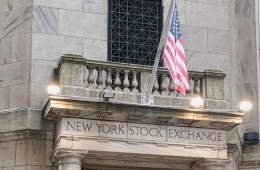
[New York Stock Market] Tech Stocks Rally Including Tesla Despite Weak Indicators... Nasdaq Up 1.36%
![[Image source=Reuters Yonhap News]](http://www.asiae.co.kr/news/img_view.htm?img=2022072205332259482_1658435602.jpg)
[Asia Economy New York=Special Correspondent Joselgina] Major indices on the U.S. New York Stock Exchange closed higher on the 21st (local time), buoyed by Tesla's earnings and a weaker dollar. Despite some disappointing economic indicators, technology stocks including Tesla led the overall market rally. The tech-heavy Nasdaq index rose for the third consecutive trading day and is expected to gain more than 4% this week alone.
On this day at the New York Stock Exchange (NYSE), the Dow Jones Industrial Average closed at 32,036.90, up 162.06 points (0.51%) from the previous session. The large-cap S&P 500 index rose 39.05 points (0.99%) to 3,998.95, while the tech-focused Nasdaq index gained 161.96 points (1.36%) to close at 12,059.61.
By stock, Tesla, which reported net profits exceeding expectations after the previous day's close, led the rally with a 9.78% increase from the previous session. Major tech stocks such as Apple (+1.51%), Microsoft (+0.98%), and Nvidia (+1.36%) also rose. Jay Bryant Evans, portfolio manager at Cozad Asset Management, said, "Investors believe the tech sector has fallen too much," reflecting a bargain-buying sentiment. Major foreign media also reported that the weaker dollar contributed to the tech stock rally.
On the other hand, airline and travel stocks showed weakness due to earnings impacts. American Airlines fell more than 7% despite meeting expectations, after scaling back future growth plans. United Airlines dropped 10.17% on earnings below expectations. Leading cruise stock Carnival slid more than 11%. Royal Caribbean Cruises and Norwegian Cruise Line also fell 8% and 7%, respectively.
Additionally, AT&T closed down 7.62% after lowering its cash flow targets. Verizon Communications ended the day down 2.87%.
Investors closely watched the European Central Bank's (ECB) surprise big rate hike (0.5 percentage points), corporate earnings announcements, and key economic indicators on this day.
At its monetary policy meeting, the ECB raised its benchmark interest rate by 0.5 percentage points from 0% to 0.5%. This is the ECB's first rate hike in 11 years since July 2011. The increase was also twice the initially announced and market-expected 0.25 percentage point hike.
Following the Bank of Canada's larger-than-expected 1 percentage point rate hike, the ECB's doubling of its initially announced increase has drawn attention to the upcoming U.S. Federal Reserve's (Fed) rate decision next week. The Fed is also expected to raise rates by at least 0.75 percentage points, heightening global tightening concerns. According to the Chicago Mercantile Exchange (CME) FedWatch tool, federal funds (FF) futures markets reflect a 72.7% probability of a 0.75 percentage point rate hike in July.
However, amid ongoing central bank tightening, U.S. economic indicators continue to signal a slowdown. The U.S. Department of Labor reported that new unemployment claims for the week of July 10-16 rose by 7,000 to 251,000, marking a third consecutive weekly increase and the highest level since November last year. This also exceeded expert forecasts of 240,000, indicating a weakening U.S. labor market. Recently, major tech companies including Apple, Meta Platforms, and Google Alphabet have announced layoffs or hiring plan reductions.
On the same day, the Philadelphia Federal Reserve Bank's manufacturing activity index for July, which reflects manufacturing activity in its district, was recorded at minus (-) 12.3. A negative figure indicates contraction in manufacturing conditions. This follows last month's first negative entry (-3.3) with an even larger decline. As slowdown warnings continue, U.S. second-quarter gross domestic product (GDP) data will be released next week.
In the New York bond market, the yield on the U.S. 10-year Treasury note fell below the 3% level to 2.87%. The decline in Treasury yields indicates increased demand for safe-haven government bonds, pushing bond prices higher. The 2-year yield remains above 3%, continuing the inversion of short-term yields exceeding long-term yields, a phenomenon typically interpreted as a recession signal.
Weak economic indicators boosted gold prices, a representative safe-haven asset. After hitting a 16-month low the previous day, gold rebounded. On the New York Mercantile Exchange, August gold futures rose $13.20 (0.8%) to close at $1,713.40 per ounce.
Conversely, the dollar weakened. The dollar index, which measures the dollar's value against six major currencies, fell to the 106 level.
Hot Picks Today
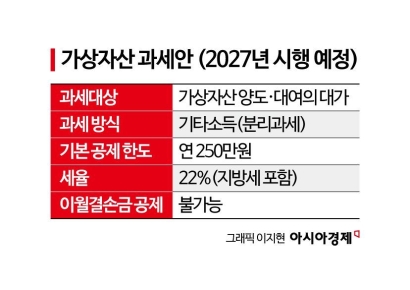 "Stocks Are Not Taxed, but Annual Crypto Gains Over 2.5 Million Won to Be Taxed Next Year... Investors Push Back"
- "Not Jealous of Winning the Lottery"... Entire Village Stunned as 200 Million Won Jackpot of Wild Ginseng Cluster Discovered at Jirisan
- "Rather Than Endure a 1.5 Million KRW Stipend, I'd Rather Earn 500 Million in the U.S." Top Talent from SNU and KAIST Are Leaving [Scientists Are Disappearing] ①
- "How Did an Employee Who Loved Samsung End Up Like This?"... Past Video of Samsung Electronics Union Chairman Resurfaces
- "Even With a 90 Million Won Salary and Bonuses, It Doesn’t Feel Like Much"... A Latecomer Rookie Who Beat 70 to 1 Odds [Scientists Are Disappearing] ③
Oil prices declined amid global tightening concerns. On the New York Mercantile Exchange, September West Texas Intermediate (WTI) crude oil futures closed at $96.35 per barrel, down $3.53 (3.53%) from the previous session. This marks the first time in four trading days that the closing price fell below the $100 mark.
© The Asia Business Daily(www.asiae.co.kr). All rights reserved.