[New York Stock Market] Declines Ahead of CPI Due to Recession and Earnings Concerns... Nasdaq Down 0.95%
![[Image source=Yonhap News]](http://www.asiae.co.kr/news/img_view.htm?img=2022070409523136409_1656895951.jpg)
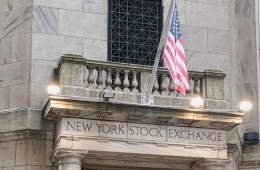
[Asia Economy New York=Special Correspondent Joselgina] Major indices on the U.S. New York Stock Exchange closed lower across the board on the 12th (local time). This was due to increased risk aversion amid concerns over slowing corporate earnings and an economic recession ahead of the June Consumer Price Index (CPI) announcement, which the Federal Reserve (Fed) is closely monitoring. Investors flocked to safe-haven assets, continuing the strength of the dollar.
On the day at the New York Stock Exchange (NYSE), the Dow Jones Industrial Average fell 192.51 points (0.62%) from the previous close to finish at 30,981.33. The large-cap-focused S&P 500 index dropped 35.63 points (0.92%) to 3,818.80, and the tech-heavy Nasdaq index closed down 107.87 points (0.95%) at 11,264.73.
By sector, airline stocks showed strength. American Airlines surged nearly 10% as its Q2 sales are expected to surpass pre-pandemic 2019 levels. United Airlines (+8.09%), Delta Air Lines (+6.15%), and Southwest Airlines (+4.64%) also rose in unison. Cruise stocks Norwegian and Carnival closed up 5.84% and 7.54%, respectively. Boeing’s shares also jumped more than 7%.
However, energy stocks weakened as oil prices fell amid global recession concerns. Halliburton and Devon Energy dropped more than 2%. Leading tech stocks such as Microsoft (-4.10%), Netflix (-1.63%), and Amazon (-2.26%) also slid. Salesforce declined 4.61%. On the other hand, Twitter rebounded over 4% after falling double digits the previous day following CEO Elon Musk’s announcement to halt the acquisition.
PepsiCo, which reported earnings exceeding market expectations, raised its annual sales forecast but still closed down 0.57%. Home training company Peloton rose 3.70% after deciding to stop manufacturing its own bikes.
Investors focused on corporate earnings reports, recession concerns, and the trends of Treasury bonds and dollar strength. Following PepsiCo, companies such as Delta, JPMorgan Chase, Morgan Stanley, Wells Fargo, and Citigroup are scheduled to report earnings this week.
As the Federal Reserve, the central bank, continues its aggressive tightening to curb soaring inflation, corporate earnings will provide insight into the extent of economic slowdown. In particular, if the burden of rising costs due to inflation and weakening consumption become visible in corporate results, recession fears are expected to intensify.
Chris Zaccarelli of Independent Advisor Alliance said, "I agree that the situation could get worse and am concerned about slowing corporate profits or a potential earnings recession." The recent dollar strength could also negatively impact U.S. companies, as dollar-denominated earnings from overseas decline.
The dollar index, which measures the value of the dollar against six major currencies, surged to 108.56, the highest since October 2002. As money flowed into the safe-haven dollar, the dollar index has risen about 13% so far this year.
The dollar and euro entered parity territory for the first time in 20 years, with 1 dollar equaling 1 euro. This is attributed to money flowing into the relatively safe U.S. dollar amid recession warnings centered on the European region. Jeremy Stretch, head of FX strategy at IBC Capital Markets, said, "This reflects the fear of recession across Europe."
In the New York bond market, the yield on the U.S. 10-year Treasury note fell to around 2.97%. Demand for safe-haven government bonds pushed yields lower. However, the 2-year yield remained in the 3% range, widening the spread between short- and long-term Treasury yields. The inversion of the yield curve is generally considered a signal of recession, fueling ongoing market concerns.
The economic indicators released on the day were weak. The National Federation of Independent Business (NFIB) small business optimism index for June, which reflects the economic outlook of U.S. small businesses, dropped to 89.5, the lowest since January 2013. The proportion of small business owners expecting better economic conditions in the next six months also hit a 48-year low.
Investors are also awaiting the inflation data to be released on the 13th. The market expects the June CPI to rise 8.8% year-over-year, significantly exceeding May’s increase of 8.6%. Despite the Fed’s tightening measures, inflation shows no signs of stabilizing, raising concerns that it might even surpass 9%. Art Hogan, chief market strategist at National Securities, said, "Inflation could remain elevated for another one to two months."
With high inflation expected to persist, the Fed’s aggressive tightening stance is gaining momentum. The market has already priced in a 0.75 percentage point rate hike at the July Federal Open Market Committee (FOMC) meeting. Some even consider a 1.0 percentage point increase possible.
Hot Picks Today
 "Stocks Are Not Taxed, but Annual Crypto Gains Over 2.5 Million Won to Be Taxed Next Year... Investors Push Back"
- "Not Jealous of Winning the Lottery"... Entire Village Stunned as 200 Million Won Jackpot of Wild Ginseng Cluster Discovered at Jirisan
- "Jeong Yu-kyung Is a Neighbor"...Itaewon Standalone House with Record 23.2 Billion Won Appraisal Up for Auction [Real Estate AtoZ]
- "How Did an Employee Who Loved Samsung End Up Like This?"... Past Video of Samsung Electronics Union Chairman Resurfaces
- "Even With a 90 Million Won Salary and Bonuses, It Doesn’t Feel Like Much"... A Latecomer Rookie Who Beat 70 to 1 Odds [Scientists Are Disappearing] ③
Oil prices fell below $100 per barrel, hitting a three-month low. On the New York Mercantile Exchange, August West Texas Intermediate (WTI) crude closed at $95.84 per barrel, down $8.25 (7.9%) from the previous session.
© The Asia Business Daily(www.asiae.co.kr). All rights reserved.