[Initial Insight] Korea's Economy at a Crossroads, the Bank of Korea's Choice Is
![[Initial Insight] Korea's Economy at a Crossroads, the Bank of Korea's Choice Is](http://www.asiae.co.kr/news/img_view.htm?img=2022062110223720875_1655774557.jpg)
[Asia Economy Reporter Seo So-jeong] Recently, while having a conversation with a senior executive of the Bank of Korea about whether 'our economy will face a crisis,' an old movie was recalled. It is the 2018 release
In the United States, shocked by inflation hitting the highest level in 41 years, public apologies from the Treasury Secretary and the Federal Reserve (Fed) Chair have followed. Earlier this month, U.S. Treasury Secretary Janet Yellen belatedly admitted policy missteps. She had insisted throughout last year that the rise in U.S. consumer prices was temporary, but as inflation soared above 8%, she acknowledged the misjudgment. Secretary Yellen had previously refuted former Treasury Secretary Larry Summers’ calls since February last year for countermeasures, warning that liquidity would severely impact the U.S. economy.
Fed Chair Jerome Powell also apologized to Congress for underestimating inflation. Mohamed El-Erian, an advisor at Allianz and former CEO of PIMCO, the world’s largest bond manager, has criticized the Fed’s assessment since last year that inflation was temporary as a ‘historic misjudgment,’ and continues to argue that the Fed is still lagging behind the market.
South Korea’s inflation situation is no less serious. Following a 6% inflation rate in June, the highest in 24 years, the market expects the 7% barrier to be broken by October. With variables such as the Ukraine crisis and China’s lockdowns emerging this year, the Bank of Korea has repeatedly revised its inflation forecasts.
During the 2008 global financial crisis, Alan Greenspan said the reason ‘no one saw the crisis coming’ was due to weak warning signals. However, Michelle Bucker, author of
Hot Picks Today
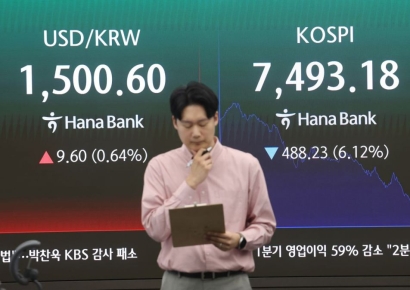 After Topping 8,000 Instead of Hitting 10,000... KOSPI Plunges—When Will It Rebound?
- "Samsung and Hynix Were Once for the Underachievers"... Hyundai Motor Employee's Lament
- [Breaking] Court Rules Against Samsung Electronics Union...1 Billion Won per Day Penalty for Exceeding Strike Scope
- Court Partially Grants Samsung Electronics' Injunction to Prohibit Industrial Action... 100 Million Won Penalty Per Day for Violations
- "That? It's Already Stashed" Nightlife Scene Crosses the Line [ChwiYak Nation] ③
Bank of Korea Governor Lee Chang-yong emphasized the central bank’s role as an ‘inflation fighter’ in his speech commemorating the 72nd anniversary last month, stating, "At this point, Korea’s response cannot be considered proactive." Central banks worldwide are struggling against global inflation and U.S. monetary tightening. With an additional base rate hike expected on the 13th, it is hoped that the Bank of Korea will play an important compass role for the Korean economy, standing at the crossroads between inflation and recession, based on an accurate diagnosis and forecast of the current inflation situation.
© The Asia Business Daily(www.asiae.co.kr). All rights reserved.