"Can't Afford Labor Costs"... Convenience Stores Contemplate 'Unmanned Operations' Due to Minimum Wage Burden
Next Year's Minimum Wage Rises 5% to 9,620 Won
8 out of 10 Small Business Owners Say "Minimum Wage Burden"
![Photo of an employee working at a convenience store in Seoul on the 6th. [Image source=Yonhap News]](http://www.asiae.co.kr/news/img_view.htm?img=2022070713245041515_1657167890.jpg)
Photo of an employee working at a convenience store in Seoul on the 6th. [Image source=Yonhap News]
View original image[Asia Economy Reporter Heo Midam] With next year's minimum wage set at 9,620 KRW per hour, a 5% increase from this year, the convenience store industry is expressing continued opposition. Due to the nature of convenience stores typically operating 24 hours, the minimum wage hike poses an even greater burden on store owners. As a result, some owners are considering unmanned stores or hybrid stores that operate unmanned only during certain hours.
Recently, online communities where convenience store owners gather have been filled with complaints about the minimum wage increase. One netizen, identifying as a convenience store owner, said, "The minimum hourly wage has risen so much that I'm scared to hire part-time workers. Even if I operate at night, there is no profit margin. I wish they would at least abolish the weekly holiday allowance," adding, "Prices are rising and competitors are increasing, so I'm worried."
Earlier, the Minimum Wage Commission, which deliberates and decides on the minimum wage, set next year's minimum wage at 9,620 KRW per hour, a 5% increase from this year. The monthly conversion of next year's minimum wage (based on 209 working hours) is 2,010,580 KRW.
Convenience store owners have expressed that the burden of labor costs has made store operations even more daunting. Due to the steep rise in minimum wage over recent years, it has already become difficult to secure profits, and with labor costs rising further, the economic burden has significantly increased.
The minimum wage (hourly basis) has increased as follows: ▲2017: 6,470 KRW (7.3% increase from previous year) ▲2018: 7,530 KRW (16.4%) ▲2019: 8,350 KRW (10.9%) ▲2020: 8,590 KRW (2.9%) ▲2021: 8,720 KRW (1.5%) ▲2022: 9,160 KRW (5.0%) ▲2023: 9,620 KRW (5.0%). Compared to 2017, next year's minimum wage represents an increase of about 48.7%.
The Korea Convenience Store Owners Association (KCSOA) issued a statement on the 30th of last month regarding the minimum wage increase, criticizing, "This minimum wage decision completely ignores the desperate situation where half of convenience stores cannot earn a single won despite long working hours." According to KCSOA, the average monthly sales of convenience stores this year is 43.57 million KRW. Of this, the average store profit is about 9.15 million KRW. After deducting various costs such as labor, rent, and franchise fees from the store profit, the actual income that owners take home is low, according to the association.
![Lunch boxes and other food items are displayed at a convenience store in Seoul. [Image source=Yonhap News]](http://www.asiae.co.kr/news/img_view.htm?img=2022070713255441517_1657167954.jpg)
Lunch boxes and other food items are displayed at a convenience store in Seoul. [Image source=Yonhap News]
View original imageThe industry expects that the minimum wage increase will lead to a reduction in the employment of convenience store part-time workers in the future. According to a survey conducted last month by the Korea Federation of Micro Enterprise Associations targeting 1,105 small business owners, 48.2% of respondents said "the minimum wage should be lowered next year." Another 38.9% said it should be "frozen at this year's level," totaling 87.1% of small business owners advocating for either a reduction or freeze. In particular, 34.1% of respondents said they would "reduce existing staff" if the minimum wage increased, and 31.6% said they would "reduce working hours of existing staff."
Some business owners are also considering operating unmanned or hybrid stores to reduce labor costs by applying unmanned systems. On the self-employed community "Apeunikka Sajangida" ("Because It Hurts, I'm a Boss"), one netizen said, "Now convenience stores should close at night. I don't know who benefits from overnight operations. Or it's better to run the store unmanned. Even if a few items get stolen, it would cost less than labor."
However, since tobacco and alcohol sales are high during late-night hours and unmanned stores cannot sell alcohol or tobacco, a drop in sales is expected.
Hot Picks Today
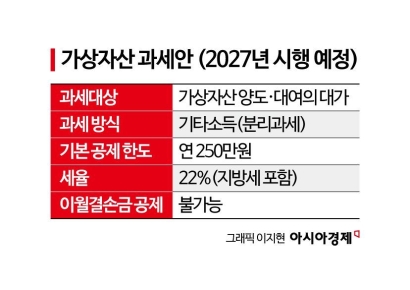 "Stocks Are Not Taxed, but Annual Crypto Gains Over 2.5 Million Won to Be Taxed Next Year... Investors Push Back"
- "Not Jealous of Winning the Lottery"... Entire Village Stunned as 200 Million Won Jackpot of Wild Ginseng Cluster Discovered at Jirisan
- "Even With a 90 Million Won Salary and Bonuses, It Doesn’t Feel Like Much"... A Latecomer Rookie Who Beat 70 to 1 Odds [Scientists Are Disappearing] ③
- "Rather Than Endure a 1.5 Million KRW Stipend, I'd Rather Earn 500 Million in the U.S." Top Talent from SNU and KAIST Are Leaving [Scientists Are Disappearing] ①
- "How Did an Employee Who Loved Samsung End Up Like This?"... Past Video of Samsung Electronics Union Chairman Resurfaces
Meanwhile, some convenience store owners are pushing to introduce a "surcharge system" that raises prices during late-night hours. Currently, the late-night operating hours defined in the Enforcement Decree of the Franchise Business Act are from midnight to 6 a.m. or from 1 a.m. to 6 a.m. The Korea Franchise Convenience Store Association (KFCSA), composed of operators of GS25, CU, 7-Eleven, and Emart24, plans to raise prices by about 5% during these hours.
© The Asia Business Daily(www.asiae.co.kr). All rights reserved.







