Launch of the 'National Land and Transport Regulatory Reform Committee'... Transfer of Regulatory Abolition Authority to Private Committee (Comprehensive)

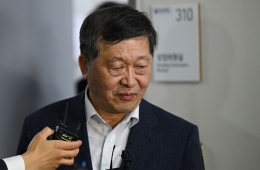
Won Hee-ryong, Minister of Land, Infrastructure and Transport, is speaking at the 1st Land, Infrastructure and Transport Regulatory Reform Committee held on the 6th at the Government Seoul Office to promote regulatory reform in the land and transportation sector. (Photo by Yonhap News)
View original image[Asia Economy Reporter Ryu Tae-min] On the 6th, the Ministry of Land, Infrastructure and Transport announced that it will establish and implement the "Innovation Plan for the Land, Infrastructure and Transport Regulatory Reform Promotion System" to promote regulatory innovation.
On this day, the Ministry of Land, Infrastructure and Transport will launch the Land, Infrastructure and Transport Regulatory Reform Committee. It is an independent organization composed entirely of 36 civilian members, and the committee will take the lead in deciding the abolition, improvement, or maintenance of all regulations under the jurisdiction of the Ministry of Land, Infrastructure and Transport. The chairperson is Professor Won Suk-yeon of the Department of Public Administration at Ewha Womans University.
The Land, Infrastructure and Transport Regulatory Reform Committee consists of a total of five subcommittees: ▲Urban Subcommittee ▲Architecture Subcommittee ▲Housing and Land Subcommittee ▲Mobility and Logistics Subcommittee ▲Construction and Infrastructure Subcommittee, each composed of seven members. They deliberate and decide on the necessity of newly established or strengthened regulations and the appropriateness of opinions from the relevant departments regarding proposals for improving existing regulations.
When the regulatory department submits an agenda, it is first reviewed by the subcommittee. If the regulatory department raises objections to the subcommittee's review results, a plenary committee meeting is held for a second review.
The relevant department must, in principle, follow the results of the plenary committee's review. However, if the regulatory department has objections to important review results with significant social and economic ripple effects, the chairperson may exceptionally submit the matter to a meeting presided over by the Minister of Land, Infrastructure and Transport for a final decision.
Incentives such as awards and personnel benefits will be provided to outstanding regulatory reform employees, and exemptions from audits related to regulatory improvements will be actively proposed to the Board of Audit and Inspection to vigorously lead regulatory reform.
Minister Won Hee-ryong of the Ministry of Land, Infrastructure and Transport stated, "If there are regulations that do not exist in advanced countries such as the United States and Europe, we will boldly promote regulatory innovation by abolishing all regulations in principle as long as there are no safety concerns," and added, "We will mobilize all capabilities to achieve proper results this time and ensure regulatory reform outcomes that satisfy the public."

Separately from the committee, the Ministry of Land, Infrastructure and Transport has selected eight major regulatory innovation tasks to be promoted in the second half of this year. These eight major regulatory innovation tasks will be developed with an open and innovative direction, and detailed implementation plans will be sequentially announced.
First, innovation in transportation regulations suitable for the mobility era will fully support the emergence and spread of new services in response to the rapidly changing mobility environment, such as the preemptive allowance of inter-company sales of Level 4 autonomous vehicles, establishment of subscription services for electric vehicle batteries, and expansion of demand-responsive transportation services.
Regulatory innovation for the Logistics 4.0+ era will respond to the spread of non-face-to-face consumption culture centered on the MZ generation by easing location regulations for logistics facilities in urban areas and establishing institutional foundations for unmanned logistics mobility such as drones. Regulatory innovation for fostering the future aviation industry includes creating "drone parks" where drones for hobby and leisure purposes can be freely flown and significantly improving drone safety certification inspection methods. It also supports the growth of the aviation mobility industry through the introduction of regulatory exceptions for early commercialization of UAM (Urban Air Mobility) and expansion of ultra-light flight zones.
Reforming entry regulations to boost the railway vehicle and parts industry will improve and simplify inspection procedures such as type approval and manufacturer approval based on advanced country cases, creating an environment where domestic railway vehicle and parts industries can possess technological competitiveness.
Regulation-free cities for future spatial innovation will respond to diverse spatial demands by setting special zones where private developers can freely develop without land-use district regulations and allowing mixed-use at the district level, thereby flexibilizing the land-use district system. Innovation in building regulations responding to future changes will resolve public inconveniences related to architecture by reorganizing building use systems considering changes in the building environment such as the increase in single-person households and integrating building and landscape reviews.
Additionally, regulatory reforms for fostering new real estate industries such as PropTech will be implemented. This includes easing entry and business regulations to revitalize REITs, and expanding public data disclosure for new real estate industries such as PropTech and spatial information industries.
Finally, bold regulatory innovation to revitalize the construction industry will lay the foundation for the recovery of construction investment by rationalizing overlapping safety regulations at construction sites and strengthening construction fund support through expanding the business scope of the Construction Mutual Aid Association.
Hot Picks Today
 "Stocks Are Not Taxed, but Annual Crypto Gains Over 2.5 Million Won to Be Taxed Next Year... Investors Push Back"
- [Breaking] Central Labor Relations Commission: "Second Post-Mediation Fails for Samsung Electronics"
- "Not Jealous of Winning the Lottery"... Entire Village Stunned as 200 Million Won Jackpot of Wild Ginseng Cluster Discovered at Jirisan
- "Looks Even More Like Him in Person": Crowds Gather to See 'Trump Lookalike' Albino Buffalo
- "Even With a 90 Million Won Salary and Bonuses, It Doesn’t Feel Like Much"... A Latecomer Rookie Who Beat 70 to 1 Odds [Scientists Are Disappearing] ③
To support the two-track promotion system between the committee and major regulatory innovation tasks, a Regulatory Innovation Task Force (TF) will be operated. The TF leader is the Director of the Planning and Coordination Office, who will communicate frequently with industry and experts. Furthermore, clear incentives such as awards and personnel benefits will be provided to outstanding regulatory reform employees, and exemptions from audits related to regulatory improvements will be actively proposed to the Board of Audit and Inspection to enhance the enthusiasm of practitioners for regulatory reform.
© The Asia Business Daily(www.asiae.co.kr). All rights reserved.