"Don't Want to Go to the Hospital," Research on 'Non-Face-to-Face Medical Care' Begins... UNIST to Train Digital Talent in Smart Healthcare
Ministry of Science and ICT? IITP Supports 'Regional Intelligence Innovation Talent Development Project' Final Selection
'5T SPACE Center' Secures 18 Billion KRW Over 8 Years for Multi-Biological Signal Measurement Research

[Asia Economy Yeongnam Reporting Headquarters Reporter Kim Yong-woo] When will the day come when we can receive medical treatment without going to the hospital?
Everyone anticipates that the era of non-face-to-face medical treatment is approaching, but the preparation for the medical system is entirely the responsibility of the medical and scientific communities, making it difficult to see inside.
The Ulsan National Institute of Science and Technology (UNIST) ‘5T SPACE Center’ has triggered research on a non-face-to-face medical treatment system that enables health monitoring to check physical condition and remote diagnosis and prescription.
The center plans to build a system that measures various biometric signals such as blood pressure, pulse, and blood sugar through a single device, safely transmits them to hospitals, and enables real-time monitoring and remote medical care.
In this process, they will also provide education not only to science and engineering students but also to industry workers to nurture talents who will contribute to the development of the smart healthcare field.
The 5T SPACE Center is a project group that was finally selected as the representative of the Southeast region in the 2022 Regional Intelligence Innovation Talent Development Project.
Led by the Department of Electrical and Electronic Engineering at UNIST, the center will receive 18 billion KRW including national funding over eight years starting this year to develop the region’s ‘smart healthcare’ sector and participate in the government’s ‘1 Million Digital Talent Development’ initiative.
Professor Byun Young-jae of the Department of Electrical and Electronic Engineering at UNIST, who is the director and overall responsible person for this project, said, “5T stands for the five core next-generation intelligent ICT technologies: ‘Network (IoT, 5G), Data (Cloud, Big Data), Artificial Intelligence, Computing, and Cybersecurity.’ The center will be a ‘space (SPACE)’ to research and learn 5T, share technology with companies.”
The 5T SPACE Center aims to establish a system capable of measuring multiple biometric signals with a single wearable device and enabling real-time health monitoring and remote medical treatment based on this.
They plan to develop sensor materials that are comfortable on the skin, design artificial intelligence algorithms to prevent the mixing of multiple measured signals, and handle security maintenance such as personal information and data transmission and reception.
To this end, they will pursue detailed tasks such as ▲ development of multi-biometric signal sensors and systems (SoC) ▲ biometric signal data analysis and transmission/reception ▲ artificial intelligence algorithms and real-time monitoring ▲ non-face-to-face remote medical treatment systems. Professors from UNIST, Gyeongnam National University, and Changwon National University totaling 10 and 44 researchers will participate.
Additionally, UNIST will operate a master’s degree program in engineering for employees of ICT small and medium-sized enterprises in the Southeast region to improve practical skills and provide opportunities to enhance market understanding. The degree program plans to recruit three times annually starting in 2023.
They will also establish a new ‘Department of Information and Communication Technology Convergence’ to develop curricula that connect and converge various technology fields and operate project-based education programs. The curriculum will consist of courses essential for smart healthcare-based intelligent industries, such as wireless communication, sensor materials, semiconductor design, and artificial intelligence.

Professor Byun Young-jae of the Department of Electrical and Electronic Engineering at UNIST, who serves as the director of the 5T SPACE Center.
View original imageDirector Byun said, “Research on ICT technology related to multi-biometric signals and non-face-to-face remote medical treatment systems will also be linked to the development of the ‘smart healthcare’ sector, a future growth engine industry in the Southeast region including Ulsan.” He predicted, “Digital talents nurtured through the 5T SPACE Center will be active in local biomedical, anti-aging bio, and nano-convergence component industries.”
He added, “The non-face-to-face medical platform using bio big data processing and handling technology and integrated systems developed by the center will have high social utility. It has the potential to improve the health of elderly living alone, prevent virus spread, and even expand to non-face-to-face veterinary medical systems.”
The ‘Regional Intelligence Innovation Talent Development Project’ led by UNIST is a project to resolve the shortage of high-level talent in the region by supporting industry-academia joint research and re-education for master’s and doctoral degrees linked to regional key industries for local employees.
Hot Picks Today
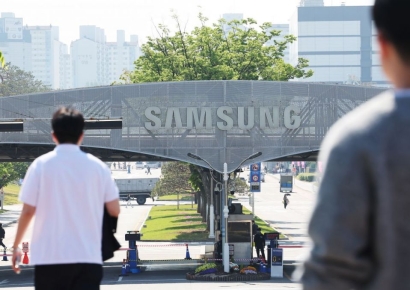 "Now Our Salaries Are 10 Million Won a Month" Record High... Semiconductor Boom Drives Performance Bonuses at Major Electronic Component Firms
- 'Still Hesitant? If You're Wondering Whether KOSPI Will Rise, This Is the Number You Must Watch [Weekend Money]'
- "Heading for 2 Million Won": The Company the Securities Industry Says Not to Doubt [Weekend Money]
- About 100 Trillion Won at Stake... "Samsung Strike Is an Unprecedented Opportunity" as Prices Surge 20% [Taiwan Chip Column]
- Is It Really Like an Illness? "I Can't Wait to Go Again"—Over 1 Million Visited in Q1, Now 'Busanbyeong' Takes Hold [K-Holic]
It is hosted by the Ministry of Science and ICT and the Institute for Information & Communications Technology Planning & Evaluation (IITP), and this year, one university was selected in each of the five major regions nationwide, totaling five universities.
© The Asia Business Daily(www.asiae.co.kr). All rights reserved.