No Japan-South Korea Summit Expected in NATO Schedule... Japan-South Korea Relations Drifting Even Under New Government
No Agenda Coordination for Korea-Japan Summit by Presidential Office
Meeting Opportunity Expected After Japan's Upper House Election on the 10th of Next Month
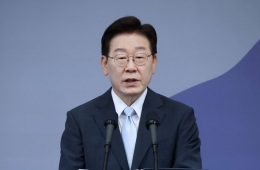
[Asia Economy Reporters Inho Yoo and Gimin Lee] The Presidential Office announced President Yoon Suk-yeol's schedule ahead of the North Atlantic Treaty Organization (NATO) summit but is reportedly not expected to mention a South Korea-Japan summit.
![[Image source=Yonhap News]](http://www.asiae.co.kr/news/img_view.htm?img=2022060809130595114_1654647184.jpg)
It has become difficult to guarantee whether a South Korea-Japan summit, which was expected to be a momentum for improving bilateral relations after the new government took office, will take place during the NATO summit.
At least until next year, there are no political events such as elections in either country. While the United States hopes for improved South Korea-Japan relations to strengthen trilateral cooperation among South Korea, the U.S., and Japan, concerns are emerging that if the summit is canceled due to differences in perceptions of historical issues and negative domestic public opinion, the opportunity to improve relations will be lost.
According to the Presidential Office and the Ministry of Foreign Affairs on the 17th, about two weeks before the NATO summit scheduled for the 29th to 30th in Madrid, Spain, the South Korean and Japanese governments have not coordinated the key agenda for the summit. The lack of agenda alignment indicates a low possibility of the summit taking place.
![[Image source=Yonhap News]](http://www.asiae.co.kr/news/img_view.htm?img=2021110813485011661_1636346930.jpg)
It is reported that President Yoon and Japanese Prime Minister Fumio Kishida will both attend the NATO summit.
Since this will be their first face-to-face opportunity, there was speculation about the possibility of a bilateral summit between the two leaders after two years and seven months.
President Yoon has consistently maintained the position that the South Korea-U.S.-Japan alliance should be built and the strained South Korea-Japan relations should be resolved. At the joint press conference of the South Korea-U.S. summit on the 21st of last month, President Yoon emphasized the importance of trilateral cooperation among South Korea, the U.S., and Japan by mentioning responses to North Korean challenges, joint security, and effective responses to shared economic challenges, which reflects this stance.
However, as Japan has recently shown a lukewarm attitude toward the summit, the South Korean government also appears not to be actively pursuing it. A National Security Office official stated, "We do not think it is necessary to hold a South Korea-Japan summit during the NATO summit."
The difficulty in holding a South Korea-Japan summit stems from numerous unresolved issues between the two countries. There are significant differences in positions regarding the restoration of honor for Japanese military comfort women victims and compensation for forced labor victims.
The Japanese Sankei Shimbun reported, citing Japanese government sources, that if no tangible solutions are presented on issues such as forced labor, a bilateral summit with South Korea would be difficult.
Internal political circumstances in Japan ahead of the House of Councillors election on the 10th of next month are also cited as a background. From Japan’s perspective, Prime Minister Kishida is unlikely to show flexibility on historical and territorial issues that have deepened bilateral conflicts over the years, especially with the election approaching.
As negative sentiments toward the summit spread, ruling party members and experts express concerns that the opportunity to discuss current issues and improve relations may be missed.
Issues such as the termination of the comfort women agreement, export controls on semiconductors, and normalization of the General Security of Military Information Agreement (GSOMIA) remain unresolved.
A ruling party official said, "It is true that expectations for Japan’s new government increased after our country’s regime change," adding, "Since there will be no elections in either country from July until next year, it is a politically free period for discussions, but if this opportunity is not seized, it may become difficult to grasp future chances."
However, since bilateral meetings between leaders during multilateral summits sometimes occur spontaneously without prior scheduling, the possibility of informal talks remains open.
It is also known that a trilateral summit among South Korea, the U.S., and Japan is highly likely during President Yoon’s visit. The South Korea-Japan GSOMIA is expected to be on the table at the trilateral summit. GSOMIA is one of the practical foundations symbolizing security cooperation and coordination not only between South Korea and Japan but also among South Korea, the U.S., and Japan.
Previously, in August 2019, South Korea notified Japan of its intention to terminate GSOMIA in response to Japan’s export control regulations. Subsequently, through U.S. mediation, the termination notice was suspended in November of the same year, and the agreement has been maintained since then, although it has not been actively utilized.
Hot Picks Today
 "Stocks Are Not Taxed, but Annual Crypto Gains Over 2.5 Million Won to Be Taxed Next Year... Investors Push Back"
- "Groups of 5 or More Now Restricted"... Unrelenting Running Craze Leaves Citizens and Police Exhausted
- Despite Warnings of "Do Not Enter, You May Not Make It Out Alive"... Foreign Tourist Stranded After Unauthorized Climb on Jeju Sanbangsan
- Signed Without Viewing for 1.6 Billion Won... Jamsil and Seongbuk Jeonse Prices Jump 200 Million Won in a Month [Real Estate AtoZ]
- "Even With a 90 Million Won Salary and Bonuses, It Doesn’t Feel Like Much"... A Latecomer Rookie Who Beat 70 to 1 Odds [Scientists Are Disappearing] ③
A Ministry of Foreign Affairs official said, "The South Korea-Japan GSOMIA issue should be addressed comprehensively along with other bilateral issues," adding, "Considering the growing importance of trilateral cooperation in security areas such as North Korea’s nuclear threat, it is necessary for the three countries to engage in practical and effective security cooperation."
© The Asia Business Daily(www.asiae.co.kr). All rights reserved.