Proptech Market Sees Mixed Fortunes in Fundraising... Zigbang Launches Large-Scale Hiring of 250 Employees

[Asia Economy Reporter Ryu Tae-min] Recently, the ‘PropTech’ industry, which combines real estate and IT, is undergoing a period of upheaval. Since the investment market has sharply contracted starting this year, investment firms are showing a cautious stance. Companies with highly profitable business models are attracting concentrated investment and actively expanding their operations, while some companies are faltering after failing to secure funding.
According to a compilation of reports on the 15th, Zigbang, the largest real estate brokerage platform in Korea, is reportedly aiming to hire more than 250 employees in the long term, including about 100 developers. Zigbang has been accelerating its expansion by continuing triple-digit hiring since last year, including in its development teams. Additionally, its corporate value has surged to 2.4 trillion KRW following a recent pre-IPO (pre-listing equity investment), significantly increasing its market valuation.
Zigbang is also actively diversifying its business. On the 20th of last month, it launched ‘Soma,’ an upgraded version of ‘Metapolis,’ the first global virtual office developed domestically. Furthermore, Zigbang is seeking synergy in the smart home market by combining its residential content with Samsung SDS’s home IoT hardware.
The growth of commercial real estate PropTech companies is also steep. Data company R-Square has recently surpassed a cumulative real estate transaction volume of 6 trillion KRW over five years, covering offices, retail, and logistics centers. Last year, it raised a total of 85 billion KRW in investments, the highest among PropTech firms. In the first quarter, it recorded 65 billion KRW in order revenue, surpassing half of last year’s total order revenue (120 billion KRW) in just three months.
However, not all PropTech companies are on a growth trajectory. Real estate brokerage startup Jiptos recently failed to secure additional investment and is reportedly conducting voluntary layoffs targeting some employees. Jiptos has accumulated investment funding of approximately 9 billion KRW and annual sales reaching 3 billion KRW.
Hot Picks Today
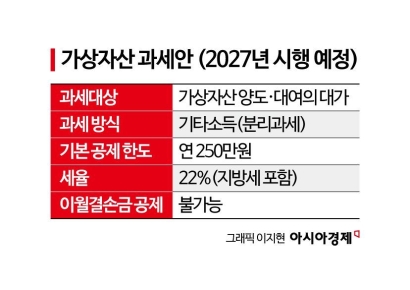 "Stocks Are Not Taxed, but Annual Crypto Gains Over 2.5 Million Won to Be Taxed Next Year... Investors Push Back"
- "Not Jealous of Winning the Lottery"... Entire Village Stunned as 200 Million Won Jackpot of Wild Ginseng Cluster Discovered at Jirisan
- General Strike D-1: Final Negotiations Between Samsung Electronics Labor and Management Over One Key Issue
- "How Did an Employee Who Loved Samsung End Up Like This?"... Past Video of Samsung Electronics Union Chairman Resurfaces
- "Even With a 90 Million Won Salary and Bonuses, It Doesn’t Feel Like Much"... A Latecomer Rookie Who Beat 70 to 1 Odds [Scientists Are Disappearing] ③
This is interpreted as a failure to attract investment due to the recent cautious mood in the investment market, unlike last year when large amounts of funding were flowing in. An industry insider said, “As stock prices of listed companies fall, it is difficult to receive investment unless a highly profitable business model is presented,” adding, “The polarization phenomenon, where investment demand concentrates only on companies with good business potential, may intensify further.”
© The Asia Business Daily(www.asiae.co.kr). All rights reserved.