Bank of Korea Employees Share Views on 'Finance and Economy'..."Monetary Policy Is No Different from Homework"
Bank of Korea Establishes Blog Category on Website
Frontline Employees Share Analysis on Economic Issues
Enhancing External Communication... First Post on Base Interest Rate

On the 26th, at the economic outlook press briefing held at the Bank of Korea in Jung-gu, Seoul, Director Kim Woong of the Research Department is speaking. Photo by Hyunmin Kim kimhyun81@
View original imageThe Bank of Korea has established a new blog category on its website and plans to share analyses and opinions from its executives and staff on major financial and economic issues going forward. This move is interpreted as reflecting the intention of Bank of Korea Governor Lee Chang-yong to increase communication with the public. The first post published on the day included the personal reflections of the Director of the Monetary Policy Department, who likened the base interest rate hike to a 'homework assignment.'
Hong Kyung-sik, Director of the Bank of Korea's Monetary Policy Department, posted an article titled "Background of the Bank of Korea's Base Interest Rate Hike in May" on the Bank of Korea's website blog on the 31st. In the post, Director Hong stated, "At the May meeting, the Monetary Policy Committee raised the base interest rate, considering that the current high inflation trend is expected to persist for a considerable period. It was expressed that monetary policy should be operated with a greater focus on inflation for the time being." He added, "In deciding the timing and pace of further base rate hikes and the future direction of monetary policy, key considerations will likely include the development of domestic and external risk factors, consumer price inflation rate, GDP growth rate, and major economic indicators to be obtained in the future, as well as the pace of the U.S. Federal Reserve's rate hikes."
He explained, "The expansion of inflationary pressure was significantly influenced by external factors such as the Ukraine crisis, China's lockdown measures, and the acceleration of the U.S. Federal Reserve's rate hikes." He continued, "The Fed is expected to raise policy rates by 50 basis points in June and July following the increase in May. Such rapid policy rate hikes act as a factor that further increases domestic inflationary pressure through the rise in the won-dollar exchange rate."
Director Hong noted, "While the Ukraine crisis is weakening Europe's growth momentum, concerns about economic slowdown are growing in China and the U.S. due to lockdown measures and accelerated rate hikes, respectively, making negative impacts on South Korea's exports inevitable." However, he added, "Since excess demand conditions persist in the global goods market due to supply disruptions, the overall export trend is not expected to deteriorate significantly."
In particular, Director Hong shared his personal reflections related to the base interest rate hike. He said, "Looking back on my school days, I remember having a lot of homework. When I did my homework little by little in advance, I was not anxious even as the deadline approached. However, if I postponed my homework for any reason, I ended up staying up all night near the deadline, which lowered the quality of the homework and took a toll on my health. Reflecting on the period since last year, I think monetary policy is no different."
Kim Woong, Director of the Bank of Korea's Research Department, also explained the background for the Bank lowering its domestic economic growth forecast for this year from the initial 3% to 2.7%, and raising the consumer price inflation forecast from 3.1% to 4.5%, in a post titled "Key Contents of the May 2022 Economic Outlook."
He pointed out, "The global economy rebounded quickly from the COVID-19 crisis last year, but this year the recovery pace has slowed due to war and supply chain disruptions." He added, "Especially during the post-pandemic recovery process, inflationary pressures expanded worldwide, and recently, inflationary pressures have intensified due to rising raw material prices and worsening supply disruptions."
Hot Picks Today
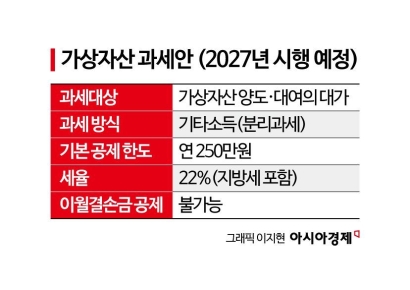 "Stocks Are Not Taxed, but Annual Crypto Gains Over 2.5 Million Won to Be Taxed Next Year... Investors Push Back"
- "Not Jealous of Winning the Lottery"... Entire Village Stunned as 200 Million Won Jackpot of Wild Ginseng Cluster Discovered at Jirisan
- "Even With a 90 Million Won Salary and Bonuses, It Doesn’t Feel Like Much"... A Latecomer Rookie Who Beat 70 to 1 Odds [Scientists Are Disappearing] ③
- "Jeong Yu-kyung Is a Neighbor"...Itaewon Standalone House with Record 23.2 Billion Won Appraisal Up for Auction [Real Estate AtoZ]
- "How Did an Employee Who Loved Samsung End Up Like This?"... Past Video of Samsung Electronics Union Chairman Resurfaces
He continued, "Regarding consumption, face-to-face activities are expected to recover faster than initially anticipated due to the lifting of social distancing measures and the execution of supplementary budgets by the government." However, he explained, "Exports are expected to gradually weaken as the growth momentum of major trading partners slows."
© The Asia Business Daily(www.asiae.co.kr). All rights reserved.