Will Protests Be Possible Right in Front of Yongsan Office During Biden's Visit to Korea?...Conflicting Expert Opinions
Seoul Administrative Court Holds Hearing on Suspension of Assembly Ban Requested by People's Solidarity
"Security Near Yongsan Office Not Yet Perfect... Security Must Come First"
"Law Must Be Equal Before President Biden... Maintaining Legal Order Is Priority"
![[Image source=Yonhap News]](http://www.asiae.co.kr/news/img_view.htm?img=2022052009152473962_1653005724.jpg)
The fate of protests within 100 meters of the Yongsan Presidential Office, timed with U.S. President Joe Biden's visit to South Korea, will be decided on the 20th. Experts are divided between opinions that the court should prioritize the security of foreign heads of state and those that emphasize maintaining the uniformity of the law.
The Administrative Division 13 of the Seoul Administrative Court (Chief Judge Park Jeong-dae) will hold a hearing around 10:30 a.m. on the same day regarding the suspension of the enforcement of a protest ban notification filed by the People's Solidarity for Participatory Democracy against the Yongsan Police Station in Seoul. The People's Solidarity had reported a protest within 100 meters of the Yongsan Presidential Office in line with the U.S.-South Korea summit scheduled for the afternoon of the 21st, but the police issued a ban notification. The police have issued ban notifications for all nine protests reported to be held in front of the Yongsan Presidential Office during President Biden's visit, including the People's Solidarity's protest report.
Protests Were Intense During U.S. Presidents' Visits... But No Protests Within 100 Meters of the Blue House
Protests have been intense during every visit by a U.S. president. During former President Barack Obama's visit in 2014, the Korean Confederation of Trade Unions (KCTU) and the National Peasants' Federation held large-scale protests opposing the Korea-U.S. Free Trade Agreement (FTA). When former President Donald Trump visited, progressive groups held anti-Trump protests, while conservative groups held welcoming rallies.
However, the current protest report in front of the Yongsan Presidential Office differs from past cases and circumstances. During the visits of former Presidents Obama and Trump, civic groups gathered at Gwanghwamun Square in Seoul or marched only as far as the Hyoja Security Center, which is 100 meters away from the Blue House, allowing for the prevention of unexpected incidents in advance. But if protests are held within 100 meters of the venue of the U.S.-South Korea summit, the police responsible for security inevitably face increased pressure.
For this reason, the police have so far banned protests within 100 meters of the Yongsan Presidential Office based on Article 11 of the Assembly and Demonstration Act (the Assembly Act). They argue that the Presidential Office falls under the category of a residence. However, the court views the residence and the Presidential Office as separate spaces. On the 11th, the Seoul Administrative Court partially accepted the suspension of enforcement of a ban on outdoor protests filed by Rainbow Action Against Sexual Minority Discrimination. Empowered by the court's decision, Rainbow Action conducted a march within 100 meters of the Yongsan Presidential Office on the 14th.
Diverging Expert Opinions: "Priority to Foreign Head of State Security" vs. "Maintain Legal Order"
![[Image source=Yonhap News]](http://www.asiae.co.kr/news/img_view.htm?img=2022052009202073994_1653006020.jpg)
This court ruling is expected to serve as a directional turning point for protests and demonstrations within 100 meters of the Yongsan Presidential Office in the future. Professor Kim Do-woo of the Department of Police Science at Gyeongnam National University said, “Various interpretations have emerged regarding the Yongsan Presidential Office and the Assembly Act, but this discussion has reached a watershed moment,” adding, “If the court allows an expansive interpretation of the Assembly Act, it could lead to legislative amendments.”
Hot Picks Today
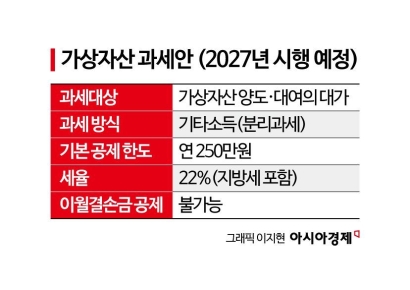 "Stocks Are Not Taxed, but Annual Crypto Gains Over 2.5 Million Won to Be Taxed Next Year... Investors Push Back"
- "Not Jealous of Winning the Lottery"... Entire Village Stunned as 200 Million Won Jackpot of Wild Ginseng Cluster Discovered at Jirisan
- "Rather Than Endure a 1.5 Million KRW Stipend, I'd Rather Earn 500 Million in the U.S." Top Talent from SNU and KAIST Are Leaving [Scientists Are Disappearing] ①
- "How Did an Employee Who Loved Samsung End Up Like This?"... Past Video of Samsung Electronics Union Chairman Resurfaces
- "Even With a 90 Million Won Salary and Bonuses, It Doesn’t Feel Like Much"... A Latecomer Rookie Who Beat 70 to 1 Odds [Scientists Are Disappearing] ③
Experts' forecasts on the court's ruling are divided. Professor Kim said, “Since the office was relocated recently, security near the Yongsan Presidential Office is not yet fully established,” and added, “Considering the special case of a foreign head of state visiting and the need to prioritize security, the court is likely to ban the protest.” On the other hand, Professor Lee Yun-ho of the Department of Police Science at Korea Cyber University explained, “The fundamental principle of law is that all people are equal before the law,” and “President Biden is no exception. Since the Seoul Administrative Court recently allowed protests near the Presidential Office, to maintain legal order, protests should be permitted this time as well.”
© The Asia Business Daily(www.asiae.co.kr). All rights reserved.