North Korea's Ballistic Missile Launch Deemed a 'Provocation'
![[Image source=Yonhap News]](http://www.asiae.co.kr/news/img_view.htm?img=2022013011034828352_1643508229.jpg)
[Asia Economy Yang Nak-gyu, Military Specialist Reporter] Going forward, the military authorities will use the term ‘provocation’ from the initial media announcement whenever North Korea launches a ballistic missile. Until now, the military used expressions such as ‘North Korea, unidentified projectile launch,’ but this is interpreted as a will to reflect a firm stance on North Korean missiles.
According to military authorities on the 12th, the Ministry of National Defense and the Joint Chiefs of Staff have been internally reviewing the modification of expressions used in media announcements regarding North Korea’s ballistic missile launches, and it is known that a final conclusion was reached following the directive of Minister of National Defense Lee Jong-seop, who took office the day before. This reflects the policy of President Yoon Suk-yeol and the new government, who have repeatedly declared a firm stance on North Korean missiles.
Until now, when a ballistic missile was detected, the military announced it to the press corps within minutes via text message in the form of a ‘breaking news’ alert as ‘North Korea, unidentified projectile launch.’ Subsequently, in the form of second and third updates, additional analyzed specifications and related information along with the military authorities’ stance were expressed.
However, the military authorities have decided that in the future, when announcing the initial detection of a ballistic missile, they will clearly define it as an ‘unidentified ballistic missile’ instead of using the term ‘projectile.’ It is also reported that official statements on North Korea’s ballistic missiles will include phrases indicating that they are ‘recognized as serious provocations’ rather than just ‘serious threats.’
Earlier, Minister Lee stated at the confirmation hearing on the 4th, "North Korea has carried out 13 missile provocations this year and held a large-scale military parade, heightening military tensions," clearly expressing the position of ‘provocation.’
During the Moon Jae-in administration, it is true that the Blue House and the military refrained from using the term ‘provocation.’ The word ‘threat’ was mainly used. On September 15 last year, when North Korea launched two short-range ballistic missiles, the Blue House held an emergency meeting of the National Security Council (NSC) Standing Committee and stated, "We express deep concern over North Korea’s continuous missile launch provocations." On the same day, former President Moon Jae-in, who observed the first test launch of South Korea’s submarine-launched ballistic missile (SLBM), also expressed that "it can serve as a definite deterrent against North Korea’s provocations."
Hot Picks Today
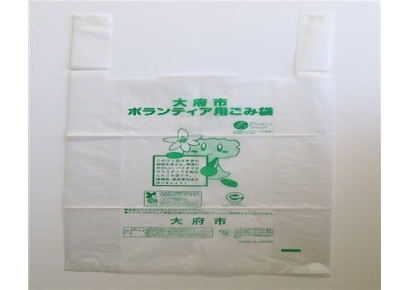 "Only Two Per Person" Garbage Bag Crisis Was Just Yesterday... Japan Also Faces Shortage Anxiety
- "Samsung Electronics Employee with 100 Million Won Salary Receiving 600 Million Won Bonus... Estimated Tax Revealed"
- Lived as Family for Over 30 Years... Daughter-in-Law Cast Aside After Husband's Death
- 'Will Demand Finally Decline Due to High Prices?'... "I'll Just Enjoy Nearby Trips" as Japan and China See a Surge
- "Wore It Once, Then This? White Spots All Over 4.15 Million Won Prada Jacket... 'Full Refund Ordered'"
However, Kim Yo-jong, the sister of North Korean State Affairs Commission Chairman Kim Jong-un and Deputy Department Director of the Workers’ Party, harshly criticized former President Moon, and subsequently issued strong statements opposing the characterization of their missile test launches as ‘provocations,’ calling it a ‘double standard.’ This deepened the trend of ‘cautious announcements.’ This was interpreted as an adjustment of tone considering inter-Korean relations, but some have continuously criticized it as excessive ‘tiptoeing’ amid North Korea’s ongoing military demonstrations.
© The Asia Business Daily(www.asiae.co.kr). All rights reserved.