Kiwoom Securities "April Stock Market Secures Downside Rigidity... KOSPI Fluctuates Between 2600 and 2950"
![[Image source=Yonhap News]](http://www.asiae.co.kr/news/img_view.htm?img=2022033013384199253_1648615121.jpg)
[Asia Economy Reporter Lee Seon-ae] Kiwoom Securities forecasted that the stock market in April will experience high volatility due to persistent macro uncertainties such as U.S. monetary policy uncertainty and recession debates caused by the inversion of short- and long-term interest rates, but downside rigidity is expected to be secured. The expected KOSPI band was presented as 2600?2950.
According to Kiwoom Securities on the 1st, uncertainties regarding the Federal Reserve's (Fed) aggressive tightening, which is considering a 50bp (0.5%p) rate hike at a specific meeting, and recession debates due to the inversion of short- and long-term interest rates will continue this month. Accordingly, Ji-young Han, a researcher at Kiwoom Securities, said, "Stock market volatility will increase around major events scheduled for mid-April, such as the March Federal Open Market Committee (FOMC) minutes and March inflation indicators." However, since the KOSPI has already reflected a significant portion of negative factors in terms of downward price pressure, downside rigidity of the index is expected to be secured.
Domestic stock markets have experienced increased volatility amid expanding macro uncertainties but are stabilizing around the Federal Open Market Committee (FOMC). Researcher Han diagnosed, "Although it is difficult to say that macro uncertainties, such as the inversion of short- and long-term interest rates in the bond market, have eased to the extent that market participants feel comfortable, there is no sign of real demand contraction, which is a signal of economic recession."
Furthermore, he emphasized the need to view positively the fact that Russia and Ukraine, whose war had raised concerns about stagflation (rising prices amid recession), are making visible progress in negotiations. He projected, "Major governments are making every effort to control inflation, such as the U.S. reducing tariffs on Chinese products and the energy agreement between the U.S. and Europe, which will reduce companies' medium- to long-term cost burdens."
He added, "Although concerns about the weakening of the yen highlighting the price competitiveness decline of export companies are emerging, the direction of their stock prices is determined by major demand sources such as the U.S. and China," and assessed, "Currently, the manufacturing momentum of the U.S. and China is bottoming out, and key indicators of Korean exports and corporate profits, such as the easing of U.S. supply shortages and demand from economic reopening, are rebounding, which raises expectations for the earnings season."
Hot Picks Today
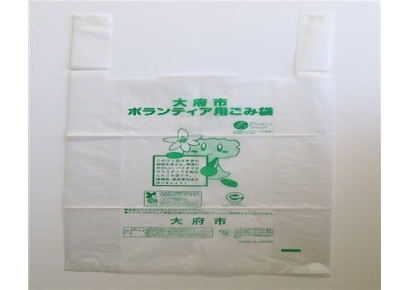 "Only Two Per Person" Garbage Bag Crisis Was Just Yesterday... Japan Also Faces Shortage Anxiety
- "Samsung Electronics Employee with 100 Million Won Salary Receiving 600 Million Won Bonus... Estimated Tax Revealed"
- Lived as Family for Over 30 Years... Daughter-in-Law Cast Aside After Husband's Death
- 'Will Demand Finally Decline Due to High Prices?'... "I'll Just Enjoy Nearby Trips" as Japan and China See a Surge
- "Wore It Once, Then This? White Spots All Over 4.15 Million Won Prada Jacket... 'Full Refund Ordered'"
Kiwoom Securities advised responding with sectors showing earnings growth. Researcher Han said, "Considering the improvement in momentum of G2 countries such as U.S. real consumption and Chinese manufacturing, the positive semiconductor industry outlook due to Micron's favorable guidance, and the continued reopening demand, April is recommended to increase stock weight centered on earnings growth sectors such as information technology (IT) and reopening."
© The Asia Business Daily(www.asiae.co.kr). All rights reserved.