'Aftermath of War' Many Ukrainian Jews Likely to Migrate to Israel
Hundreds of Thousands of Jews Reside in Ukraine... Over One Million Migrated in the 1990s After the Soviet Collapse
[Asia Economy Reporter Park Byung-hee] Major foreign media reported on the 27th (local time) that due to the war between Russia and Ukraine, the largest number of Jews in decades are expected to migrate to Israel. In the past, Jews mainly lived in Eastern Europe centered around Poland, and a significant number of Jews also resided in Ukraine.
Since Russia's invasion of Ukraine, the number of Ukrainian refugees entering Israel has approached 17,000, of which about one-third are Jewish.
It is estimated that there are hundreds of thousands of Jews in Ukraine. The New York Times cited Chabad, one of the world's largest Jewish organizations, reporting that the number of Jews living in Ukraine is estimated at 350,000.
According to Israel's Law of Return, if there is even one Jewish grandparent or great-grandparent, one can apply for Israeli citizenship. An Israeli government official predicted that up to 50,000 refugees from Russia, Ukraine, and Belarus could enter within the next three months. Furthermore, the number of refugees could double to 100,000 by the end of the year. Accordingly, this is expected to be the largest Jewish migration since the large-scale migration following the collapse of the Soviet Union in 1991. In the 1990s, over one million Jews migrated to Israel.
The large-scale migration in the 1990s brought significant changes to Israel in various aspects such as society, politics, and economy. Alex Selski, who served as an aide to former Prime Minister Benjamin Netanyahu (in office 1996?1999, 2009?2021), said that Jews who migrated after the collapse of the Soviet Union revitalized the economy and made Israeli politics more conservative. He stated, "So many Jews migrated that it could be said all the French moved to the United States. They were well-educated and excelled especially in machinery, medicine, and technology sectors, injecting vitality into the Israeli economy. Israeli politics became more right-wing. Among immigrants from the Soviet Union, very few voted for progressive parties."

Citizens of Tel Aviv, the capital of Israel, held an anti-war protest on the 20th (local time) while watching Ukrainian President Volodymyr Zelenskyy's video speech to the Israeli parliament.
Photo by EPA Yonhap News
This time, the number of Jews expected to migrate is much smaller than in the 1990s, so it is unlikely to have as large an impact as before. However, perhaps due to the historical ties from the large Jewish population, Israeli political circles are showing more active efforts to accept Ukrainian refugees. There has been social controversy over allegations of discrimination between Jewish and non-Jewish Ukrainian refugees.
Earlier this month, non-Jewish Ukrainian refugees were stranded for long hours at Israeli airports due to entry quota restrictions, and a video showing refugee children sleeping while leaning on luggage conveyor belts was released, prompting fierce protests from Israelis.
Minister for Diaspora Affairs Nahman Shai said about the video, "It was like seeing black-and-white photos of Auschwitz concentration camp. Should they be restricted because of entry quotas? It is neither moral nor Jewish."
Following the controversy, the Ministry of Interior eased the entry quota restrictions. The policy was changed to allow unlimited acceptance of Ukrainians who have relatives in Israel without numerical limits. However, the quota of 5,000 remains for Ukrainians with no ties to Israel.
Hot Picks Today
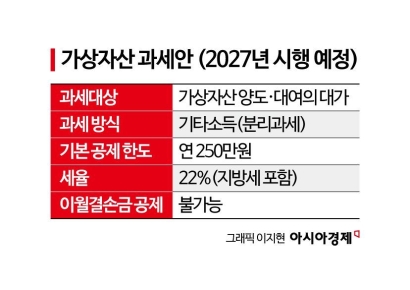 "Stocks Are Not Taxed, but Annual Crypto Gains Over 2.5 Million Won to Be Taxed Next Year... Investors Push Back"
- "Not Jealous of Winning the Lottery"... Entire Village Stunned as 200 Million Won Jackpot of Wild Ginseng Cluster Discovered at Jirisan
- "Even With a 90 Million Won Salary and Bonuses, It Doesn’t Feel Like Much"... A Latecomer Rookie Who Beat 70 to 1 Odds [Scientists Are Disappearing] ③
- [Click e-Stock] "Conquering China with Snacks"... A Stock with Strong Performance and High Dividends
- "How Did an Employee Who Loved Samsung End Up Like This?"... Past Video of Samsung Electronics Union Chairman Resurfaces
Interior Minister Ayelet Shaked stated that the Law of Return will be applied focusing on Jews, and while Israel is opening its borders, it is not unlimited.
© The Asia Business Daily(www.asiae.co.kr). All rights reserved.







