SK Chemicals, "Green Materials and Bio Business to Reach 4 Trillion KRW in Sales in 4 Years"...Some Oppose Jeon Gwang-hyun's Appointment
Regular General Meeting on the 28th... Business Restructuring 'Financial Story' Unveiled
Andawon-yong "Jeon Gwang-hyun Holds Concurrent Position as SK Bioscience CEO... Potential Conflict of Interest"

[Asia Economy Reporter Moon Chae-seok] SK Chemicals has pledged to achieve sales of 4 trillion won in four years by implementing a business restructuring focused on green materials and bio sectors, along with investments exceeding 2 trillion won. Meanwhile, opposition to the reappointment of CEO Jeon Gwang-hyun has been raised within the financial investment community. The company is attempting to appease shareholders by announcing a mid- to long-term sustainable management strategy and declaring transparency in the board of directors.
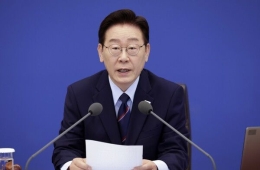
SK Chemicals announced on the 28th that it revealed its 'Financial Story,' centered on transitioning to green materials and bio businesses, at the regular shareholders' meeting. The chemical materials business, which currently focuses on petrochemical products, will be advanced into green materials, while the pharmaceutical business, centered on synthetic drugs, will be developed into bio. Jeon Gwang-hyun, CEO of SK Chemicals, stated, "SK Chemicals has built a business foundation by accumulating decades of technological expertise in plastic waste recycling, bio-plastics, and new drug development," adding, "Green materials and bio are areas where SK Chemicals can excel the most, and they are essential tasks to be achieved mid- to long-term for survival and growth."
In the petrochemical materials sector, a key task is to completely replace raw materials such as copolyester with recycled plastics and bio-based materials. Domestic production infrastructure, including the Ulsan plant, will be expanded to major overseas hubs. The target raw material conversion rates are 50% by 2025 and 100% by 2030. Copolyester production capacity is planned to increase to 300,000 tons by 2025 and 450,000 tons by 2030, aiming to become the world’s number one in this field. The company plans to realize a 'circular economy' by supplying finished products made from recycled plastic produced from waste PET bottles collected by local governments and regional collection companies, thereby implementing SK Group’s financial story. Through this, the company expects to recycle about 20% of domestic waste PET bottles. In the bio materials sector, SK Chemicals plans to newly develop a white bio business with annual sales of 1 trillion won, strengthening its position in the bio-plastics field. The market size in this sector is expected to reach 390 trillion won by 2030. Additionally, the company aims to achieve net-zero greenhouse gas emissions (carbon neutrality) by 2040. It plans to offset all estimated greenhouse gas emissions of 1.37 million tons by 2040 and reduce costs related to carbon credit purchases. To this end, SK Chemicals will invest 420 billion won in the Ulsan plant to convert coal power generation to liquefied natural gas (LNG) combined heat and power by 2024 and introduce hydrogen infrastructure in the mid- to long-term. The products sold will also be switched to low-carbon green material products.
In the bio-pharmaceutical sector, SK Chemicals will create business opportunities through open innovation and in-house research and development (R&D). Open innovation refers to a management technique where technology and ideas are sourced from external startups and necessary data is provided by the company. In the life sciences field, the company will advance specialty pharmaceutical businesses such as musculoskeletal and neurological diseases. It plans to expand its bio business comprehensively by utilizing AI and open innovation. By integrating AI technology, SK Chemicals will activate in-house development in areas such as non-alcoholic fatty liver disease, fibrotic diseases, and rheumatoid arthritis. In new areas such as gene editing, gene therapy, targeted protein degradation, and cell therapy, the company will secure new technologies through open innovation with competitive external companies. Kim Jeong-hoon, head of SK Chemicals’ R&D Center, said, "SK Chemicals has achieved milestones such as developing Korea’s first new drug Sunpla, the world’s second cell-cultured flu vaccine, and the first FDA approval of a US bio new drug developed with domestic technology," adding, "We will secure new technologies and infrastructure through the company’s capabilities and open innovation to achieve 1 trillion won in bio sector sales."
Within the financial investment community, it is known that some have cast dissenting votes against CEO Jeon’s reappointment. According to the industry, Andaz Asset Management is expected to vote against the reappointment of CEO Jeon. The reason is that Jeon concurrently serves as CEO of SK Bioscience and is scheduled to be appointed as a non-executive director at the regular shareholders’ meeting, which could lead to potential conflicts of interest if reappointed as an inside director of SK Chemicals. They also pointed out that shareholder returns have been minimal.
Hot Picks Today
 "Stocks Are Not Taxed, but Annual Crypto Gains Over 2.5 Million Won to Be Taxed Next Year... Investors Push Back"
- "Don't Throw Away Coffee Grounds" Transformed into 'High-Grade Fuel' in Just 90 Seconds [Reading Science]
- Despite Warnings of "Do Not Enter, You May Not Make It Out Alive"... Foreign Tourist Stranded After Unauthorized Climb on Jeju Sanbangsan
- Signed Without Viewing for 1.6 Billion Won... Jamsil and Seongbuk Jeonse Prices Jump 200 Million Won in a Month [Real Estate AtoZ]
- "Even With a 90 Million Won Salary and Bonuses, It Doesn’t Feel Like Much"... A Latecomer Rookie Who Beat 70 to 1 Odds [Scientists Are Disappearing] ③
In response, SK Chemicals signed a trust contract for the purchase of its own shares worth 50 billion won on the 21st and announced a 'mid- to long-term strategy for sustainable management' on the 25th to appease shareholders. At the shareholders’ meeting, the company also committed to practicing ESG (environment, social, governance) management and establishing a transparent and professional management system. Through independent and transparent board operations, SK Chemicals plans to strengthen the board’s role and implement various shareholder return policies and participation systems to build a transparent management system. CEO Jeon said, "Last year, we created conditions to focus on core businesses by selling off composite materials and polyphenylene sulfide (PPS) businesses," adding, "Based on our assets and solid business profits, we will secure investment resources exceeding 2 trillion won to build production infrastructure for green materials and bio businesses and make company-wide efforts to create business opportunities through aggressive R&D and mergers and acquisitions (M&A)."
© The Asia Business Daily(www.asiae.co.kr). All rights reserved.