"Cannot Contain Anger" - Remarks by Park Beom-gye That Agitated the Transition Committee...
![[Image source=Yonhap News]](http://www.asiae.co.kr/news/img_view.htm?img=2022032410065490790_1648084014.jpg)
[Asia Economy Reporter Kim Hyung-min] The Political, Judicial, and Administrative Subcommittee of the Presidential Transition Committee abruptly postponed the Ministry of Justice's work report scheduled for the 24th. This was a warning measure following Minister of Justice Park Beom-gye's public opposition the day before to President-elect Yoon Seok-yeol's judicial pledges.
Accordingly, it appears that the Ministry of Justice, one of the executive branches formed by the current government, and President-elect Yoon's side have entered a phase of conflict. It is also difficult to rule out the possibility of several more clashes before the new government takes office. The Ministry of Justice's report to the transition committee has been postponed to the 29th.
The subcommittee transition members strongly opposed Minister Park's remarks from the previous day, saying they "cannot contain their anger." At a press conference that day, they emphasized that the contents of President-elect Yoon's judicial pledges all "reflect Yoon's philosophy and will to strengthen the independence and political neutrality of the prosecution," and stated that Minister Park "distorted Yoon's true intentions" and expressed hope that "this situation will not be repeated."
At a brief press briefing the day before, Minister Park reiterated his opposition not only to abolishing the investigative authority of the Minister of Justice but also to granting the Prosecutor General independent budgetary authority. Meanwhile, the Supreme Prosecutors' Office expressed support for President-elect Yoon's pledges, effectively countering Minister Park.
Minister Park detailed his reasons for opposing each aspect of President-elect Yoon's pledges. From the transition committee's perspective, these remarks may have been uncomfortable. He emphasized, "The investigative authority of the Minister of Justice is based on democratic control over the prosecution and the principle of responsible administration," and added, "The position that investigative authority is still necessary remains unchanged."
He continued, "The more important issue is how to guarantee the prosecution's political neutrality and fairness," and said, "If these aspects are institutionally established and the prosecution's organizational culture is improved accordingly, the issue of investigative authority will naturally be resolved."
Regarding President-elect Yoon's pledge to grant the prosecution independent budgetary authority, he said, "There are issues related to transparency and supervision of expenditures such as special activity funds, as well as the adjustment of the organizational structure of the Ministry of Justice's prosecution bureau, which holds budgetary authority," and added, "I believe this is a matter that requires legislation."
Hot Picks Today
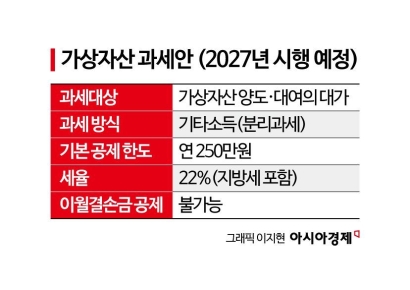 "Stocks Are Not Taxed, but Annual Crypto Gains Over 2.5 Million Won to Be Taxed Next Year... Investors Push Back"
- "Not Jealous of Winning the Lottery"... Entire Village Stunned as 200 Million Won Jackpot of Wild Ginseng Cluster Discovered at Jirisan
- "Even With a 90 Million Won Salary and Bonuses, It Doesn’t Feel Like Much"... A Latecomer Rookie Who Beat 70 to 1 Odds [Scientists Are Disappearing] ③
- "Rather Than Endure a 1.5 Million KRW Stipend, I'd Rather Earn 500 Million in the U.S." Top Talent from SNU and KAIST Are Leaving [Scientists Are Disappearing] ①
- "How Did an Employee Who Loved Samsung End Up Like This?"... Past Video of Samsung Electronics Union Chairman Resurfaces
On the expansion of direct prosecution investigations, he explained, "Just because the prosecution conducts more investigations does not mean it is beneficial for the prosecution," and said, "Until now, we have led organizational reforms to reduce direct investigations in order to firmly establish the prosecution as a dignified quasi-judicial institution in the eyes of the public."
© The Asia Business Daily(www.asiae.co.kr). All rights reserved.







