Growing Russia Default Fear "Limited Impact on Domestic Banks"
$104.7 Billion Risk in Global Banks
KRW 1.7 Trillion Domestically, 1.4% of Total
Private Banks' Share May Be Lower
![[Image source=Yonhap News]](http://www.asiae.co.kr/news/img_view.htm?img=2022031110595874939_1646963998.jpg)
[Asia Economy Reporter Song Hwajeong] As concerns over a Russian debt default grow, attention is also focused on the potential impact on domestic banks. Since the exposure of domestic banks to Russia is not significant, the direct impact is expected to be limited.
The critical date for the possibility of a Russian default is expected to be the 16th. On this day, the interest payment on dollar-denominated bonds worth $117 million (approximately 144.5 billion KRW) is due. Although there is a 30-day grace period for interest payment, allowing time until the 15th of next month, this will be the first case to gauge how Russia will respond to sovereign debt repayment. Subsequently, principal repayments of $359 million are scheduled for the 31st of this month, and $2 billion on the 4th of next month. Russia has stated its intention to repay in rubles. If Russia repays in rubles as announced by the government, the financial market may consider this a default. Kim Daejun, a researcher at Korea Investment & Securities, explained, "Facing sanctions from the Western world, Russia has imposed capital controls prohibiting the offshore transfer of foreign currency assets, making it uncertain whether it can meet the repayment schedule properly," adding, "The SWIFT sanctions blocking smooth fund transfers also increase the likelihood of default."
For domestic banks, the direct impact is expected to be minimal due to their limited exposure to Russia. According to the Bank for International Settlements (BIS), as of the end of September last year, global banks’ exposure to Russia was $104.7 billion. Domestic banks’ exposure to Russia was $1.4 billion (approximately 1.7 trillion KRW), accounting for only 1.4% of the total. Gu Kyunghoe, a researcher at SK Securities, said, "The exposure of domestic banks to Russia likely includes guaranteed credits, trade receivables, and financial transactions," and added, "Moreover, the proportion of private banks might be low, so it is unnecessary to overinterpret the entire 1.7 trillion KRW as losses for domestic banks." He further stated, "I believe the direct impact of Russia’s invasion of Ukraine on domestic banks is minimal," and added, "The relatively better performance of domestic bank stocks compared to U.S. or European banks since February is due to the limited direct impact."
Hot Picks Today
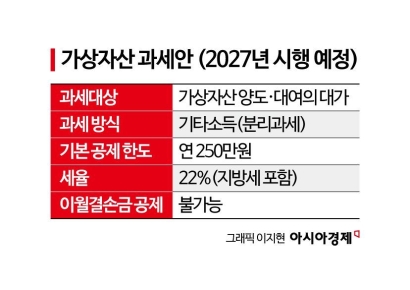 "Stocks Are Not Taxed, but Annual Crypto Gains Over 2.5 Million Won to Be Taxed Next Year... Investors Push Back"
- "Not Jealous of Winning the Lottery"... Entire Village Stunned as 200 Million Won Jackpot of Wild Ginseng Cluster Discovered at Jirisan
- "Even With a 90 Million Won Salary and Bonuses, It Doesn’t Feel Like Much"... A Latecomer Rookie Who Beat 70 to 1 Odds [Scientists Are Disappearing] ③
- "Rather Than Endure a 1.5 Million KRW Stipend, I'd Rather Earn 500 Million in the U.S." Top Talent from SNU and KAIST Are Leaving [Scientists Are Disappearing] ①
- "How Did an Employee Who Loved Samsung End Up Like This?"... Past Video of Samsung Electronics Union Chairman Resurfaces
However, indirect effects that may arise if the war prolongs are considered a concern. Researcher Gu said, "Earlier in early January, the U.S. Federal Reserve (Fed) adopted a tightening stance, raising expectations of interest rate hikes," and added, "However, if the Russia-Ukraine war prolongs, indirect effects such as further surges in commodity prices, the possibility of stagflation (economic stagnation with inflation), and weakening of the global tightening stance are worrisome."
© The Asia Business Daily(www.asiae.co.kr). All rights reserved.