Seongdong-gu Establishes Intelligent Civil Petition Form Writing Assistant Service... Gangseo-gu Launches 'Thematic Map Mobile App Service'
[Seoul District News] Seongdong-gu Automates Complex Civil Petition Forms with Voice and Touch Input Public MyData Automatically Fills Personal Information Fields · Pilot Service to Be Established at 10 District and Community Centers by Year-End to Realize Innovative Civil Service... Gangseo-gu Enhances Facility Information with Augmented Reality Mode... Jung-gu Residents' Care Cooperative Provides Gap Care and Job Creation

The civil service kiosk is linked to the website, allowing the public to check the civil service waiting status from outside.
View original image[Asia Economy Reporter Park Jong-il] Seongdong-gu (Mayor Jung Won-oh) announced that it has been finally selected for the '2022 Advanced Information Technology Utilization Public Service Promotion Project' (hereinafter referred to as ‘Advanced Service’) hosted by the Ministry of the Interior and Safety, and will establish and introduce the ‘Intelligent Civil Petition Form Writing Assistant Service.’
The ‘Intelligent Civil Petition Form Writing Assistant Service’ is a service that helps users easily fill out civil petition forms through artificial intelligence. Vulnerable groups such as the elderly and people with disabilities can authenticate and verify their identity via kiosks when filling out public institution civil documents, and by applying ‘Public MyData’ that utilizes personal information held by public institutions, personal information fields are automatically filled in the forms.
Complex administrative terms and inquiries are answered by AI through voice recognition to support easy completion of civil petition forms.
The Advanced Service was piloted in Jeju Island in 2020 and underwent advancement last year. The district plans to further enhance the service and increase inclusiveness to lay the foundation for nationwide expansion.
Accordingly, the types of civil petition forms that can be completed using kiosks will be expanded to more than 30. From the provider’s perspective, the low utilization and inconvenient operation of the 25 existing civil petition forms will be completely revamped. A ‘Seongdong-type Living Lab,’ a public-private-expert cooperative governance, will be established to readjust the entire system construction process from the user’s perspective.
A large font screen function will be added to the main screen, and the digital tactile map will be enhanced with a braille keypad so that people with low vision and visual impairments can freely use it. ID cards, which were previously only verifiable online, will be expanded offline, and IC driver’s licenses will be directly recognized to shorten the mobile driver’s license identity verification time. Additional information such as district policies and COVID-19 status will be displayed, and the voice recognition chatbot function will also be expanded.
Seongdong-gu, which is promoting leading civil services such as civil petition waiting status and sign language voice guidance systems, prioritizes ‘Smart Inclusive City’ that enhances urban inclusiveness using smart technology. Therefore, it plans to prepare a design standard that increases inclusiveness in this public contest project. After establishing the project plan this month and selecting a service provider in July, pilot services will be established at the district office and 10 community service centers, aiming to complete the project promptly within this year.
Jung Won-oh, Mayor of Seongdong-gu, said, “Providing non-face-to-face administrative services in response to the COVID-19 pandemic will bring innovation to administrative services,” and added, “We will use advanced technology to improve civil convenience so that digital vulnerable groups can use it more easily.”

When you turn on your smartphone, various public and daily life information of Gangseo-gu unfolds vividly before your eyes.
Gangseo-gu, Seoul (Mayor Noh Hyun-song) announced that it will implement the ‘Theme Map Mobile App Service’ utilizing augmented reality (AR) technology.
The ‘Theme Map App Service’ is a mobile map service that allows users to check information on public facilities in areas such as safety, welfare, and culture at a glance through their smartphones.
The purpose is to help residents easily and conveniently check various location-based information closely related to their daily lives, such as various living information and facility information, anytime and anywhere through the mobile app service.
In 2020, the district built an online theme map containing public and living information by theme within the region and provided the service through the district office website.
Although the usability has been improved by continuously reflecting various information including disaster safety facilities, there were inconveniences in using the theme map on smartphones.
Therefore, the district applied augmented reality (AR) technology to enhance the usability and convenience of the theme map and implemented it as a mobile app.
By installing the app on a smartphone, users can easily find information on public facilities that are difficult to check on general maps by theme, such as ▲emergency evacuation facilities ▲emergency fire extinguishing facilities ▲heatwave shelters ▲public parking lots ▲shuttle buses for the elderly and disabled ▲parks ▲cultural heritage sites ▲walking trails ▲welfare facilities ▲public restrooms ▲land transaction permission zones within the region.
If the facility is located within the district, users can receive diverse information including facilities installed and managed by fire stations, police stations, and national institutions.
In particular, users can see surrounding facilities at a glance centered on their current location and select desired facilities to check detailed information such as facility name, address, and contact number.
Also, by pressing the AR button on the app to enter augmented reality mode, users can learn about surrounding facilities more vividly through the camera.
The Theme Map app can be downloaded by accessing the Gangseo-gu website on a smartphone and selecting ‘Gangseo News - Notices/News’ from the main menu, and it will also be available on mobile app markets within this month.
The district plans to gradually expand the service items of the Theme Map app and update information so that residents can continuously use it conveniently.
Mayor Noh Hyun-song said, “I hope the Theme Map Mobile App Service, which gathers various information of the region, will be practically helpful to residents,” and added, “We will continue to do our best to discover and provide various location information services that residents need.”
For more details, please contact the Real Estate Information Division of Gangseo-gu.

Jung-gu (Mayor Seo Yang-ho) announced plans to expand resident-led community care services through the promotion of the ‘Jung-gu Type Mutual Care The Together Project.’
The ‘Jung-gu Type Mutual Care The Together Project,’ selected in 2020 by the Ministry of Health and Welfare’s social service sector social economy fostering and support public contest under the ‘Resident Participation Care Cooperative Fostering’ category, is a three-year project designed to form social service resident cooperatives to support gaps in public care services.
A district official said, “In this third year, we plan to invest about 100 million won to further strengthen the resident-led care platform built over the past two years,” adding, “Jung-gu, the resident care community, and the Jung-gu Social Economy Integrated Support Center will organically cooperate to solidify the care support system and actively discover care blind spots in the region to expand the beneficiary groups.” He also added, “The ultimate goal is to strengthen the capacity of resident care cooperatives and grow them into social economy organizations to establish a sustainable community care system.”
In the first and second years of the ‘Jung-gu Type Mutual Care The Together Project,’ the district discovered resident care communities responding to local care demands and secured idle spaces for program operation, supporting resident-planned care projects such as ▲child and youth care support ▲care for people with developmental disabilities and healing programs for their families ▲food sharing for the elderly and single-person households.
For example, an artificial turf field was created in a church parking lot that was empty during weekdays to provide a space where children can play, and a shared kitchen space in the community center was remodeled for food sharing for the elderly.
Currently, there are three resident care communities in the region: the child care cooperative ‘The Jarum,’ the developmental disability care cooperative ‘The Giving Tree,’ and the newly discovered ‘Cheonggudong The Together Care Project Group’ last year. ‘The Jarum’ and ‘The Giving Tree’ participated as care communities in the early stages of the project and received social cooperative approval in 2021 after undergoing social economy education, mentoring, and profit model creation consulting.
During the COVID-19 pandemic, when outdoor activities are difficult, programs such as the inline skating and soccer programs of ‘The Jarum Social Cooperative’ and the Namsan outdoor experience program of ‘Cheonggudong The Together Care Project Group’ have received great responses not only from children and youth but also from working parents.
Meanwhile, ‘The Giving Tree Social Cooperative’ conducts job-linked vocational education programs for people with developmental disabilities, contributing to job creation for idle human resources in the region. For example, through the cooperative’s barista training course called the ‘Mom Teacher Fruit Project,’ a youth with developmental disabilities had the opportunity to operate a caf? entrusted within the Jung-gu Education Support Center ‘Iro-um.’
The district plans to build a solid local community care network through sound operation so that resident-led care projects can expand to gap groups not covered by public care services. It also plans to focus on strengthening professional capacity by training resident instructors and providing customized job education so that resident organizations can become self-reliant even after the project ends.
Hot Picks Today
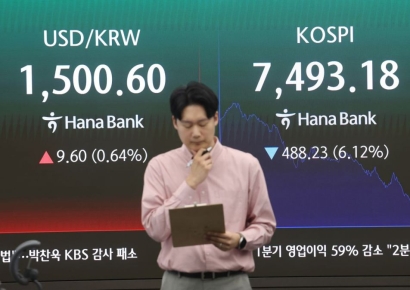 After Topping 8,000 Instead of Hitting 10,000... KOSPI Plunges—When Will It Rebound?
- "Samsung and Hynix Were Once for the Underachievers"... Hyundai Motor Employee's Lament
- [Breaking] Court Rules Against Samsung Electronics Union...1 Billion Won per Day Penalty for Exceeding Strike Scope
- Global Big Tech Joins AI Firms in Full-Scale AI Agent Showdown
- "That? It's Already Stashed" Nightlife Scene Crosses the Line [ChwiYak Nation] ③
Mayor Seo Yang-ho said, “We will spare no institutional and policy support so that local residents can unite to solve care issues in the region by themselves and establish themselves as a desirable social economy organization contributing to job creation.”
© The Asia Business Daily(www.asiae.co.kr). All rights reserved.