"Fear of Losing Russian Export Payments"... KITA Holds 'Emergency Briefing' on Ukraine Crisis
"Efforts to Minimize Damage in the Trade Industry"

Officials from various organizations attending the "Online Emergency Briefing on the Ukraine Situation" held by the Korea International Trade Association (Chairman Gu Ja-yeol) on the 4th are speaking.
View original image[Asia Economy Reporter Jin-ho Kim] The Korea International Trade Association (KITA) held an 'Online Emergency Briefing on the Ukraine Situation' on the 4th at the Trade Tower in Samseong-dong, Seoul.
The briefing was jointly organized by 10 institutions including the Ministry of Trade, Industry and Energy, the Financial Services Commission, the Financial Supervisory Service, the Korea Development Bank, the Export-Import Bank of Korea, the Industrial Bank of Korea, KOTRA, the Korea Trade Insurance Corporation, and the Strategic Materials Management Institute to provide information on responding to the Ukraine situation and to resolve difficulties faced by companies.
KITA, which has been operating the 'Ukraine Situation Emergency Task Force' since the 24th of last month, informed attendees about frequently received corporate difficulties at the complaint reception desk and the corresponding response measures.
Additionally, representatives from each institution provided information on local trends in Russia and Ukraine, the current status of sanctions against Russia, the supply chain status of strategic materials, and risk management for uncollected payment settlements.
Shin Seung-kwan, Executive Director of KITA, stated, "Over the past week, about 270 cases of difficulties such as payment settlement issues, inability to ship, and disruption of business partners have been reported. As the trade industry exporting to Russia and Ukraine is suffering continuous damage due to the recent series of events, we will continue to make efforts to minimize damage through cooperation with the government and related organizations."
Earlier, the government prepared an emergency financial support program worth approximately 2 trillion won for Korean companies facing difficulties due to export controls and financial sanctions against Russia. It also extended the export credit guarantee limit without reduction before shipment, expedited payment of short-term export insurance claims, and plans to strengthen dedicated support services through the 'Russia Desk.'
Meanwhile, at the briefing, companies inquired about export payment settlements and the possibility of exporting strategic materials.
- The United States included Korea as an exception country under the Foreign Direct Product Rule (FDPR). Does this automatically apply to items excluded from strategic materials?
▲ Being exempted from FDPR does not mean export controls apply to all items. It is necessary to understand the matter by dividing it into U.S.-origin goods or technology and Korean goods and technology. For example, if a Korean company imports and then re-exports to Russia, or if more than a certain percentage of U.S.-origin strategic materials are included in exports to Russia, U.S. export controls still apply. Therefore, it is necessary to apply for export permission for strategic materials. Even if it is not a strategic material, since it can be used militarily in Russia, permission from our government is required.
- Is there a way to check which products are excluded from export control items?
▲ The U.S. strategic materials list has been translated by the Strategic Materials Management Institute and posted on their website bulletin board. You can check it there. For Korean strategic materials, there is a strategic materials determination system. You can access the strategic materials management system and check whether an item is a strategic material through self-assessment or professional assessment.
- Currently, remittances from Russia to Korea are blocked. Is there absolutely no way to receive payments from Russia to Korea?
▲ There are two main overseas remittance regulations currently applied in Russia. First, remittance to overseas accounts of Russian residents is prohibited, and second, overseas remittance is completely banned for non-resident individuals of 46 countries participating in sanctions against Russia. This includes local subsidiaries of foreign companies, embassies, and local offices of foreign companies. However, remittances from local Russian subsidiaries to their headquarters are allowed as an exception.
- Domestic banks are currently refusing transactions with Russian banks that are not subject to sanctions.
▲ As of the 2nd, the Ministry of Strategy and Finance and the Financial Services Commission have sent official letters specifying sanctioned targets and sanction grace periods. They are guiding that transactions with banks not subject to sanctions can proceed.
- Is it possible to receive liquidity support programs even when the existing guarantee limit is fully used?
Hot Picks Today
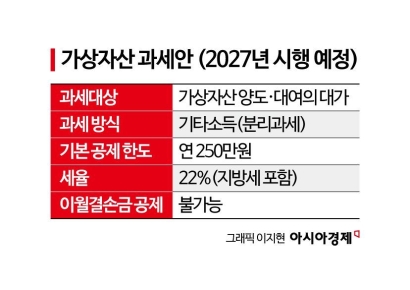 "Stocks Are Not Taxed, but Annual Crypto Gains Over 2.5 Million Won to Be Taxed Next Year... Investors Push Back"
- "Not Jealous of Winning the Lottery"... Entire Village Stunned as 200 Million Won Jackpot of Wild Ginseng Cluster Discovered at Jirisan
- "Even With a 90 Million Won Salary and Bonuses, It Doesn’t Feel Like Much"... A Latecomer Rookie Who Beat 70 to 1 Odds [Scientists Are Disappearing] ③
- "Rather Than Endure a 1.5 Million KRW Stipend, I'd Rather Earn 500 Million in the U.S." Top Talent from SNU and KAIST Are Leaving [Scientists Are Disappearing] ①
- "How Did an Employee Who Loved Samsung End Up Like This?"... Past Video of Samsung Electronics Union Chairman Resurfaces
▲ Regarding liquidity support programs, no separate guarantee is currently required.
© The Asia Business Daily(www.asiae.co.kr). All rights reserved.







