Government Provides Special Loans of 2 Trillion Won to SMEs Affected by 'Ukraine Crisis'... 15 Trillion Won Support for Supply Chain Stabilization
Emergency Financial Support Activated... Loan Interest Rates Reduced by up to 1% and Delegation of Authority Relaxed for Preferential Treatment

[Asia Economy Sejong=Reporter Kwon Haeyoung] The government will provide special loans totaling 2 trillion won to export small and medium-sized enterprises (SMEs) affected by Russia's invasion of Ukraine and reduce loan interest rates by up to 1%. To stabilize supply chain risks, it will also support policy financing worth 15 trillion won.
On the morning of the 4th, the government held the "8th Economic Security Core Items Task Force (TF) Meeting and the 11th Ukraine Crisis Emergency Response TF" at the Government Seoul Office Building, chaired by Lee Eokwon, the 1st Vice Minister of Strategy and Finance, and announced these measures.
First, to resolve financial difficulties of companies damaged or expected to be impacted by the Ukraine crisis, special loans totaling 2 trillion won will be supplied through state-run banks (Industrial Bank of Korea 800 billion won, Korea Development Bank 700 billion won, Export-Import Bank of Korea 500 billion won). Eligible recipients include companies operating in conflict zones, export and sales companies, import and purchasing companies, and partner suppliers. Banks will apply preferential conditions such as reducing loan interest rates by up to 1% and relaxing approval authority.
For medium-sized and small enterprises expected to be affected by the Ukraine crisis, the government will also promote extensions of existing loan maturities. Loans and guarantees from policy financial institutions will be extended in full for one year, and voluntary extensions of loans from commercial banks will be encouraged.
A government official stated, "The emergency financial support program will be implemented immediately from today," adding, "We will actively consider expanding the scale and scope of support while reviewing damage situations by industry and sector, as well as the degree and range of ripple effects."
To stabilize supply chains such as securing raw materials, financial support worth 15 trillion won will be provided through the Korea Trade Insurance Corporation (K-sure). Specifically, ▲ the scope of Basic Facility Agreements (FA) support will be expanded from the current focus on construction and plants to include global key raw material suppliers, ▲ logistics infrastructure will be expanded by securing container ships, and ▲ the scope of companies supported for supply chain damage will be broadened from those affected by rising export-import freight rates to those affected by rising raw material prices. ▲ Support for production facility investments for supply chain diversification, mergers and acquisitions of overseas companies possessing core technologies, import substitution, and R&D financial support for next-generation technology development will also continue.
Hot Picks Today
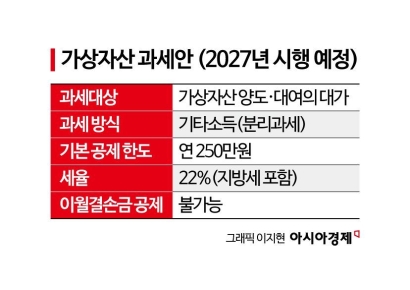 "Stocks Are Not Taxed, but Annual Crypto Gains Over 2.5 Million Won to Be Taxed Next Year... Investors Push Back"
- "Not Jealous of Winning the Lottery"... Entire Village Stunned as 200 Million Won Jackpot of Wild Ginseng Cluster Discovered at Jirisan
- "Rather Than Endure a 1.5 Million KRW Stipend, I'd Rather Earn 500 Million in the U.S." Top Talent from SNU and KAIST Are Leaving [Scientists Are Disappearing] ①
- "How Did an Employee Who Loved Samsung End Up Like This?"... Past Video of Samsung Electronics Union Chairman Resurfaces
- "Even With a 90 Million Won Salary and Bonuses, It Doesn’t Feel Like Much"... A Latecomer Rookie Who Beat 70 to 1 Odds [Scientists Are Disappearing] ③
A government official said, "Given the high uncertainty regarding the developments of the Russia-Ukraine situation and international sanctions against Russia," and added, "the Ukraine Crisis Emergency Response TF will be held daily to continuously monitor trends in exports, imports, finance, and key items according to the situation and operate a timely response system based on contingency plans." They emphasized, "To strengthen the overall supply chain capabilities of our economy, we will continuously implement supply chain stabilization measures such as risk management, operation of an Early Warning System (EWS), inspection of core items, and strengthening policy support."
© The Asia Business Daily(www.asiae.co.kr). All rights reserved.