Key Points to Watch at China's Two Sessions... 'Inflation'
Growth Target of 'Over 5%' Likely This Year, with Inflation Control as the Biggest Variable
Russia's Invasion of Ukraine Also an Unexpected Factor for China
[Asia Economy Beijing=Special Correspondent Jo Young-shin] With the opening of the Two Sessions (National Committee of the Chinese People's Political Consultative Conference and the National People's Congress), China's largest political event, scheduled for the 4th, attention is focused on this year's economic policy direction of the Chinese government.
At the Central Economic Work Conference last December, the Chinese government expressed a strong determination to stimulate the economy this year, stating that the Chinese economy is facing triple pressures of 'demand contraction,' 'supply shocks,' and 'weakened expectations.'

In fact, ahead of the Two Sessions, all 31 provinces (including municipalities and autonomous regions) in China held their local Two Sessions and collectively lowered their growth rate targets for this year. The simple average of the growth rate targets for the 31 provincial-level regions this year is around 6.3%, more than 2 percentage points lower than last year.
However, a point that deserves more attention than this year's growth rate in China is inflation. If there is a problem managing inflation, money cannot be injected. The Chinese leadership's plan to drive economic growth through stimulus could fall apart.
The Hidden Threat to the Chinese Economy: Inflation
The Chinese government's concerns about triple pressures stem from the global economic situation, including rising international raw material prices, global supply chain bottlenecks, and US-China conflicts.
To overcome this, the Chinese government has instructed local governments to secure funds to be used this year in advance by encouraging local bond issuance since the end of last year. Accordingly, Chinese local governments issued bonds totaling 1.7898 trillion yuan (approximately 341 trillion Korean won) in December alone.
Additionally, the People's Bank of China provided support by lowering the Loan Prime Rate (LPR), the benchmark interest rate, by 0.05 percentage points in December last year and an additional 0.1 percentage points in January. When money flows, prices tend to rise. Inflation must be stably managed to proceed with stimulus measures such as infrastructure investment.
The National Development and Reform Commission, which oversees China's economic planning, has urgently summoned coal and iron ore-related companies this year and warned that there will be consequences if they artificially raise prices, a move aimed at controlling inflation.
Although the Producer Price Index (PPI) in China rose significantly last year due to rising international raw material prices, this did not translate into the Consumer Price Index (CPI). This should be viewed considering that the Chinese economy operates under a socialist controlled economy.
China's Target for This Year Expected to Be 'Above 5%'
The dominant forecast is that the Chinese government's economic growth target for this year will be above 5%, which is 1 percentage point lower than last year's 'above 6%.'
The Chinese Academy of Social Sciences, a think tank under the State Council, also predicted this year's growth target to be around 5.3%. Tang Duoduo, head of the macroeconomic team at the Chinese Academy of Social Sciences, indicated that "below 5% means the Chinese economy is bad, above 5% means it is not bad, and above 5.5% means it is good," suggesting that the growth target will be lowered.
Since the Chinese government sets the annual target based on the growth targets of local governments and the Chinese Academy of Social Sciences' forecast, this year's growth target is expected to be 'above 5%.'
However, the Chinese government may set a more conservative target due to the Ukraine crisis. Russia's invasion of Ukraine was an unforeseen variable for China as well. There are concerns that the Ukraine crisis could become a black hole for both the Chinese and global economies. If the Ukraine crisis prolongs or the conflict expands to the European Union (EU), it is difficult to gauge the extent of the shock the global economy will face.
Meanwhile, China's state-run Xinhua News Agency highlighted the key points to watch at this year's Two Sessions as people's democracy, epidemic control and international cooperation, contributions to the Chinese economy and market opening, and green growth.
Hot Picks Today
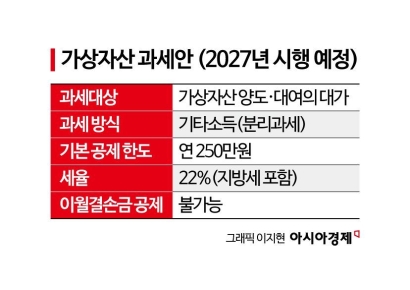 "Stocks Are Not Taxed, but Annual Crypto Gains Over 2.5 Million Won to Be Taxed Next Year... Investors Push Back"
- "Not Jealous of Winning the Lottery"... Entire Village Stunned as 200 Million Won Jackpot of Wild Ginseng Cluster Discovered at Jirisan
- "Even With a 90 Million Won Salary and Bonuses, It Doesn’t Feel Like Much"... A Latecomer Rookie Who Beat 70 to 1 Odds [Scientists Are Disappearing] ③
- [Click e-Stock] "Conquering China with Snacks"... A Stock with Strong Performance and High Dividends
- "How Did an Employee Who Loved Samsung End Up Like This?"... Past Video of Samsung Electronics Union Chairman Resurfaces
© The Asia Business Daily(www.asiae.co.kr). All rights reserved.







