From Fund Recovery to Import and Export... Korean Companies on Full-Scale Emergency (Comprehensive)
As Sanctions on Russia Tighten
Letter of Credit Issuance Refused, Logistics Disrupted
Local Businesses Take Direct Hit
Payment Issues Top at 52.4%
Exclusion from SWIFT Could Worsen Impact
Companies Stockpile Inventory Amid Emergency

On the 27th (local time), a man was seen passing in front of a building destroyed by a Russian missile attack near Vasylkiv, close to Kyiv, the capital of Ukraine. The Russian military launched a concentrated offensive using all branches of the army, navy, and air force on major Ukrainian cities, including Kyiv. (Image source=AFP Yonhap News)
View original image[Asia Economy Reporters Choi Dae-yeol and Moon Chae-seok] Company A, which imports and sells Russian pulp domestically, was recently refused the issuance of letters of credit by four domestic banks. Unable to create letters of credit guaranteed by banks, payment has become difficult, making transaction disruptions inevitable. Company B, which exports tractors overseas, is currently debating whether to produce the shipment scheduled for Russia next month. Company C also planned to send semiconductor equipment to Samsung Electronics' factory in Russia next month, but it is still unclear whether the logistics system will operate normally.
As the international community tightens sanctions against Russia, Korean companies operating locally or trading with local firms are taking a direct hit, facing refusals to issue letters of credit, non-recovery of funds, disruptions in parts supply, and logistics network issues.
On the 28th, the Korea International Trade Association surveyed major difficulties faced by companies related to the Ukraine crisis. As of that morning, payment issues accounted for the largest portion at 52.4%, followed by logistics at 33.3%, and information provision at 14.3%. Since this was before Russia was cut off from the Society for Worldwide Interbank Financial Telecommunication (SWIFT), the payment disruptions for Korean companies due to SWIFT exclusion are expected to worsen. A representative from a major domestic conglomerate said, "Currently, the sanctions target local Russian banks, so companies dealing with foreign banks are less affected, but indirect impacts are inevitable. In the past, local economic conditions fluctuated due to external variables like oil prices, so if the situation prolongs, losses will inevitably increase."

Domestic energy and parts industries have begun self-preparation by securing raw material inventories. Rare gases essential for semiconductor processes, such as neon and krypton, have a high dependency of over 50% on Russia and Ukraine, with current stock estimated to cover about three months. While equipment can operate for now, prolonged disruption could halt factory operations due to raw material supply issues. Some automakers like Renault have already decided to temporarily suspend operations at their Russian factories due to parts supply problems.
Park Kang-ho, an analyst at Daishin Securities, said, "Supply disruptions of neon gas used in semiconductor photolithography can significantly impact semiconductor production. Memory semiconductor companies currently hold up to eight weeks of inventory, higher than the normal four weeks, but prolonged military actions causing distribution stoppages will severely affect semiconductor production." A representative from a domestic auto parts company said, "We have secured some inventory and liquidity, so there are no immediate issues with factory operations, but we are closely monitoring the situation as prolonged conflict or additional sanctions could have an impact."
The petrochemical industry also faces the imminent risk of rising prices for Russian naphtha. According to the industry, Korea imports about 29 to 30 million tons of naphtha annually, with Russian naphtha accounting for the largest share at 20-25%. The industry has secured imports for the next two months, but if the war continues longer, they plan to source naphtha from the Middle East and India or increase domestic operating rates. Refining and petrochemical companies are paying attention to whether the U.S. will ease sanctions on Iran. An industry insider said, "Currently, the U.S. still sanctions Iran, so there are no discussions about importing Iranian crude oil, but if the war prolongs and sanctions are eased, it could help ease crude oil supply."
National research institutes also expressed concerns that prolonged international sanctions against Russia could negatively affect the productivity of Korean companies. On the 28th, Jung Min-hyun, a senior researcher at the Korea Institute for International Economic Policy (KIEP), stated in an analysis titled "The Impact of the Ukraine Crisis on the Korean Economy" that local demand contraction in Russia could reduce profitability for Korean companies. He also pointed out increased transaction costs due to broad financial sanctions as a risk factor. However, he judged that even if Russia is removed from the SWIFT list, trade would not be completely halted. Furthermore, if restrictions on Russian fossil fuel imports continue, supply reductions could also lower corporate productivity.
Hot Picks Today
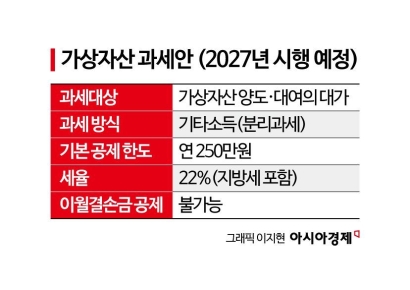 "Stocks Are Not Taxed, but Annual Crypto Gains Over 2.5 Million Won to Be Taxed Next Year... Investors Push Back"
- "Not Jealous of Winning the Lottery"... Entire Village Stunned as 200 Million Won Jackpot of Wild Ginseng Cluster Discovered at Jirisan
- "Jeong Yu-kyung Is a Neighbor"...Itaewon Standalone House with Record 23.2 Billion Won Appraisal Up for Auction [Real Estate AtoZ]
- "How Did an Employee Who Loved Samsung End Up Like This?"... Past Video of Samsung Electronics Union Chairman Resurfaces
- "Even With a 90 Million Won Salary and Bonuses, It Doesn’t Feel Like Much"... A Latecomer Rookie Who Beat 70 to 1 Odds [Scientists Are Disappearing] ③
Researcher Jung said, "If the 'Foreign Direct Product Rule' (FDPR) applies not only to products listed in the export control list (CCL) categories 3 to 8 but also to final consumer goods under export administrative regulations (EAR99) such as automobiles, machinery, plastics, and electrical products, which are major exports to Russia, exports to Russia could sharply decline." FDPR is a strong sanction clause that prohibits exports if foreign companies outside the U.S. use U.S.-controlled equipment, software, or designs in their manufacturing process, even if the products are made abroad.
© The Asia Business Daily(www.asiae.co.kr). All rights reserved.