Refusal to Inter at National Cemetery Despite 6.25 War Participation? Court: "Service at Military Hospital Is Not Combat Support"

Seoul Dongjak-gu National Seoul National Cemetery / Photo by Jinhyung Kang aymsdream@
View original image[Asia Economy Reporter Kim Daehyun] A court ruling has determined that the period of service at an Air Force hospital during the Korean War does not qualify as combat participation time required for burial at the National Cemetery.
On the 28th, the Administrative Court of Seoul, Administrative Division 6 (Presiding Judge An Jonghwa) ruled against Mr. A in the first trial of his lawsuit against the Director of the National Seoul Cemetery, seeking to overturn the refusal to bury at the National Seoul Cemetery.
Previously, Mr. A's grandfather, the late Mr. B, enlisted as an Air Force soldier in 1952 and worked at an Air Force hospital. He was commissioned as an officer in 1954 and served until 1971. Mr. A applied to have Mr. B, who passed away in 2019, buried at the National Seoul Cemetery, but the authorities explained that he was eligible for burial at the National Memorial Cemetery, not the National Seoul Cemetery.
In the administrative lawsuit, Mr. A's side argued, "According to the 'Korean War Service Medal,' Mr. B engaged in combat or combat support activities from 1952 to 1953," and "under the former Military Pension Act, the period should be counted double and added to the 18 years and 6 months of military service." In this case, the total service period would be 19 years and 10 months, thus meeting the 20-year service requirement for burial at the National Cemetery.
However, the court stated, "It is difficult to consider that combat support activities were performed solely based on the fact that he served at an 'Air Force hospital,'" and dismissed Mr. A's claim. The court acknowledged that Mr. B participated in combat until February 1953, but after that, his unit could not be confirmed, and only that he was assigned to the Air Force hospital, which is not a combat participation unit as defined by the former Military Pension Act.
Hot Picks Today
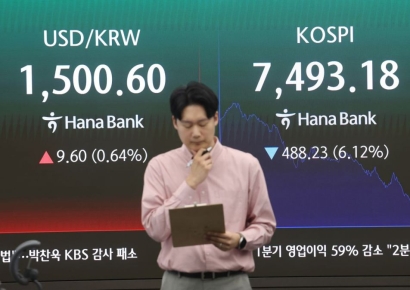 After Topping 8,000 Instead of Hitting 10,000... KOSPI Plunges—When Will It Rebound?
- "Samsung and Hynix Were Once for the Underachievers"... Hyundai Motor Employee's Lament
- [Breaking] Court Rules Against Samsung Electronics Union...1 Billion Won per Day Penalty for Exceeding Strike Scope
- 'Real Strike' Looms as Samsung Union Grows More Hardline... How the 2024 Strike Process Compares
- "That? It's Already Stashed" Nightlife Scene Crosses the Line [ChwiYak Nation] ③
The court further noted, "Both the National Seoul Cemetery and the National Daejeon Cemetery are located in major cities and are well recognized by the public, making them relatively preferred burial sites, so the burial requirements are strictly regulated," and "interpreting that the burden of proving whether one participated in combat during a specific period lies with the National Seoul Cemetery is inconsistent with the content and system of the former National Cemetery Act." It also added that since Mr. B's remains were buried at the National Memorial Cemetery, it is difficult to view the state as neglecting its duty of honor.
© The Asia Business Daily(www.asiae.co.kr). All rights reserved.