[The World on the Page] Now Is the Time to Start Exercising
![[The World on the Page] Now Is the Time to Start Exercising](http://www.asiae.co.kr/news/img_view.htm?img=2022011810144913366_1642468489.jpg)
The weather has turned cold. The mood to go for a walk naturally shrinks. For two years, exercise has decreased automatically due to the COVID-19 pandemic. Since most work is done at home and lectures and meetings are mostly held online, it feels like being confined indoors.
Except for reading, the heart finds no joy and keeps the body stuck in the corner of the room. Some days even pass without getting any fresh air outside. My mother’s nagging about health concerns has grown louder. Feeling that this cannot continue, I try hard to at least go for a walk, but the mind, accustomed to ‘jipkok’ (staying home), finds countless excuses not to move the body. Is this really okay?
Alison Bechdel is a representative graphic novel artist of contemporary America. Unlike the serialized comic genre popular in Korea, Western graphic novels are published as standalone books with strong completeness and are commonly recognized as an art form between comics and literature. Bechdel has made her name in early 21st-century American literary history by winning awards such as the MacArthur Genius Fellowship, known as the “Genius Grant,” the Lambda Literary Award, and the Stonewall Literary Award. Her representative work, Fun Home, was adapted into a Broadway musical and swept five Tony Awards.
According to her recently published autobiographical graphic novel The Secret to Superhuman Strength, Bechdel is also a fitness enthusiast. In this work, Bechdel reveals that from a childhood with no “sports for girls” to her recent years at the age of sixty, she has been deeply involved in dozens of sports including running, marathons, skiing, hiking, mountain climbing, camping, karate, fitness, yoga, and cycling. Bechdel says, “I’ve tried almost every sport that has emerged in the last 60 years.”
According to Bechdel, the reason for exercising is not solely for physical health. Exercise affects the human mind, emotions, and psychology in various ways and even brings transcendent experiences. The reason Bechdel immersed herself in exercise was that she thought “without physical hardship, I was nothing but a shell.” Exercise fills the emptiness of our hearts, alleviates anxiety, and instills confidence and fulfillment. It even creates an illusion that exercise can bring “superhuman strength.”
The work takes us through the various exercise experiences of Bechdel herself and leads us into the whirlwind of exercise trends that swept across America over the past half-century. Thanks to this, we can observe how exercise has treated the human body and mind, starting from scenes in 1960s television shows featuring women stretching in black leopard print workout clothes and men doing push-ups, to walking meditation in the forest where a chickadee is trained to feed from one’s hand. The history of the development of health and leisure equipment is an added bonus.
Bechdel’s first realization about exercise is that “the body can be built, and exercise gives ‘passion’ and ‘vitality.’” Exercise teaches us how not to live according to fate. The feeling of muscles growing inside the body through action and the body becoming stronger and firmer is also a driving force that uplifts our entire life. The experience of shaping one’s physical form by one’s own power gives us the courage to live life as we wish.
Exercise often brings the “euphoria of doing more than you thought you could,” and this feeling awakens a spirit of challenge against a world that does not give chances to the weak. For Bechdel, exercise is an act of rejecting stereotypes and social limits surrounding women and a way to arm oneself against a threatening external environment where violence against the vulnerable is rampant. “Any physical activity seems to bring enlightenment. Activities like tap dance, pole vaulting, and lifts formed the basis not only for all the sports skills I practiced but for every challenge I faced.” It is no different for men.
Moreover, exercise restores humans, who have become alienated from nature, back to wholeness and heals the mind, which has become sick due to disconnection from the body. Exercise saves modern people suffering from burnout, anxiety, and depression in concrete cities. Camping and hiking provide supreme happiness through the experience of becoming one with nature, and group exercise returns a deep sense of belonging through “moving and breathing together, entering a state of selflessness and unity.” Additionally, through “exercises that develop endurance, flexibility, balance, speed, and coordination,” we hold onto a precariously wavering mind so it does not fall into the abyss. We can enjoy peace and rest that arise “when the mind quiets and the body takes its place.”
The “state induced by aerobic exercise” also brings humans the experience of “feeling the essence of the universe.” The extreme pain accompanying exercise often leads to intense joy. Marathon runners call this ‘runner’s high.’ When pushing oneself to the point of immobility, the brain releases pleasure hormones to soothe the tired and exhausted body. Mental suffering destroys humans, but the pain of exercise plunges humans into ecstasy. The running addict and novelist Joyce Carol Oates says, “The mind runs away with the body, and in the brain’s pulse, the rhythm of the legs, and the swing of the arms, a mysterious language blooms and throbs.”
Transcendent experiences give humans mental freedom and birth a new self within it. The joy of exercise functions the same way as the ecstasy of religious enlightenment or the sublime experience of art. It transcends dichotomies such as me and you, subject and object, human and nature, bringing a peak happiness where the self seems to dissolve into the universe.
However, Bechdel warns against being addicted to transcendent power and pushing oneself endlessly. Exercise addiction can destroy the mind and body. No matter how hard we try, we are bound to the earth, and even a strongly trained body is ultimately bound to death. Exercise can make us better humans, but it does not make us transcend this world. Therefore, what we must strive for is not transcendence but to better cultivate this very place, the only home of life. A healthy body is a quality necessary to do that well. “If we can’t even change our miserable selves, is there hope to change the world?”
Hot Picks Today
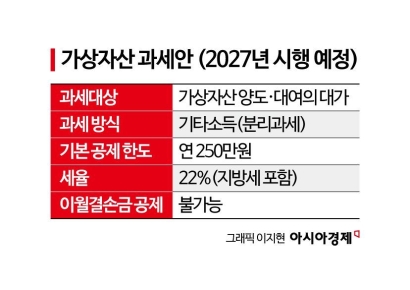 "Stocks Are Not Taxed, but Annual Crypto Gains Over 2.5 Million Won to Be Taxed Next Year... Investors Push Back"
- "Not Jealous of Winning the Lottery"... Entire Village Stunned as 200 Million Won Jackpot of Wild Ginseng Cluster Discovered at Jirisan
- "Even With a 90 Million Won Salary and Bonuses, It Doesn’t Feel Like Much"... A Latecomer Rookie Who Beat 70 to 1 Odds [Scientists Are Disappearing] ③
- "Rather Than Endure a 1.5 Million KRW Stipend, I'd Rather Earn 500 Million in the U.S." Top Talent from SNU and KAIST Are Leaving [Scientists Are Disappearing] ①
- "How Did an Employee Who Loved Samsung End Up Like This?"... Past Video of Samsung Electronics Union Chairman Resurfaces
The pandemic clearly revealed that human selfish activities ultimately cause great suffering to humans themselves. So now is the time to start exercising. To change ourselves and change the world.
© The Asia Business Daily(www.asiae.co.kr). All rights reserved.







