January Producer Prices Up 8.7% Year-on-Year... Impact of Soaring International Oil Prices
Bank of Korea Announces Producer Price Index for January
![[Image source=Yonhap News]](http://www.asiae.co.kr/news/img_view.htm?img=2022022308433654794_1645573416.jpg)
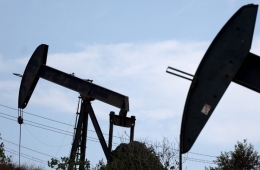
Due to the conflict between Russia and Ukraine, international crude oil and raw material prices have surged sharply, causing the Producer Price Index (PPI) to rise by 8.7% compared to the same month last year. Compared to the previous month, it increased by 0.9%, marking a return to growth after one month. Prices for electricity, gas, and water rose at the largest rate in about 23 years and 7 months compared to the same period last year, indicating growing inflationary pressures.
According to the Bank of Korea on the 24th, the provisional PPI for January was 114.24 (2015 = 100), up 8.7% from a year earlier. Compared to the previous month, it rose by 0.9%. The producer price had increased for 13 consecutive months until November last year, remained unchanged in December, and then turned upward again last month.
The PPI measures price changes of goods and services supplied by domestic producers to the market and is used as an economic trend indicator.
The Bank of Korea explained that the rise in raw material prices, including international crude oil, mainly drove the increase in producer prices for manufactured goods. By item, manufactured goods rose 13.9% year-on-year. Coal and petroleum products surged 56%, followed by primary metal products (34.2%), chemical products (15.5%), and food and beverages (5.8%). Electricity, gas, water, and waste increased by 13.3% compared to a year ago, which the Bank of Korea said was the largest increase since June 1998. Prices for agricultural, forestry, and fishery products rose 1.5% year-on-year, and services increased by 2.6%.
Compared to the previous month, electricity, gas, water, and waste rose 2.4%, the largest increase since July 2009. Manufactured goods increased 0.9% month-on-month, led by coal and petroleum products (5.2%) and chemical products (1.0%). Agricultural, forestry, and fishery products rose 1.7%, and services increased by 0.6%. Among detailed items, hot chili peppers (80.2%), croaker fish (77.8%), compound fertilizer (42.3%), apples (25.3%), and diesel (10.5%) saw significant month-on-month increases. In contrast, DRAM (-10.1%), pork (-9.5%), and mobile phones (-5.2%) declined.
The rate of increase in the PPI has narrowed for two consecutive months recently. Son Jin-sik, head of the Price Statistics Team at the Bank of Korea’s Economic Statistics Bureau, explained, "Compared to the same month last year, the rate of increase has been gradually slowing since November last year," attributing this to a base effect.
The Domestic Supply Price Index, which measures price changes including imported goods, rose 0.4% month-on-month and 13.7% year-on-year. Raw materials fell 3.5%, but intermediate goods and final goods rose by 0.7% and 0.9%, respectively.
Hot Picks Today
!["Stock Set to Double: This Company Smiles Every Time a Data Center Is Built [Click e-Stock]"](https://cwcontent.asiae.co.kr/asiaresize/93/2026050416112750184_1777878687.jpg) "Stock Set to Double: This Company Smiles Every...
"Stock Set to Double: This Company Smiles Every...
- "Continuous Groundwater Pumping Causes Mexico City to Sink 24cm Annually... 'Gia...
- “She Shouted, ‘The Rope Isn’t Tied!’... Chinese Woman Falls from 168m Cliff ...
- Samsung Electronics Officially Decides to Withdraw Some Home Appliance Businesse...
- "Prime Minister in Underwear?"... Italy's Meloni Posts Herself to Warn of Deepfa...
The Total Output Price Index for January, which adds exports to domestic shipments, rose 0.8% month-on-month and 12.0% year-on-year, driven by increases in agricultural, forestry, and fishery products, as well as manufactured goods.
© The Asia Business Daily(www.asiae.co.kr). All rights reserved.